All posts tagged: climate monitoring

Delhi-NCR likely to see week-long spell of rain and thunderstorms, says IMD

Delhi-NCR likely to see week-long spell of rain and thunderstorms, says IMD

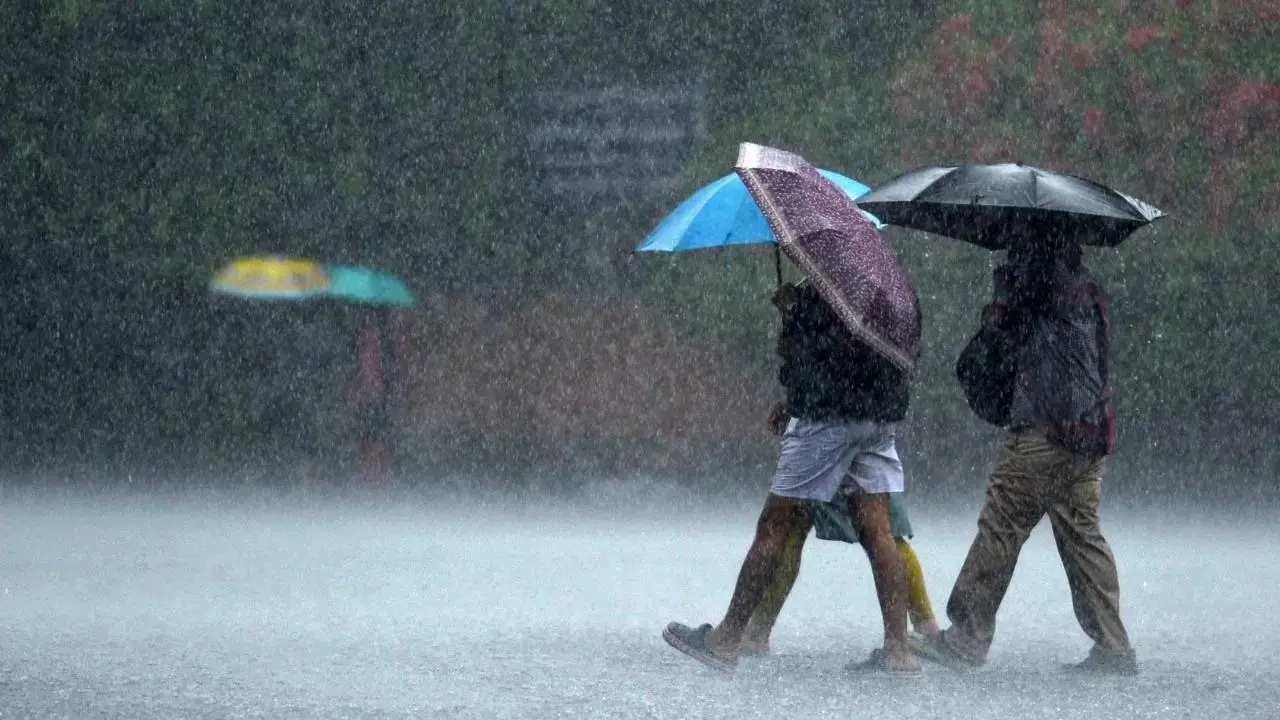
Delhi-NCR is expected to witness a week of rainfall and thunderstorm activity, bringing continued relief from intense summer heat, according to the India Meteorological Department (IMD). The weather department has forecast that maximum temperatures across the national capital will remain below the 40 degrees Celsius mark at least until June 5, aided by cloudy conditions and intermittent rain. Temperatures Stay Below Seasonal Average Delhi recorded a maximum temperature of 37.7 degrees Celsius on Tuesday, which was 2.3 degrees Celsius below the seasonal average. The relatively mild weather conditions experienced over the past several days have provided respite to residents from the prolonged summer heat. Data released by the IMD showed that temperatures remained below normal across most monitoring stations in the city. Ayanagar recorded a maximum temperature of 36.1 degrees Celsius, while Safdarjung, the city`s primary weather station, registered a high of 37.7 degrees Celsius and a minimum of 26.8 degrees Celsius. Lodhi Road recorded 36 degrees Celsius, Palam registered 35.9 degrees Celsius, and The Ridge recorded 37.2 degrees Celsius. According to the IMD, these …

ISRO Sets June 2025 Launch for Joint NASA-ISRO NISAR Satellite After Delays

ISRO Sets June 2025 Launch for Joint NASA-ISRO NISAR Satellite After Delays

Indian Space Research Organisation (ISRO) has started the final preparation for one of its most highly anticipated global collaborations after a prolonged wait. The joint mission with the United States’ National Aeronautics and Space Administration (NASA) as the NASA-ISRO Synthetic Aperture Radar, or NISAR, is scheduled to take off in June 2025. The ambitious Earth observation satellite will have one of the largest and most advanced radar imaging systems ever to have been launched into space. When in operation, NISAR will offer a new window of the Earth’s surface, with critical information about Earth’s changing systems, natural hazards, and environmental change. When in operation, NISAR will offer a new window of the Earth’s surface, with critical information about Earth’s changing systems, natural hazards, and environmental change. Technical Challenges and Assembly Progress According to the news from NASA’s own NISER blog, the launch was initially planned for 2024. It was continuously postponed because of technical problems, such as concerns over the satellite’s 12-meter radar antenna reflector overheating. To enhance its reflective coating and manage temperature issues …

NASA Tests Advanced Infrared Technology to Improve Wildfire Monitoring

NASA Tests Advanced Infrared Technology to Improve Wildfire Monitoring

Wildfires in California during January caused widespread destruction, affecting communities and ecosystems. To improve wildfire monitoring and response, NASA deployed a new scientific instrument capable of capturing high-resolution thermal infrared images. The Compact Fire Infrared Radiance Spectral Tracker (c-FIRST) was tested aboard NASA’s B200 King Air aircraft over fire-hit areas in Pacific Palisades and Altadena. The instrument, developed for satellite-based missions, was assessed for its ability to provide real-time data on active and smoldering fires. Scientists aim to use this technology to enhance understanding of wildfire behavior and improve mitigation strategies. Enhanced Fire Detection and Data Collection According to reports, the c-FIRST instrument was developed and is managed by NASA’s Jet Propulsion Laboratory (JPL), with support from NASA’s Earth Science Technology Office. The compact design allows it to be deployed on airborne platforms, simulating satellite missions while providing near-instantaneous observations. The system captures a wide range of fire characteristics, including temperature variations across large areas. Unlike previous infrared imaging systems, c-FIRST can detect extremely high temperatures exceeding 1,000 degrees Fahrenheit (550 degrees Celsius) with improved …