

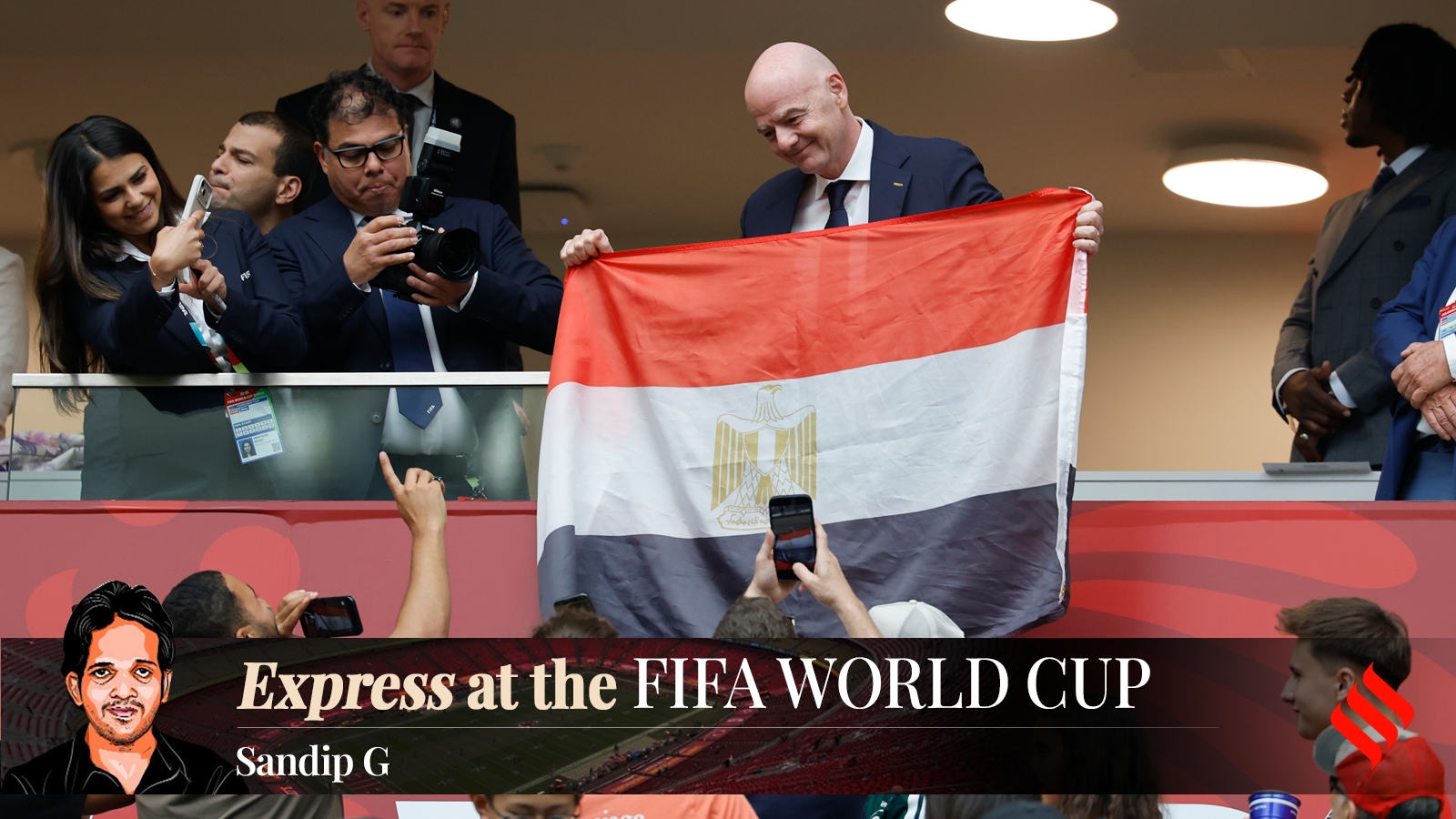
Lionel Messi might be the World Cup’s overwhelming protagonist, shaping moments and defining games. But a background crew, Gianni Infantino, Donald Trump, enraged managers, referees, and the error-checking mechanism, are putting in heavy shifts as support cast. Add conspiracy theories, corruption and rigging allegations, and the World Cup has the intrigue of a spy movie.
The background score intensified when Egypt manager Hossam Hassan remarked, after Argentina’s controversial 3-2 turnaround, that officials had been pressured to keep Messi in the tournament. “Perhaps they wanted Messi to stay in the running,” Hassan said after the match. “In football, there are sometimes external factors that go beyond the technical aspects. The world champions received support at every level.”
He was referring to two incidents that decided the game: Mostafa Zico’s goal scrapped for a foul on Argentina’s Lisandro Martinez at the other end of the pitch, and Alexis Mac Allister pulling Mohammed Salah inside the box before Enzo Fernandez scored the winner.
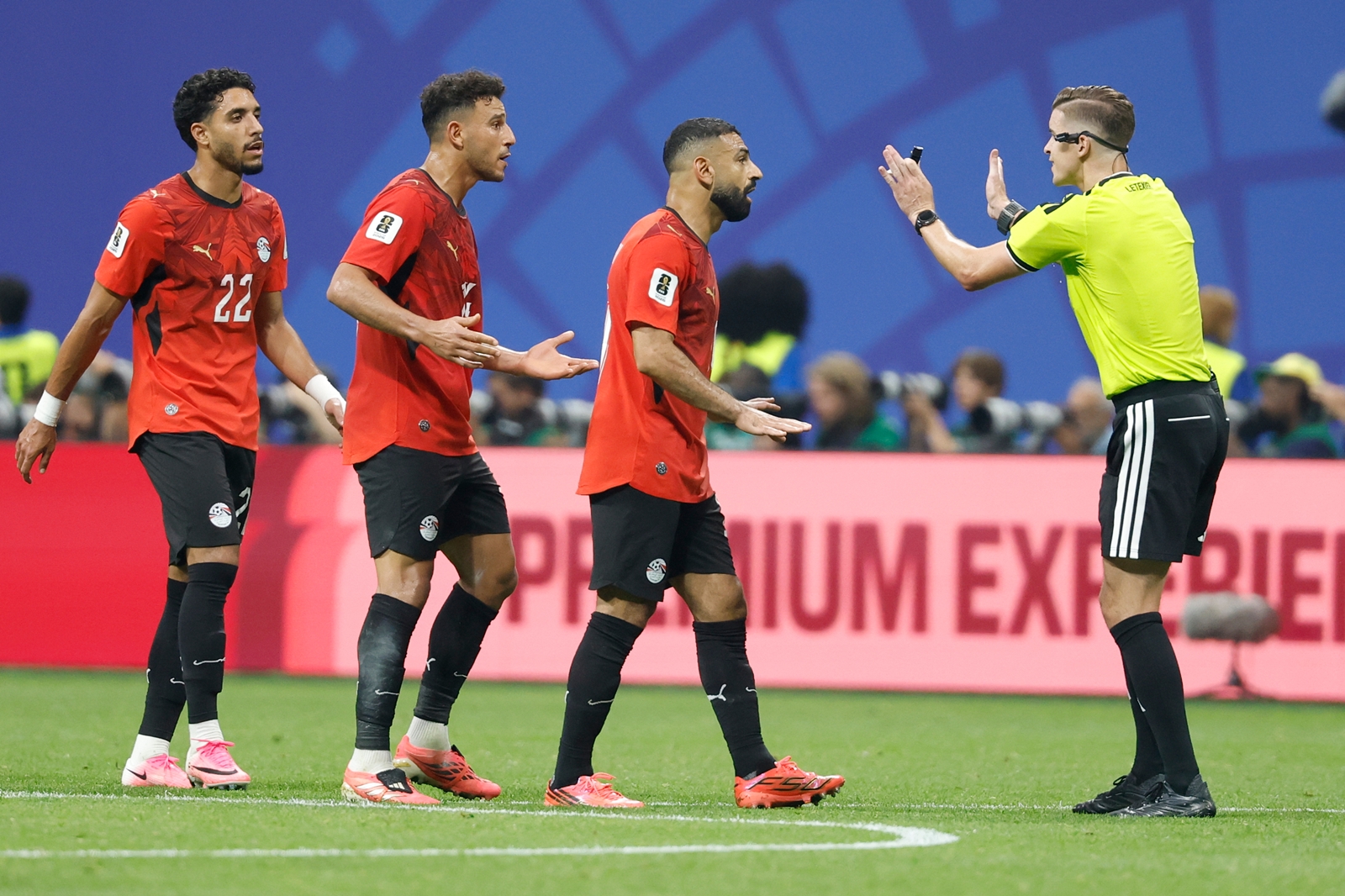 Egypt’s Mohamed Salah (10) talks with Referee Francois Letexier, of France, during the World Cup round of 16 soccer match between Argentina and Egypt in Atlanta, Tuesday, July 7, 2026. (AP Photo/Erik S. Lesser)
Going strictly by the book, the VAR’s judgement cannot be argued: under International Football Association Board protocol, VAR checks the attacking phase before every goal, and a “clear and obvious” foul sends the referee to the pitch-side monitor to rule it out.
Whether Marwan Attia’s foul, standing on Martinez’s foot, was clear and obvious is as debatable as the foul on Salah, both soft offences lost in the grey shades of a referee’s perception, not blatant ones. An emotional Hassan, Egypt’s all-time highest goal scorer, said: “Life is unfair. The world is unfair. Okay, but why isn’t there any fairness in sports? I’m not convinced by this outcome and by the way things unfolded in this match.” He paused and said: “The referee is unfair, God is sufficient for me and the best disposer of affairs. He’s wasting the effort of an entire nation. The cup is directed towards Argentina.”
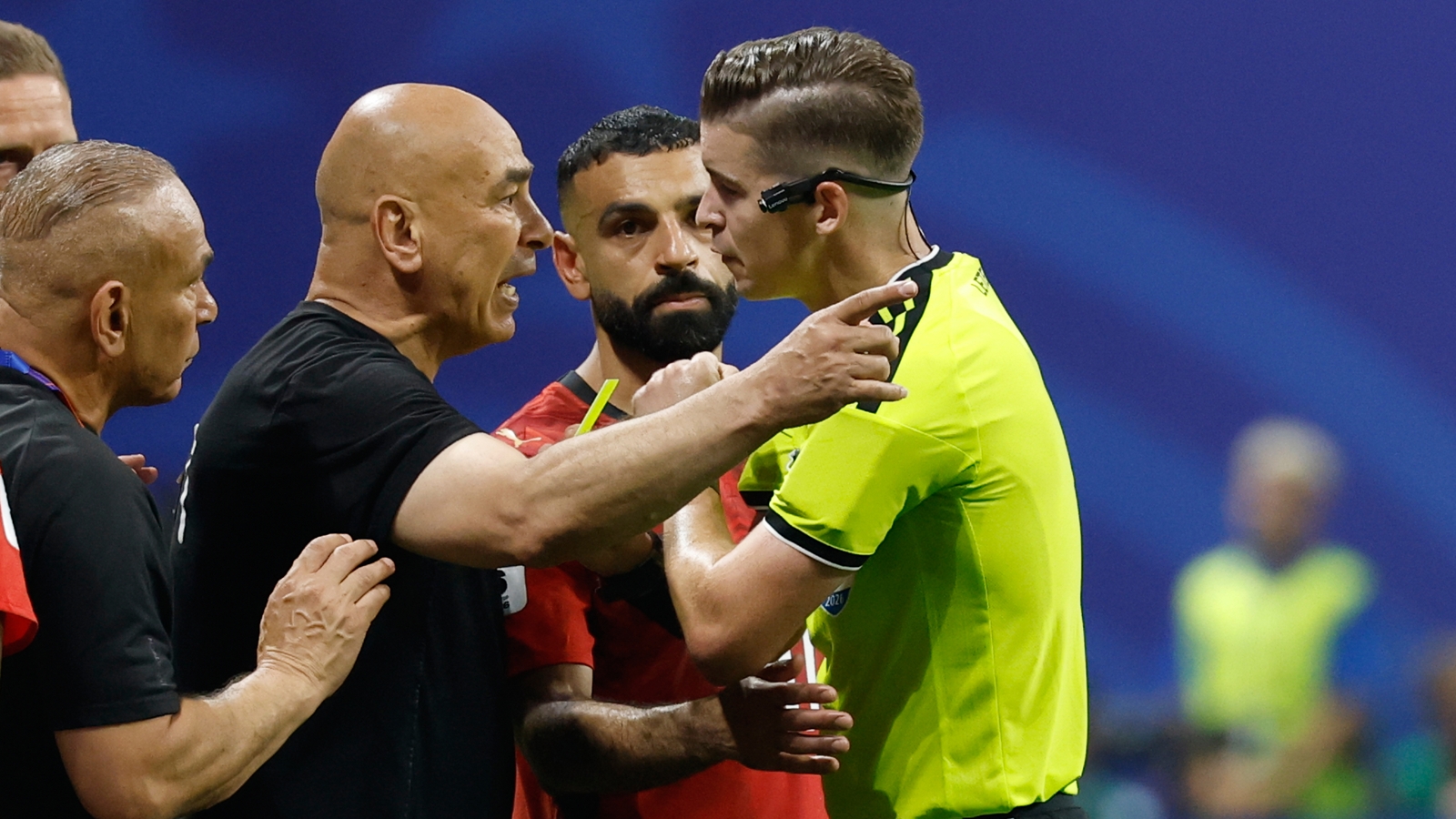 Egypt head coach Hossam Hassan argues with referee Francois Letexier, of France, during the World Cup round of 16 soccer match between Argentina and Egypt in Atlanta, Tuesday, July 7, 2026. (AP Photo/Erik S. Lesser)
The decisions divided the football world. “Sometimes, even warriors lose because the devils decide the story should end differently,” Real Madrid manager Jose Mourinho produced another ripping one-liner. Even chess legend Garry Kasparov chimed in, calling FIFA “a corrupt joke, playing favorites for stars” over the disallowed goal, and, separately, invoking Croatia’s own complaints: “Croatia robbed, now Egypt. But you cannot shame the shameless.”
To bolster the theory of FIFA staging an Argentina triumph, social media dug up every prior decision that had favoured Argentina, foremost among them Messi catching Algeria captain Aissa Mandi’s calf and Achilles tendon with his studs up in the opening game. Algeria complained, the decision stood. “It’s pointless commenting on hypothetical situations, but everyone saw it, including me,” Algeria head coach Vladimir Petkovic said.
Story continues below this ad
World Cups have a long history of scandals: the dodgy refereeing that eased co-hosts South Korea into the 2002 semifinals at Europe’s expense, two presidents shaking hands to spare Brazilian legend Garrincha a suspension, Argentina dictator General Jorge Videla’s visit to Peru’s dressing room to allegedly enable the four-goal win Argentina needed to reach the 1978 final, or the disgrace of Gijon.
But seldom has an edition been layered with this many subplots, political, sporting, ethical. It started with Iran: based in Mexico, crossing the border only a day before each match and leaving immediately after, officials and fans denied visas, manager Amir Ghalenoei calling his team the most “oppressed one” in the tournament. Their heartbreaking exit only deepened that sense of being victimised. Masoud Pezeshkian, Iran’s president, did not mince his words either. “The U.S. government’s conduct as World Cup host follows its familiar foreign policy: bending rules, bullying rivals, creating obstacles, and cheating. This is their MAGA playbook. Iran rejects such games. We stand firmly for our rights,” he posted on X.
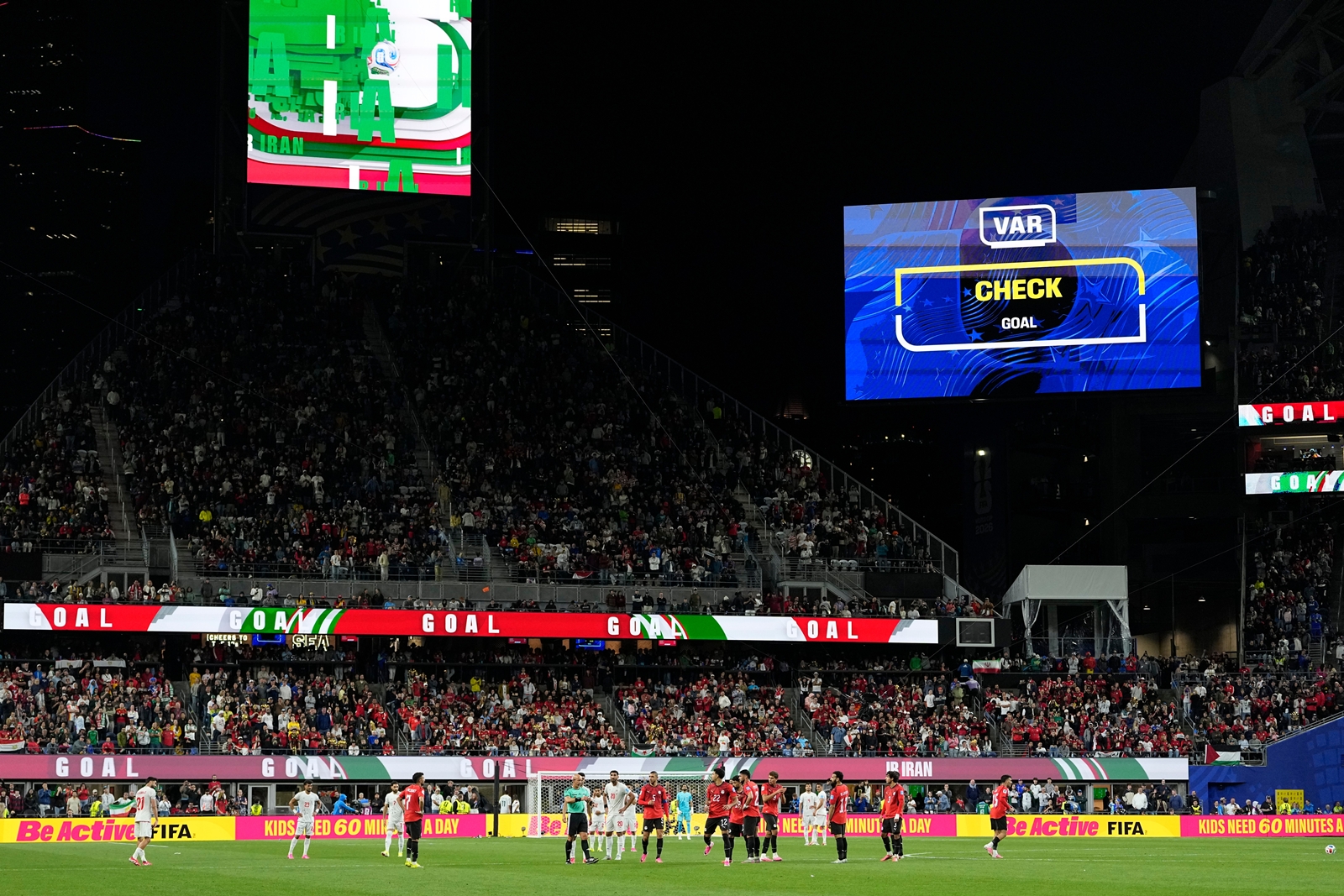 Players of the two teams await a VAR review after Iran’s Shoja Khalilzadeh (4) scored a goal that was later overturned during the World Cup Group G soccer match between Egypt and Iran in Seattle, Friday, June 26, 2026. (AP Photo/Lindsey Wasson)
Drama stayed confined to the pitch through the round-of-32, before it exploded. Trump’s successful intervention to rescind USMNT’s Folarin Balogun’s red card snowballed into a scandal, discussed as banter once Belgium hammered the co-hosts 4-1, and as political debate over a world leader’s power to overturn decisions on a football field through his nexus with FIFA’s supremo. “I didn’t know that 5 July was equal to 1 April [April Fools’ Day] at Fifa,” manager Rudi Garcia said, half in jest before the game. His association was more vehement in its criticism, and drafted a strongly-worded letter to FIFA. As did UEFA.
UEFA-FIFA ties grew more fractious still: dozens of European lawmakers are gathering support for a European Parliament investigation into Infantino’s role in the decision. “Once again, we’ve seen Infantino and FIFA surrender to the demands of the Trump administration,” the statement said.
Story continues below this ad
Belgium’s victory stubbed the fire out, not before another storm brewed.
The drama on the field rages on as the tournament enters the quarter-final stage; as would the theatre off it. And the dramatis personae could make Hollywood blush.
Disclaimer: We do not own any of the content, ideas, images, or text presented here. All rights belong to their respective owners. For more information and to view the original source, please visit the following link: