Ancient pottery from Mesopotamia may hold earliest clues to mathematics | Technology News
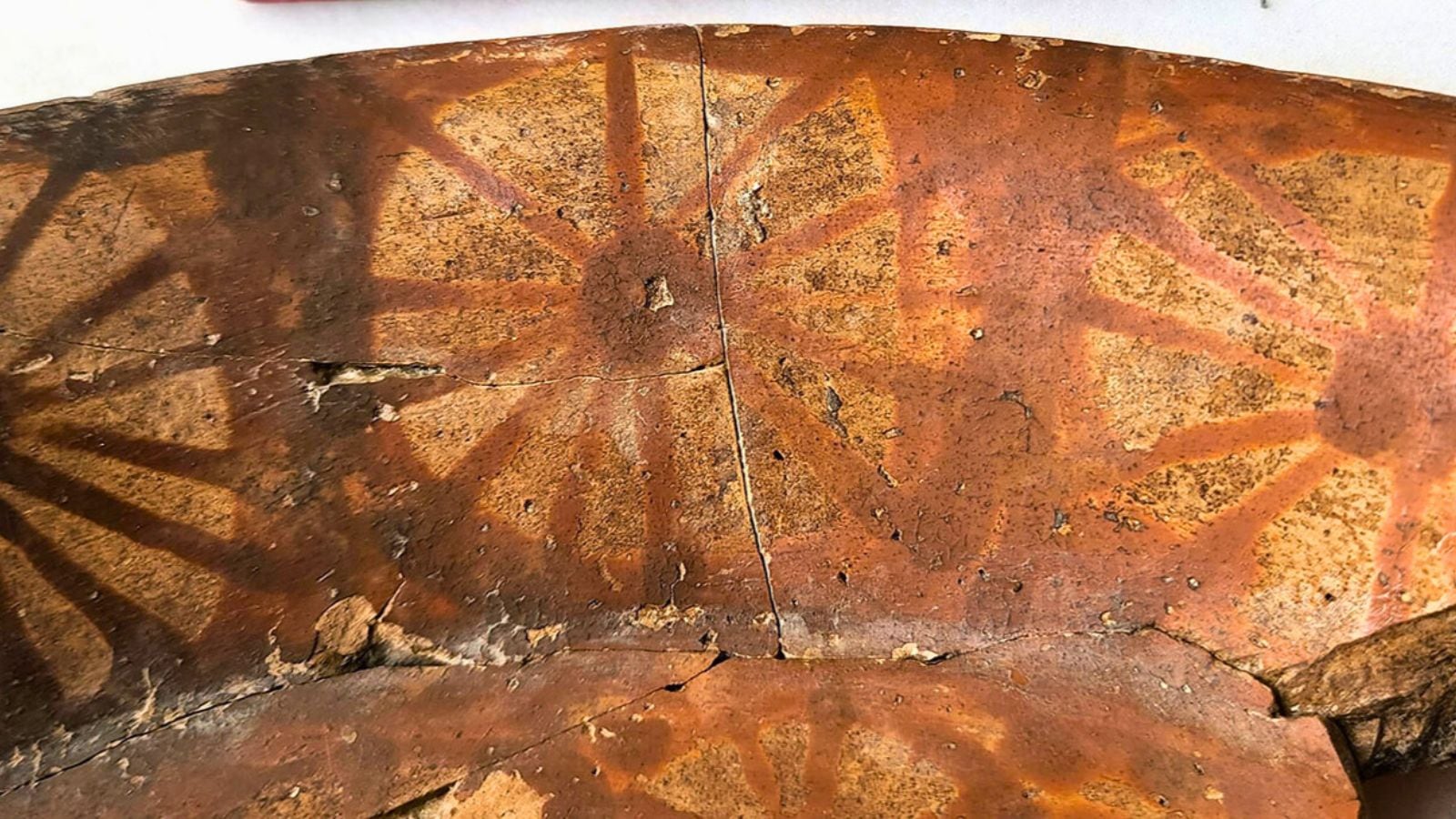
A recent study has suggested that painted images found on ancient pottery may offer one of the earliest glimpses into how humans first began to think mathematically. The pottery, created up to 8,000 years ago, belongs to the Halafian people who lived in northern Mesopotamia between 6200 BC and 5500 BC. Researchers closely studied bowls and pottery fragments decorated with flower designs. What stood out was the number of petals used in these images. Many of the flowers were painted with four, eight, 16, 32, or even 64 petals. These numbers follow a clear doubling pattern, which suggests the artists were working with ideas of balance, repetition, and symmetry rather than decorating at random, according to research published on Springer in December 2025. The study examined 375 pottery fragments collected from 29 different Halafian sites over more than a century of excavations. Despite the distance between these sites and the long span of time involved, the same patterns kept appearing. The researchers found that almost every flower followed this same sequence, strongly pointing to deliberate …