All posts tagged: DRDO

Russia shows interest in BrahMos as India explores expanded production

Russia shows interest in BrahMos as India explores expanded production

Russia is keen to induct the BrahMos supersonic cruise missile, and discussions are under way on increasing production to meet future requirements, BrahMos Aerospace Chief Jaiteerth Joshi said on Thursday. Speaking to ANI in Nagpur after the flagging off of the 100th indigenous booster manufactured by Solar Industries India Ltd, Joshi said Moscow had expressed interest in the missile even though it already has established industrial partners associated with the BrahMos programme. On whether Russia could induct BrahMos into its own armed forces, Joshi said discussions were ongoing. “That’s what they have told….. My joint managing director has committed that government of Russia is keen on taking, but they have their own established industry partners. However, they want to increase the requirement as per the present scenario. What the situation is, they are there, so they are likely to take. We are in talks with them,” he said. Asked whether any future missiles for Russia would be supplied from India, Joshi indicated that Indian industry could play a role in augmenting existing Russian production capacity. …

Why are ballistic missile defence, new WPI series and ‘brain-eating amoeba’ in the news?

Why are ballistic missile defence, new WPI series and ‘brain-eating amoeba’ in the news?

Headlines tell you what happened, but UPSC asks why. The UPSC Civil Services Examination, whether at the Prelims or Mains stage, increasingly rewards conceptual clarity and the ability to apply core ideas. That is especially true in the most dynamic areas of the syllabus: Science, Economy and Environment. The UPSC Weekly Concepts Snapshot, every Wednesday, simplifies three important current themes from these subjects through an exam-oriented lens, focusing on concepts and clarity. Read the article, understand the concept, and then crack the quiz.             Q1 of 5  •  Science What distinguishes a ballistic missile from a cruise missile in terms of propulsion and flight path? Ballistic missiles use jet engines throughout their flight Ballistic missiles are powered briefly, then follow projectile motion along a parabolic arc Ballistic missiles always fly at low altitude, closer to the ground than cruise missiles Unlike cruise missiles — powered by jet engines throughout their flight — ballistic missiles are propelled only for a short initial phase. After that, gravity and physics alone govern their …

DRDO, IAF successfully flight-test indigenous RudraM-II air-to-surface missile

DRDO, IAF successfully flight-test indigenous RudraM-II air-to-surface missile

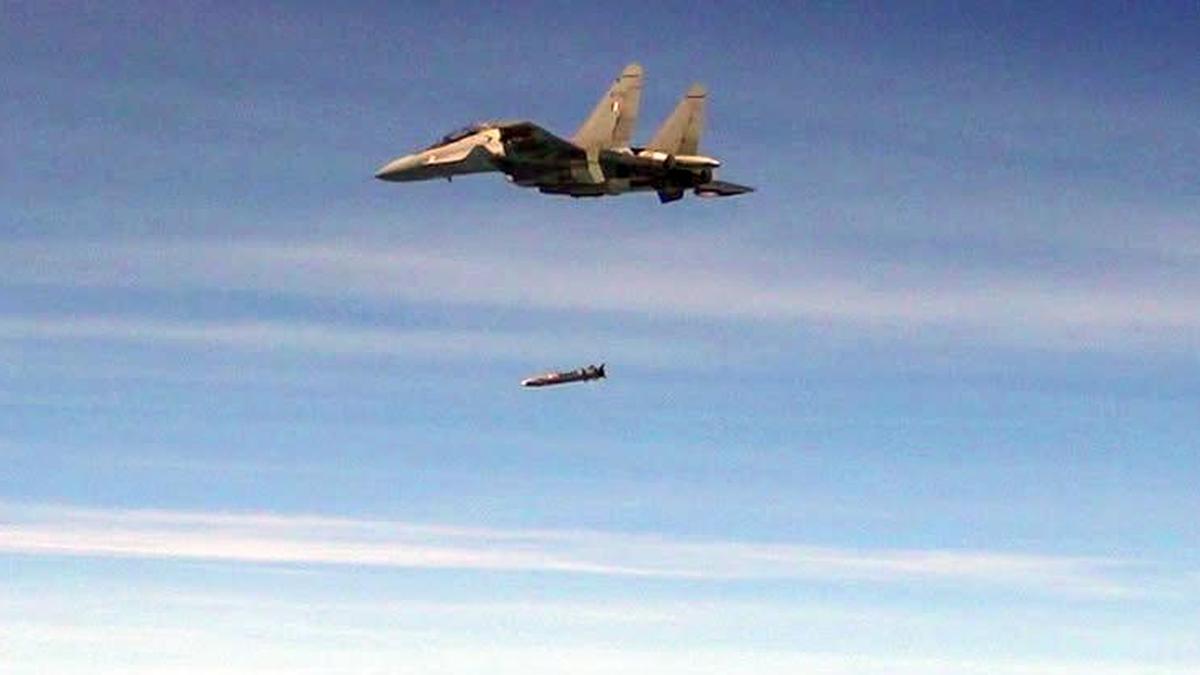
Defence Research & Development Organisation and the Indian Air Force conduct the successful flight-tests of RudraM-II Air-to-Surface Missile from an airborne platform, on Tuesday (June 2, 2026). Photo Credit: Ministry of Defence via ANI Photo) The Defence Research and Development Organisation (DRDO) and the Indian Air Force (IAF) have successfully conducted flight-tests of the indigenous RudraM-II air-to-surface missile, marking a significant milestone in India’s efforts to strengthen its precision strike capabilities and advance self-reliance in defence technology. According to the Defence Ministry, the missile was test-fired from an airborne platform under extreme release conditions, with the trials designed to validate the performance of all critical subsystems and flight parameters. According to officials, the missile successfully established the intended trajectory after launch and accurately engaged a predefined target. Pinpoint accuracy The missile demonstrated pinpoint accuracy during the tests, successfully meeting all mission objectives. Data captured through a network of tracking and monitoring instruments deployed by the Integrated Test Range (ITR), Chandipur, confirmed the missile’s performance and the success of the trials. RudraM-II has been developed indigenously …

DRDO successfully tests ULPGM-V3 missile | All about the indigenous weapon

DRDO successfully tests ULPGM-V3 missile | All about the indigenous weapon

In a major boost to India’s defence capabilities, the Defence Research and Development Organisation (DRDO) has successfully completed the final development trials of the Unmanned Aerial Vehicle Launched Precision Guided Missile (ULPGM)-V3. DRDO successfully completed the final deliverable configuration development trials of the ULPGM-V3 in Air-to-Ground and Air-to-Air modes at the DRDO test range in Kurnool on Tuesday. (DRDO via ANI) According to officials quoted in a PTI report, the tests were successful in both air-to-ground and air-to-air modes. The defence ministry informed in a statement that the trials were conducted at a DRDO test range near Kurnool in Andhra Pradesh using an integrated ground control system (GCS) to command and control the ULPGM weapon system. The GCS features state-of-the-art technologies to automate readiness and launch operations. “The Defence Research & Development Organisation (DRDO) has successfully completed the final deliverable configuration development trials of Unmanned Aerial Vehicle Launched Precision Guided Missile (ULPGM)-V3 in air-to-ground and air-to-air modes,” the ministry statement said. What is ‘Unmanned Aerial Vehicle Launched Precision Guided Missile-V3’? The ULPGM-V3, also known as …

India successfully tests Agni-5 MIRV missile with 5,000 km range, multi-warhead capability; 5 key facts

India successfully tests Agni-5 MIRV missile with 5,000 km range, multi-warhead capability; 5 key facts

India has successfully test-fired an advanced Agni missile equipped with MIRV (Multiple Independently Targeted Re-entry Vehicle) capability, enabling it to strike multiple targets simultaneously—a milestone that places the country among an elite group of global powers. India has successfully test-fired an advanced Agni missile equipped with MIRV (Multiple Independently Targeted Re-entry Vehicle) capability. (X/@DefenceMinIndia) According to the defence ministry, the trial was conducted on May 8 from Dr APJ Abdul Kalam Island. The missile was tested with multiple payloads aimed at different targets spread across a wide geographical area in the Indian Ocean region, successfully meeting all mission objectives. Also Read | India tests Agni-5 missile capable of multiple nuclear strikes Below are 5 things to know about the advanced Agni missile: 1. The advanced Agni-5 missile is equipped with MIRV (multiple independently targetable re-entry vehicle) technology, the defence ministry said. The capability allows a single missile to deploy multiple nuclear warheads against targets spread across hundreds of kilometres. Agni-5 missile has a range of up to 5,000 km. The Agni 1 to 4 missiles …

DRDO achieves major hypersonic missile milestone with successful scramjet test

DRDO achieves major hypersonic missile milestone with successful scramjet test

Defence Research and Development Laboratory (DRDL) of DRDO has achieved a path-breaking milestone in the development of Hypersonic Missiles by successfully conducting an extensive long-duration test of its Actively Cooled Full Scale Scramjet Combustor, a press release said. A run-time of over 1,200 seconds was achieved at the state-of-the-art Scramjet Connect Pipe Test (SCPT) Facility in Hyderabad on May 09, 2026, building upon the earlier successful test of over 700 seconds conducted in January this year. Disclaimer: We do not own any of the content, ideas, images, or text presented here. All rights belong to their respective owners. For more information and to view the original source, please visit the following link: Source link

India successfully tests indigenous TARA glide weapon system off Odisha coast

India successfully tests indigenous TARA glide weapon system off Odisha coast

The Defence Research and Development Organisation (DRDO) and the Indian Air Force (IAF) on Friday successfully carried out the maiden flight-trial of an indigenously developed glide weapon system off the coast of Odisha. The Tactical Advanced Range Augmentation (TARA) system, developed to convert unguided warheads into precision guided weapons, is India`s first indigenous glide weapon system. This story has been sourced from a third party syndicated feed, agencies. Mid-day accepts no responsibility or liability for its dependability, trustworthiness, reliability and data of the text. Mid-day management/mid-day.com reserves the sole right to alter, delete or remove (without notice) the content in its absolute discretion for any reason whatsoever Disclaimer: We do not own any of the content, ideas, images, or text presented here. All rights belong to their respective owners. For more information and to view the original source, please visit the following link: Source link

DRDO Tests Long-Range Missile Engine Solid Fuel Ducted Ramjet Off Odisha Coast | Video | India News

DRDO Tests Long-Range Missile Engine Solid Fuel Ducted Ramjet Off Odisha Coast | Video | India News

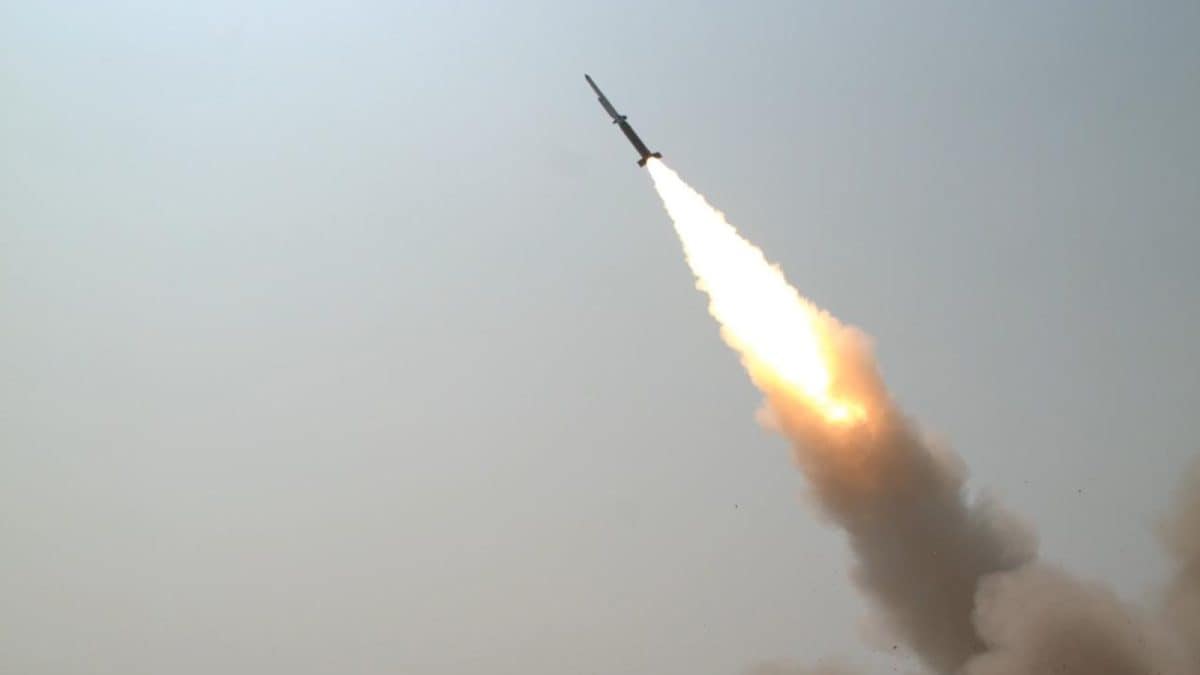
Last Updated:February 03, 2026, 18:48 IST All subsystems of the missile, including the Nozzle-less Booster, Solid Fuel Ducted Ramjet motor, and Fuel Flow Controller, performed as expected. The missile was initially propelled by a ground booster motor to the required Mach speed before the SFDR system took over. The Defence Research & Development Organisation (DRDO) on Tuesday successfully demonstrated Solid Fuel Ducted Ramjet (SFDR) technology from the Integrated Test Range (ITR), Chandipur, off the coast of Odisha. The successful test, carried around around 10:45 AM, places India among a select group of nations with this advanced capability, enabling the development of long-range air-to-air missiles that provide a tactical advantage over potential adversaries. #WATCH | Defence Research & Development Organisation (DRDO) has carried out a successful demonstration of Solid Fuel Ducted Ramjet (SFDR) technology from the Integrated Test Range (ITR), Chandipur off the coast of Odisha at around 1045 hrs on February 03, 2026. The successful… pic.twitter.com/vJwRATL7ec— ANI (@ANI) February 3, 2026 All subsystems of the missile, including the Nozzle-less Booster, Solid Fuel Ducted Ramjet motor, …

DRDO conducts key test of scramjet engine| India News

DRDO conducts key test of scramjet engine| India News

NEW DELHI: The Defence Research and Development Organisation (DRDO) on Friday conducted a successful ground test of a full-scale actively cooled scramjet engine — an air breathing engine capable of sustaining combustion during supersonic flights — with defence minister Rajnath Singh describing the achievement as a “solid foundation” for India’s hypersonic cruise missile programme. DRDO conducts key test of scramjet engine The Defence Research & Development Laboratory (DRDL), a Hyderabad based DRDO laboratory, has achieved “a path-breaking milestone” in the development of hypersonic missiles, the defence ministry said. “DRDL successfully conducted an extensive long-duration ground test of its actively cooled scramjet full scale combustor, achieving a run time of over 12 minutes…,” it said in a statement. The development is being seen as a crucial milestone in developing next-generation hypersonic missiles that can travel at speeds of more than Mach 5 or five times the speed of sound. Only the United States, Russia and China have developed technologies to field fast-manoeuvring hypersonic missiles that fly at lower altitudes and are extremely hard to track and …

DRDO Successfully Tests Long-Duration Scramjet Engine For Hypersonic Missile Programme | India News

DRDO Successfully Tests Long-Duration Scramjet Engine For Hypersonic Missile Programme | India News

Last Updated:January 09, 2026, 20:16 IST The test was carried out by the Defence Research & Development Laboratory (DRDL), Hyderabad- a key laboratory under Defence Research and Development Organisation. The successful test builds on an earlier long-duration subscale scramjet test conducted on April 25. India achieved a major milestone in hypersonic weapons development after the Defence Research and Development Organisation (DRDO) successfully conducted a long-duration ground test of a full-scale, actively cooled scramjet engine, a critical technology for hypersonic cruise missiles. The test was carried out by the Defence Research & Development Laboratory (DRDL), Hyderabad- a key laboratory under Defence Research and Development Organisation- at its Scramjet Connect Pipe Test (SCPT) facility. According to the Ministry of Defence, the engine achieved a sustained runtime of over 12 minutes, marking a path-breaking achievement in India’s hypersonic missile programme. The successful test builds on an earlier long-duration subscale scramjet test conducted on April 25, 2025 and represents a crucial step towards the development of operational hypersonic cruise missiles. The full-scale combustor and the specialised test facility were …