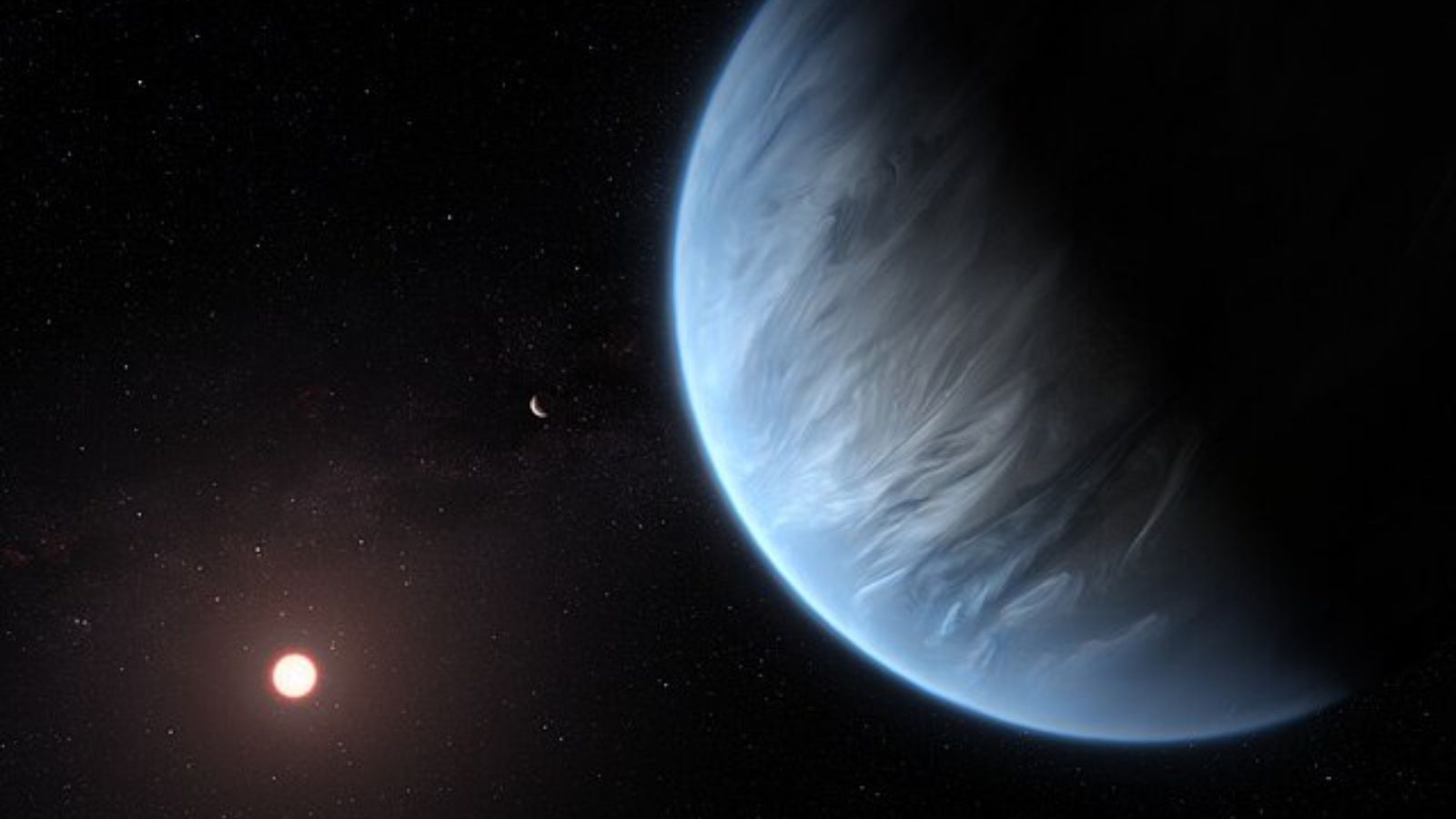
New Study Challenges Signs of Life on Exoplanet K2-18b
Expectations were high at the start of this month when a group of University of Cambridge astronomers reported they had found the “strongest evidence yet” of life on an exoplanet called K2-18b. Their assertions sprang from the detection of dimethyl sulphide (DMS), a gas linked to biological activity in the atmosphere of Earth. Conducted using the James Webb Space Telescope (JWST), the finding suggested that the planet may be a watery, habitable world. But a detailed examination of the facts now begs grave doubt about the veracity of their bold assertions. Skepticism Grows Over K2-18b Life Claims Amid New Analysis and Calls for More Data As per a study posted on April 22, Jake Taylor of the University of Oxford applied a neutral statistical test that detected no clear molecular signatures in the JWST data, just a flat line. The studies suggest the signal is either noisy or too weak to provide strong conclusions. The first Cambridge-led study revealed a three-sigma DMS detection much below the five-sigma threshold usually required to prove major scientific discoveries. …