All posts tagged: extreme heat

Ahmedabad ranks world’s 2nd most heat-risk city; Bengaluru among India’s 14 in top 50: Report

Ahmedabad ranks world’s 2nd most heat-risk city; Bengaluru among India’s 14 in top 50: Report

India, Pakistan, Nigeria and Ghana together host the largest number of cities at risk of extreme heat, with major tourist destinations including Jaipur and international business hubs in the top 50, according to an analysis that has ranked 205 of the world’s largest cities. The study analysed cities with a population of over one million. (Unsplash) More than 95 per cent of the most at-risk cities are in South and Southeast Asia and Sub-Saharan Africa. Iraq’s city of Al Basrah is the world’s most at-risk, followed by Ahmedabad in Gujarat, the study published in the journal Sustainable Cities and Society says, identifying places where people are most in danger as the planet continues to warm. Fourteen Indian cities that featured in the top 50 at-risk locations included Nagpur and Pune in Maharashtra, Madurai and Chennai in Tamil Nadu, Karnataka’s Bengaluru and Uttar Pradesh’s Kanpur and Lucknow. Lead author, Nethmi Jayaratne Kariyawasam, a researcher at the UK’s Oxford University, said, “It isn’t just exposure to hot temperatures that matters for risk. Our study highlights the importance …
Heatwave news: Why 43°C feels different in Europe than in India | Health News

Heatwave news: Why 43°C feels different in Europe than in India | Health News

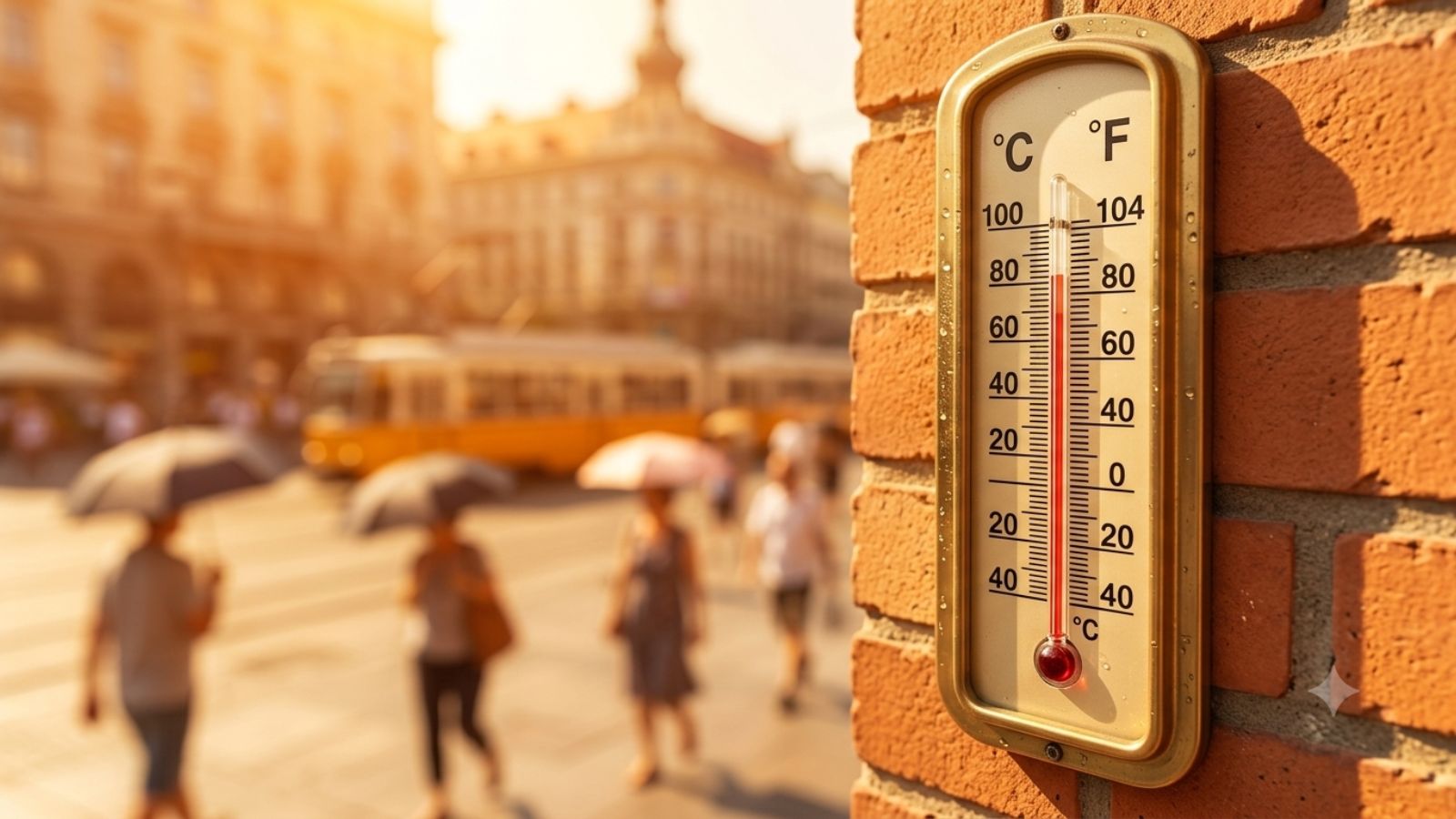
As Europe experiences an intense heatwave, a social media post comparing temperatures in Europe and India has sparked widespread debate. X user Umed Pratap Singh wrote, “Is 43°C in Europe different than 43°C in India? What’s so rona dhona about? Here, the temperature even touches 48°C.” The post quickly went viral, prompting many users to explain why the same temperature can feel very different depending on where you are. DISCLAIMER: This article is based on information from the public domain and/or the experts we spoke to. Always consult your health practitioner before starting any routine. One user pointed to differences in housing and cooling systems, writing, “They don’t have ACs. Very few have fans. Many apartments have restrictions on how much a window can open, many of them open upto 10 degrees angle only.” Another highlighted how cities are built for different climates, saying, “Infrastructure is built for the cold. 43 in Europe will feel like >>55 in India. Many houses don’t even have fans; they’re waking up to portable units now out of necessity …

Telangana heatwave death toll rises to 16; families to get Rs 4 lakh compensation

Telangana heatwave death toll rises to 16; families to get Rs 4 lakh compensation

Severe heatwave conditions in Telangana have claimed 16 lives so far, with temperatures crossing 45 degrees Celsius in several districts. The state government has announced an ex gratia of Rs 4 lakh for the families of the deceased and issued alerts as temperatures continue to soar Disclaimer: We do not own any of the content, ideas, images, or text presented here. All rights belong to their respective owners. For more information and to view the original source, please visit the following link: Source link

Over 31 NCC cadets hospitalised amid heatwave at Jabalpur training camp

Over 31 NCC cadets hospitalised amid heatwave at Jabalpur training camp

The cadets experienced symptoms such as dizziness, vomiting, diarrhoea, weakness and semi-consciousness, prompting immediate hospitalisation. Health officials said the primary cause appears to be heatstroke linked to extreme temperatures and strenuous outdoor activities Disclaimer: We do not own any of the content, ideas, images, or text presented here. All rights belong to their respective owners. For more information and to view the original source, please visit the following link: Source link

Sudden April heat spike leaves Delhi unprepared, doctors warn of rising risks

Sudden April heat spike leaves Delhi unprepared, doctors warn of rising risks

While summers in north India normally build gradually, allowing the human body to adjust over weeks, the transition to extreme heat has been abrupt this year, leaving little room for biological adaptation and putting people at higher risk of heat-related illnesses, warned experts. Heat arrives too soon, increasing risk of heatstroke and dehydration (Representative/Freepik) “High temperatures arriving earlier than usual put a strain on the body’s ability to acclimatise to hot weather, a phenomenon called seasonal or heat acclimatisation,” said Dr Mugdha Tapdiya, director of internal medicine at Fortis Hospital, Vasant Kunj. Under normal conditions, repeated exposure to heat over days or weeks triggers a series of physical responses: the body begins to sweat earlier and more efficiently, heart rate under heat stress reduces, and the system becomes better at maintaining fluid and electrolyte balance. This physiological adaptation, referred to as heat acclimatisation, typically takes about one to two weeks of progressive exposure. Also Read | EVM ‘glitches’, TMC ‘goons’ and a dare for PM Modi: A look at West Bengal’s phase-2 voting “However, a …

States in Indo-Gangetic Plain record spike in humid heat days: Study | Latest News India

States in Indo-Gangetic Plain record spike in humid heat days: Study | Latest News India

Over half of India’s districts, which are home to 76% of the country’s population and contribute to a combined GDP of ₹280 trillion, are currently at ‘high to very high’ heat risk, an analysis by the Council on Energy, Environment and Water (CEEW) has revealed. A woman shields her child from the scorching heat on a hot summer day in Prayagraj. (PTI Photo) Around 417 out of India’s 734 districts fall under high and very high risk (151 high risk, 266 very high risk), while 201 are moderate and 116 are low to very low risk, the analysis found. The 10 states/UTs with the highest heat risk include Delhi, Maharashtra, Goa, Kerala, Gujarat, Rajasthan, Tamil Nadu, Andhra Pradesh, Madhya Pradesh, and Uttar Pradesh. Further, the number of ‘very warm’ nights is rising faster than hot days, particularly in districts with large populations, the study found. For instance, in the last decade, Mumbai saw 15 more very warm nights per summer, Bengaluru (11), Bhopal and Jaipur (7 each), Delhi (6), and Chennai (4). In the last …

How Indian cities can respond to extreme heat

How Indian cities can respond to extreme heat

As the climate crisis accelerates, India’s cities are on the frontline of one of its most immediate impacts: Extreme heat. With an estimated 590 million people expected to live in dense urban areas by 2030, Indian cities face a mounting heat crisis that threatens health, livelihoods, and basic urban infrastructure. While some cities like Ahmedabad and Bhubaneshwar have made strides by institutionalising Heat Action Plans (HAPs), these measures are mostly reactive and short-term. To truly protect diverse urban populations, cities must shift from incremental solutions to system-wide, transformational approaches. Heat (representational image)(Praful Gangurde /HT Photo) Urban centres suffer more from extreme heat than rural areas due to the “urban heat island” effect, where concrete-heavy infrastructure such as paved roads, tightly packed high-rise apartments with dense populations trap heat, pushing temperatures higher. In India, this effect can exacerbate heat up to 8–10°C in dense built-up areas. The World Bank estimates that cities like Surat, Lucknow and Chennai see higher heat-related deaths every year. In Chennai alone, approximately 2,500 die each year from extreme heat, and about …

Future Supercontinent Pangea Ultima Could Trigger Mass Extinction, Reveals New Study

Future Supercontinent Pangea Ultima Could Trigger Mass Extinction, Reveals New Study

A recent study led by Dr Alexander Farnsworth, a Senior Research Associate at the University of Bristol, warns that extreme global temperatures could eventually drive mammals, including humans, towards extinction. This research, published in Nature Geoscience, anticipates a distant yet dramatic future for Earth in which the continents merge to form a single, massive landmass called Pangea Ultima. The resulting climate changes could make much of the planet uninhabitable, fundamentally altering life as we know it. Formation of Pangea Ultima: A Triple Climate Threat The study was published in the journal Nature Geoscience. The Earth’s tectonic plates are constantly moving, and scientists predict they will ultimately converge to form Pangea Ultima. This supercontinent’s unique configuration would exacerbate the climate crisis by creating a “continentality effect,” where much of the land would be far from cooling oceanic influences. Combined with increased solar brightness and higher carbon dioxide levels due to tectonic volcanic activity, the landmass could experience widespread temperatures between 40 and 50°C (104-122°F), with even greater extremes in some regions. Dr Farnsworth highlighted that under these conditions, …

IAF air show-related deaths due to ‘extreme heat,’ says DMK’s Health Minister – India TV

Image Source : PTI People leave after witnessing the Indian Air Forces (IAF) air show as part of the 92nd anniversary celebrations of IAF, at Marina Beach, in Chennai, Tamil Nadu Medical and Family Welfare minister Ma Subramanian on Monday said that five deaths that occurred after the Indian Air Force’s air show on the Marina beach on Sunday were related to heat issues and appealed to the political parties and media not to politicise the issue. Of the nearly 100 people admitted to the government hospitals close to Marina beach, 7 were undergoing treatment, and 93 people were treated as out-patients. Five persons were brought dead to the hospitals, Subramanian stated. The condition of those undergoing treatment at the hospitals was stable, he said and added that there was no stampede while the spectators started leaving for home at the same time. At least five persons, who were among thousands of spectators, died due to causes including extreme exhaustion. A senior city police official said that one person died on the beachfront and four …

Farmland trees that provide shade dwindle amid heat surge: Study | Latest News India

At a time when the impacts of climate crisis are becoming severe, with most of India suffering from extreme heat, farmland trees with large crowns that provide cool shade have disappeared to an alarming extent, a new study has found. A potential driver of tree losses is climate change, with rapid increases in temperature in central and southern India, and unfavourable trends in rainfall and drought over the past decade, the paper underlined. But, climate change may not be the direct and main reason for the high loss of farmland trees.  (HT Photo) Of the 0.6 billion farmland trees mapped In India in 2010-11, around 11% had disappeared by 2018, according to research led by the Department of Geosciences and Natural Resource Management at the University of Copenhagen. These are trees with about 96 sqm crown cover. Unlock exclusive access to the latest news on India’s general elections, only on the HT App. Download Now! Download Now! Study reveals how ‘upside down’ trees dubbed ‘mother of forest’ thrived across oceans, defying extinction The depletion is …