All posts tagged: frames

News in Frames | Trickle of freshwater just off the salty sea

News in Frames | Trickle of freshwater just off the salty sea

Under the scorching midday sun, women in R. Pudhupattinam, a coastal village about 60 kilometres from Pudukottai in Tamil Nadu, continue a daily ritual that has sustained generations. Barefoot and carrying as many containers as they can, the women walk two or three kilometres along the shoreline to collect drinking water from shallow pits dug on the beach. The fishing village, known for its close relationship with the sea, depends on freshwater from beachside pits. Residents believe the naturally filtered water is healthier than commercially supplied alternatives. Many are of the view that packaged and canned water, which they say contains chlorine, often causes cold and other health issues. “Our ancestors drew freshwater from this beachside pit since the British colonial period,” said R. Danabakkiyam, a resident of the village. The water is traditionally used for cooking meals for fishermen before they venture into sea, with locals believing it enhances the taste and nutritional value of food. The site is regarded as sacred by the community. Villagers strictly prohibit sand removal and avoid planting vegetation …

News in Frames | Bringing water to a scorching desert

News in Frames | Bringing water to a scorching desert

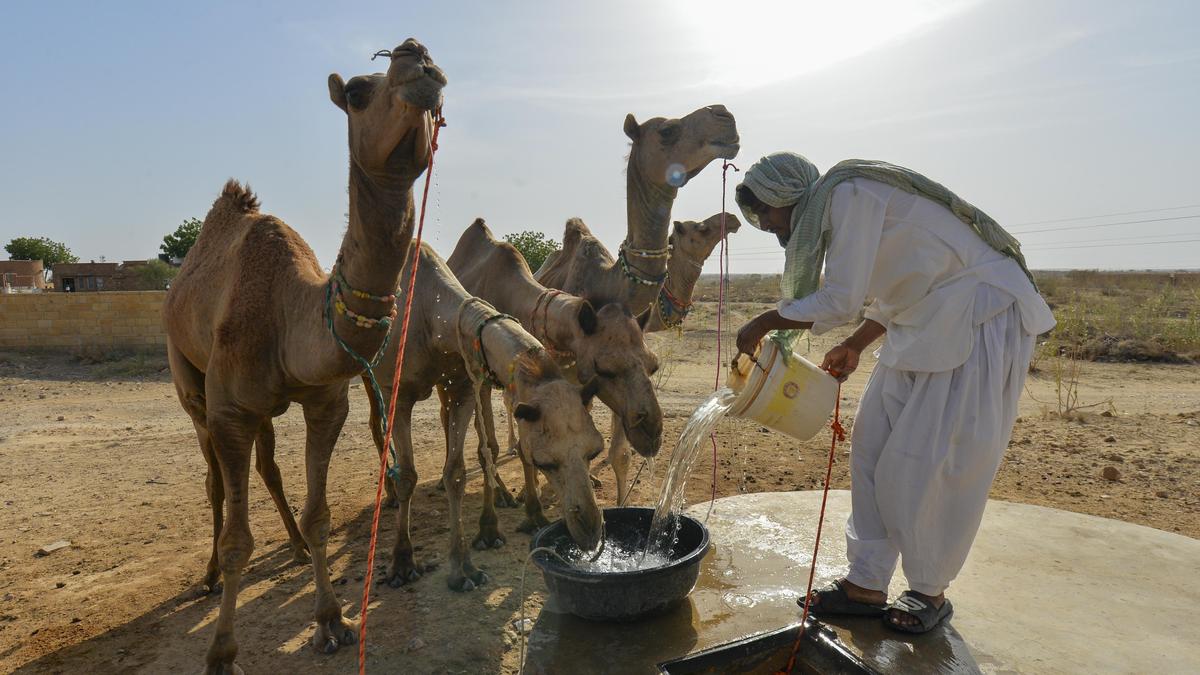
The Indira Gandhi Canal, which flows through a small stretch of northwestern Haryana before traversing Rajasthan and ending in the Thar Desert near Gadra Road in Jaisalmer district, is India’s longest canal, at 837 kilometres. It provides critical water supply to Jaisalmer and thousands of remote desert villages. The canal has also reduced dependence on scarce groundwater and supports large-scale irrigation, enabling farmers to cultivate crops and significantly strengthen animal husbandry. Rainfall itself has increased, a shift local people say is due to the increased availability of water and vegetation the canal has given growth to. “Fifty to sixty years ago, our forefathers in Jaisalmer used to tell guests, ‘You may ask for a glass of ghee or milk, but do not ask for a glass of water,’” says local social activist and veteran journalist R.K. Vyas. “That has changed… Due to the canal water, Jaisalmer witnessed changes in rainfall over the past decade. Though there was no rain last year, we pray that this year brings good rainfall so that our livestock survives and …

Maharashtra: Pune court frames charges in Nasrapur minor rape and murder case

Maharashtra: Pune court frames charges in Nasrapur minor rape and murder case

A special court in Pune on Thursday framed charges against the 65-year-old accused in the alleged sexual assault and murder of a minor girl at Nasrapur in Pune district, marking the commencement of the trial that will be conducted daily. As reported by PTI, Special Judge S R Salunkhe ordered the proceedings to be held “in-camera” (behind closed doors) starting Friday, observing that there is strong prima facie evidence and a chargesheet against the accused Bhimrao Kamble. Massive protest erupts in Nasrapur Special Public Prosecutor Ajay Misar, while arguing in the court, said that the accused is mentally sound and fit for trial. He also submitted a medical report to that effect alongside a list of 82 witnesses. Following the arguments, the court has fast-tracked the matter to ensure daily hearings in view of the gravity of the crime. According to the prosecution, between 3 pm and 4 pm on May 1, Kamble allegedly lured the young girl with the promise of snacks and showed her a newborn calf. It is alleged that he abducted …

News in Frames | The drying naulas of Uttarakhand

News in Frames | The drying naulas of Uttarakhand

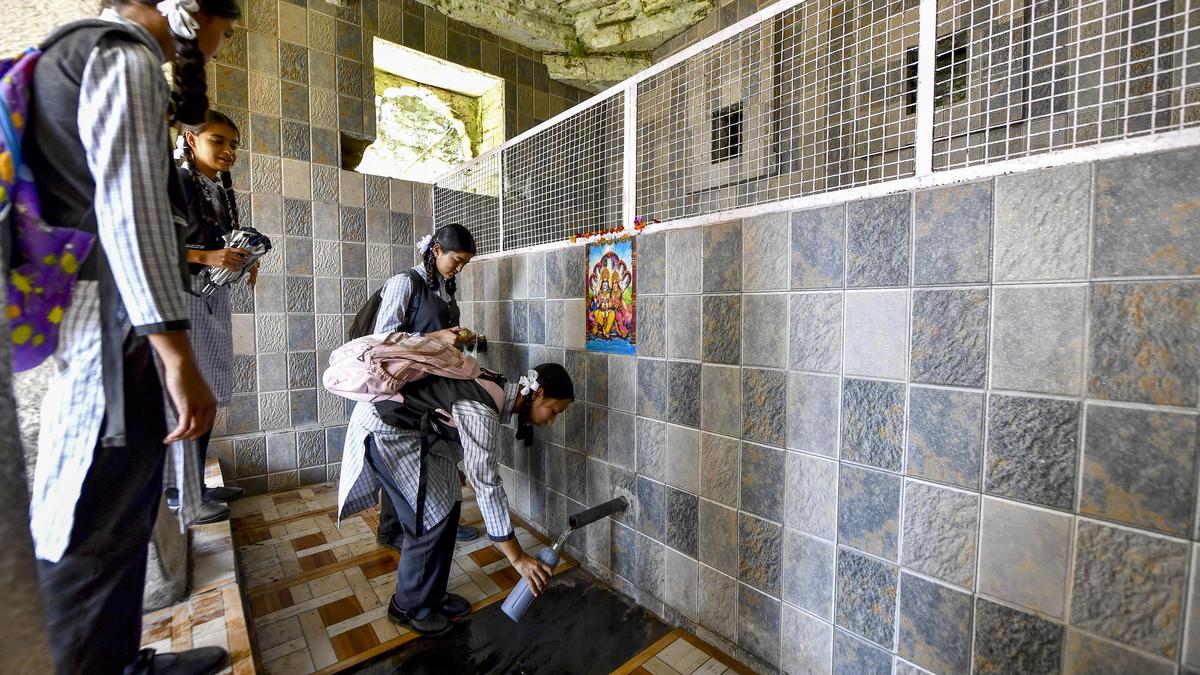
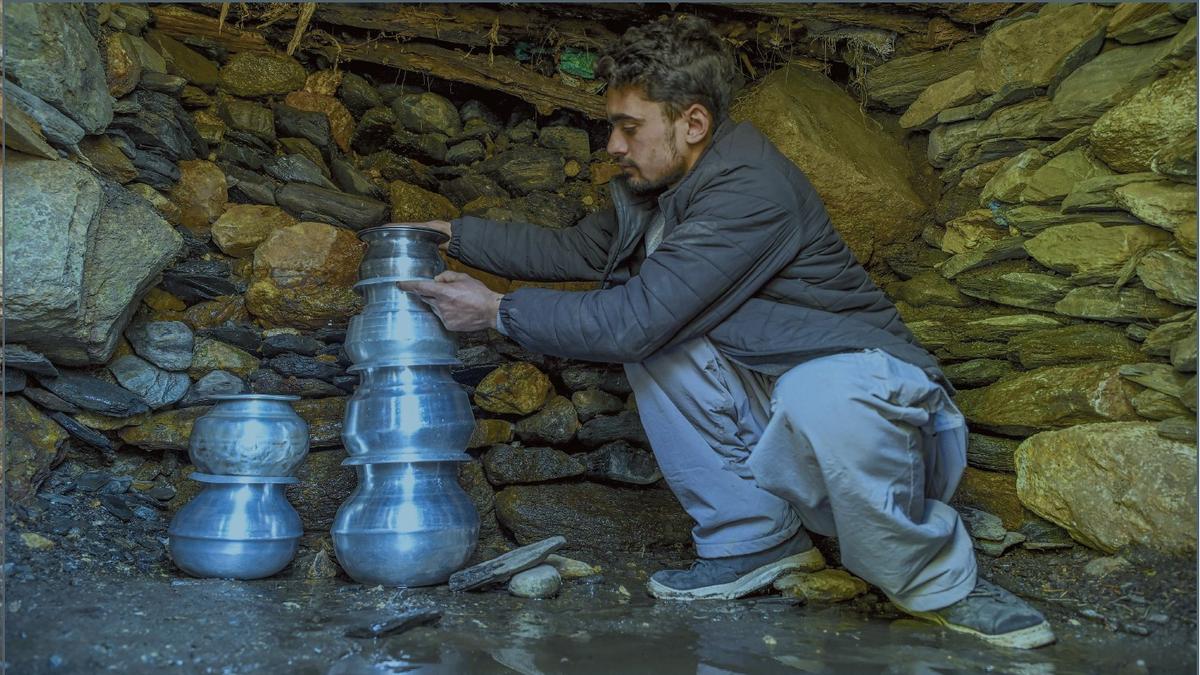
Naulas, or water temples, represent a remarkable union of nature and human ingenuity — places where one could drink clean water or even take a royal bath, as at the Ranidhara naula. These traditional stone-built water springs of the Kumaon region in Uttarakhand have long been an integral part of Himalayan life. They are not only historically significant but are also sites of water worship. In Kumaon culture, a naula is treated with the sanctity of a temple and these ancient stone-lined water structures serve as the primary lifeline for drinking water, especially where modern piped infrastructure faces geographical challenges. Today, however, many naulas and dharas, the natural springs where water emerges from the hillsides, are drying up, lying abandoned, or growing polluted — signs of a deepening environmental crisis across the State. Declining groundwater recharge has caused these springs to weaken, and many of these groundwater aquifers, tucked away inside village lanes or forest patches, have been neglected. Frequent forest fires compound the problem, destroying vegetation and drying out the soil. Climate change has …

The Hindu In Frames on the annual Zool festival in South Kashmir by Imran Nisar

The Hindu In Frames on the annual Zool festival in South Kashmir by Imran Nisar

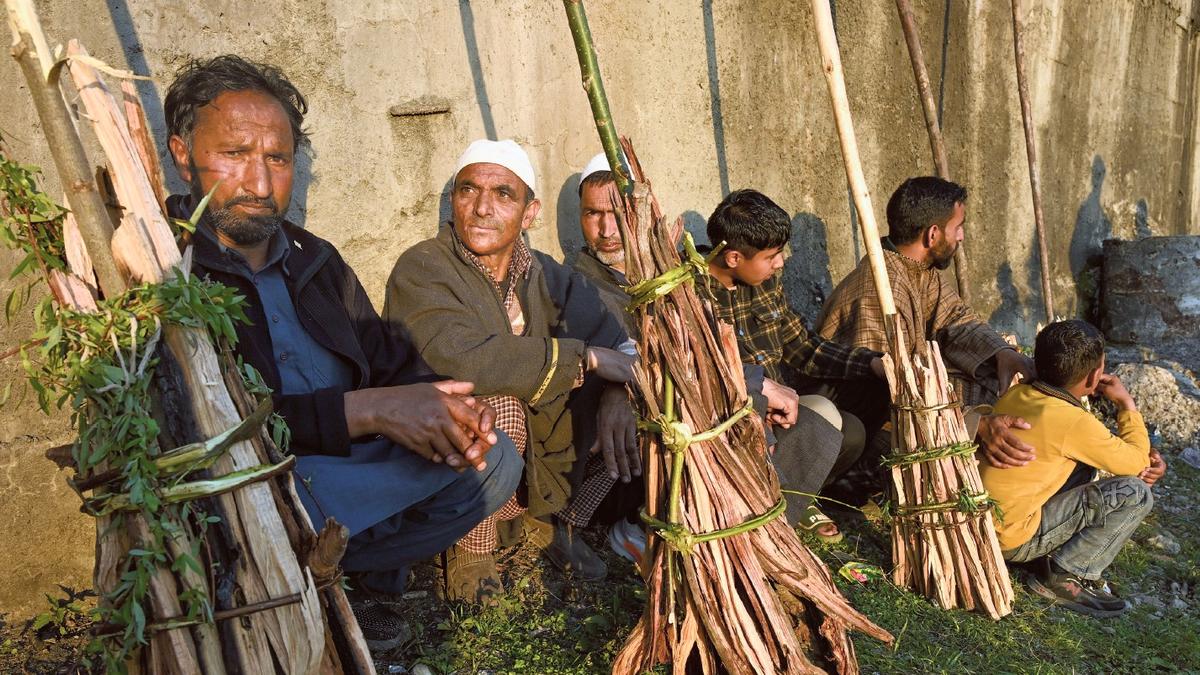
The Zool festival of Aishmuqam shrine of Baba Zain-ud-Din Wali is a procession of faith and light. Also known as the illumination or torch festival, the Zool is a centuries-old tradition held at the shrine in Anantnag district of southern Kashmir. At this shrine, located on a hillock overlooking the road to Pahalgam, the famous tourist destination in Kashmir, the annual fire procession symbolises the victory of light over darkness while commemorating the 15th-century Sufi saint Baba Zain-ud-Din Wali, a primary disciple of the renowned mystic Sheikh Noor-ud-Din Wali, also known as Nund Rishi. This year, the festival was celebrated on April 2. According to local legend, the saint meditated in a cave at Aishmuqam that was once infested with snakes or, in some versions, terrorised by a demon. His spiritual power eventually cleared the cave, and local people celebrated this “victory of good over evil” by lighting torches. The procession involves thousands of devotees carrying wooden torches, locally called mashals or phrov, crafted from special wood gathered from nearby forests. Before the festival, local …

News in Frames: Licensed to bloom

News in Frames: Licensed to bloom

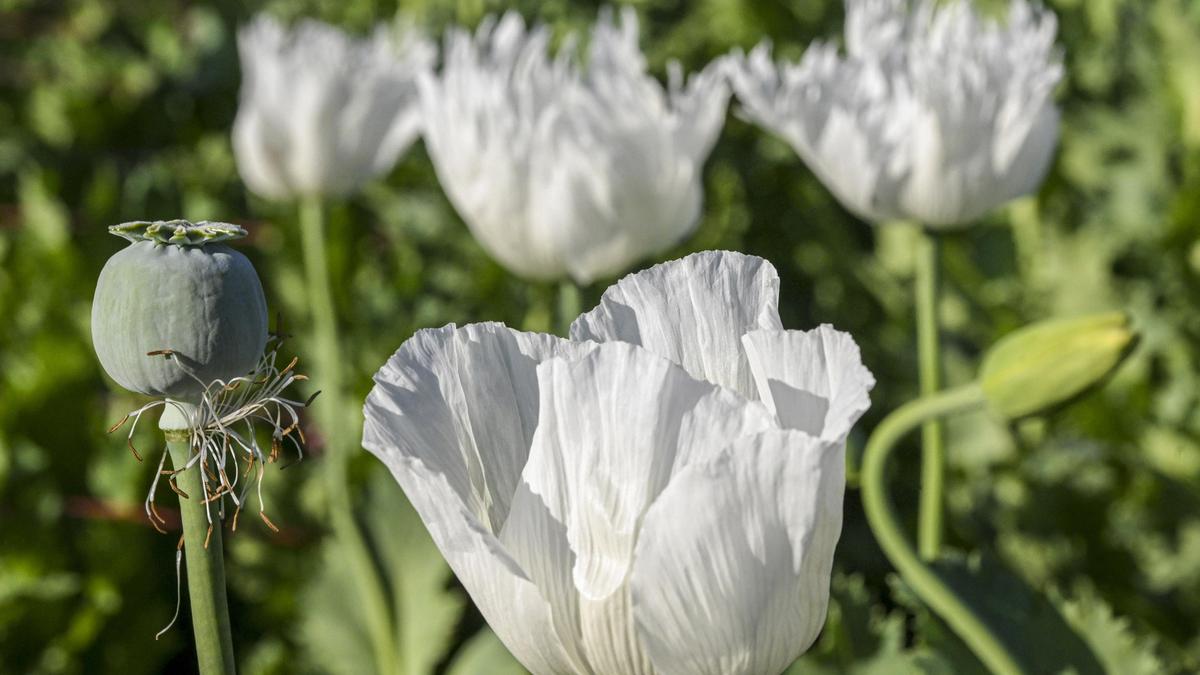
There are only a few regions in India where legal cultivation of opium poppy is permitted. Thousands of farming families in Madhya Pradesh’s Malwa and Rajasthan’s Mewar region sow the crop in small land plots under the licences issued by the Union government. The farming usually starts as the Deepavali festivities draw to a close. The region produces nearly 85% of India’s legally grown opium. The districts include Mandsaur, Neemuch and parts of Ratlam in Madhya Pradesh and Pratapgarh, Chittorgarh, and parts of Kota and Jhalawar districts in Rajasthan. The cultivation practice in the region has been passed down through generations, with some families growing it for more than 200 years. The opium, locally called afeem, is tied to family traditions and prestige alike with a popular saying — afeem ka patta ladke se badhkar hai(opium licence is bigger than a son). Farmers say that the licence also helps with the marriage prospects of their children. The farming requires skilled labour, nurturing of plants, and protection of the field and the yield. Across villages in …

In Frames: A photo feature on Hoysala-era monuments in Karnataka

In Frames: A photo feature on Hoysala-era monuments in Karnataka

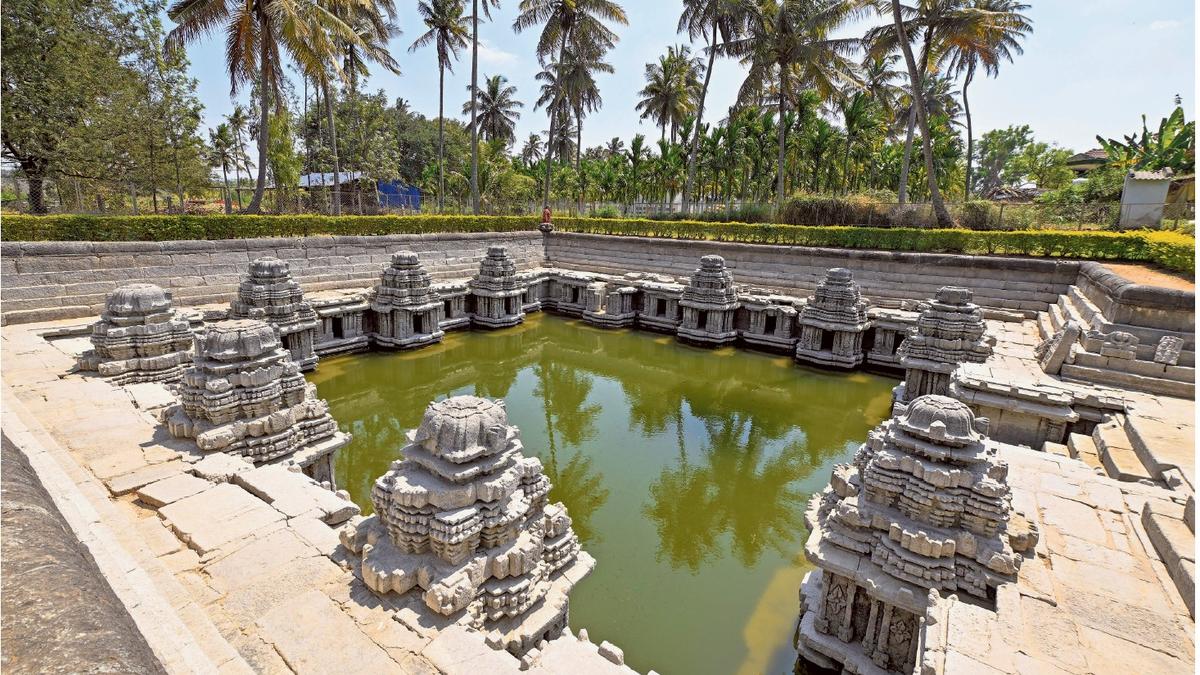
Across the quiet farmlands of Hassan, Mandya and Mysuru stand some of Karnataka’s most remarkable yet overlooked Hoysala-era monuments — temples and basadis (shrines) that once formed the spiritual fabric of a thriving medieval kingdom. Built between the 11th and 13th centuries, these shrines reveal the dynasty’s signature blend of devotion and sculptural mastery, extending far beyond the celebrated sites of Belur, Halebidu and Somanathapura. Carved from the soft, malleable soapstone favoured by Hoysala artisans, the structures rest on star-shaped platforms and feature sanctums arranged in ekakuta, dvikuta and trikuta formations. Their walls unfold like stone tapestries: celestial dancers, finely turned pillars and friezes dense with epic narratives. Once a vibrant Hoysala outpost, Koravangala is home to three temples built by three brothers. The Nageshwara and Govindeshwara temples (1160 CE) showcase an early phase of Hoysala workmanship. A decade later came the village’s architectural peak — the Bucheshwara temple (1173 CE), raised by Buchi in honour of Veera Ballala II. Today, Bucheshwara stands restored, while the older shrines linger in graceful decay. Long before it …

Baba Siddique murder case: 27 accused plead not guilty, MCOCA court frames charges

Baba Siddique murder case: 27 accused plead not guilty, MCOCA court frames charges

Mumbai, A special court here on Tuesday framed charges under MCOCA and BNS against 27 accused in the 2024 murder case of former Maharashtra minister and NCP politician Baba Siddique after they pleaded not guilty. Baba Siddique murder case: 27 accused plead not guilty, MCOCA court frames charges Framing of charges is the first stage in a criminal trial under the Bharatiya Nagarik Suraksha Sanhita , where the court formalises accusations based on evidence. The court, in the previous hearing, noted that there is sufficient material to proceed against all the accused and directed them to remain present before it on Tuesday. However, only 15 accused, lodged in Kalyan and Arthur Road jails, remained present. The other accused lodged in a jail in Thane were produced through video conferencing as they could not be brought to the court in South Mumbai due to logistical issues. Special Judge Satyanarayan R. Navander recorded the pleas of all the accused, who all pleaded not guilty and preferred to stand trial. Siddique was shot dead by three assailants outside …

SC frames 4 questions of law on pleas challenging UGC regulations| India News

SC frames 4 questions of law on pleas challenging UGC regulations| India News

New Delhi, The Supreme Court on Thursday said petitions challenging the University Grants Commission Regulations, 2026, raise substantial questions of law and framed four such questions for consideration. SC frames 4 questions of law on pleas challenging UGC regulations The court stayed the recent UGC equity regulations on preventing caste-based discrimination on campuses, saying the framework is “prima facie vague”, can have “very sweeping consequences” and may end up dividing the society with a “dangerous impact”. A bench of Chief Justice Surya Kant and Justice Joymalya Baghchi observed that the regulations suffer from “certain ambiguities” and that “the possibility of their misuse cannot be ruled out”. The top court said it was of the prima facie view that the following four substantial questions of law arise for consideration and would require a detailed examination: Whether the incorporation of clause 3 in the impugned regulations, defining “caste-based discrimination”, bears a reasonable and rational nexus to subserve the object and purpose of the 2026 UGC regulations, particularly in light of the fact that no distinct or special …

In Frames: Grounded in tradition, Dudran, a Kashmiri village endures

In Frames: Grounded in tradition, Dudran, a Kashmiri village endures

Dudran is a quintessential hilly village located in the Uri area near the Line of Control in the Baramulla district of northern Kashmir. Situated about 100 km from the winter capital, Srinagar, the village is shaped by nature, tradition, and resilience. Surrounded by steep slopes, dense forests, and flowing streams, Dudran stands as a quiet settlement connected to the land it rests upon. Its remote location along the border adds both beauty and challenge to everyday life. Traditional life in Dudran remains simple and community-centred. Villagers depend largely on agriculture and livestock for their livelihood. Terraced fields carved into the mountainsides are used to grow pulses, corn, and, in some cases, seasonal vegetables. The residents also focus on dairy farming, with almost every household owning cattle for milk production. Fresh milk, butter, curd, and ghee are not only daily staples but also a source of income for many families. Refrigeration in Dudran relies mostly on traditional and natural methods. In the absence of widespread modern appliances, villagers preserve food through drying, smoking, and storing it …