Jharia coal fires may burn hotter, emit more greenhouse gases than thought
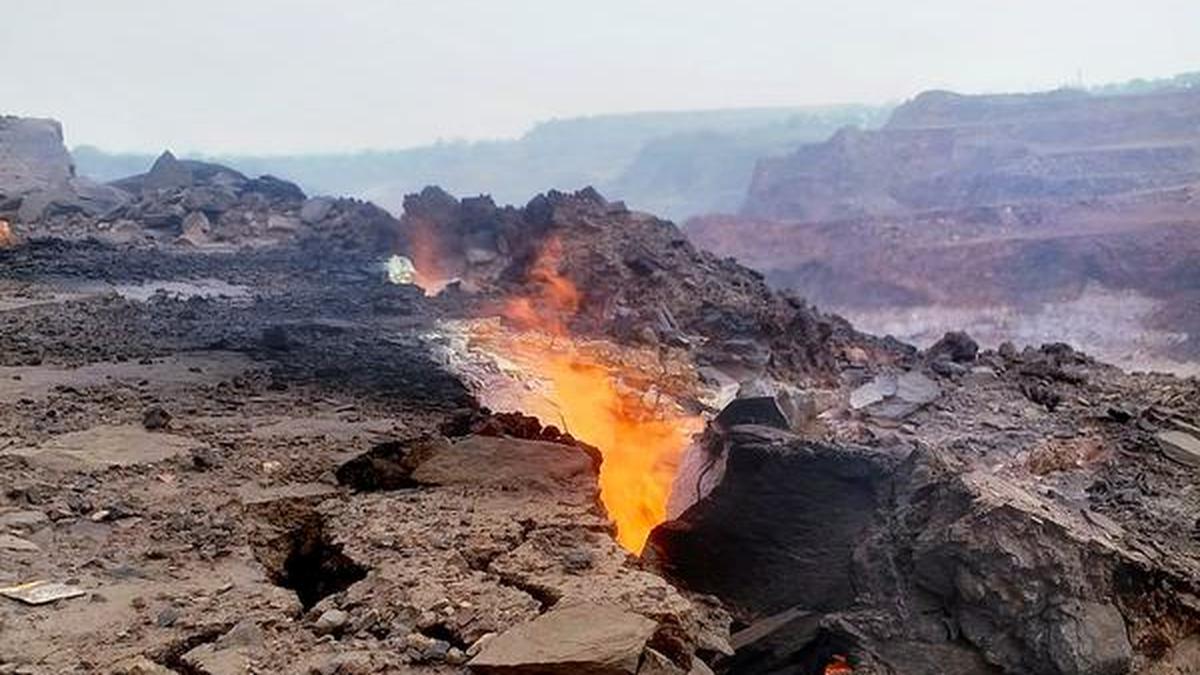
An underground fire burning in Jharia, Jharkhand, August 2024. | Photo Credit: Amit Bhelari/The Hindu Fires have burnt beneath the Jharia coal fields in Jharkhand for decades now, releasing smoke and gases through cracks in the ground. And according to a new study, parts of this underground fire system may burn hotter and release more greenhouse gases than previously estimated. Researchers from the U.K. and India, including the CSIR-Central Institute of Mining and Fuel Research (CIMFR), reported in a May 18 paper in Communications Earth & Environment that the collapse structures created when underground fires consume coal seams and destabilise the rock above them can stretch vertically for more than 100 m through the earth, venting hot gases into the air. When mining exposes coal to oxygen, natural oxidation reactions can trigger underground fires that smoulder for decades. Previous estimates suggested fires in the region already emitted copious greenhouse gases, but scientists have struggled to track them accurately because the fires spread irregularly. The new study focused on the Ena, Bastacolla, and Tisera collieries. In …