All posts tagged: low earth orbit

China lands a reusable rocket for the first time: Why this matters for the space race | Explained News

China lands a reusable rocket for the first time: Why this matters for the space race | Explained News

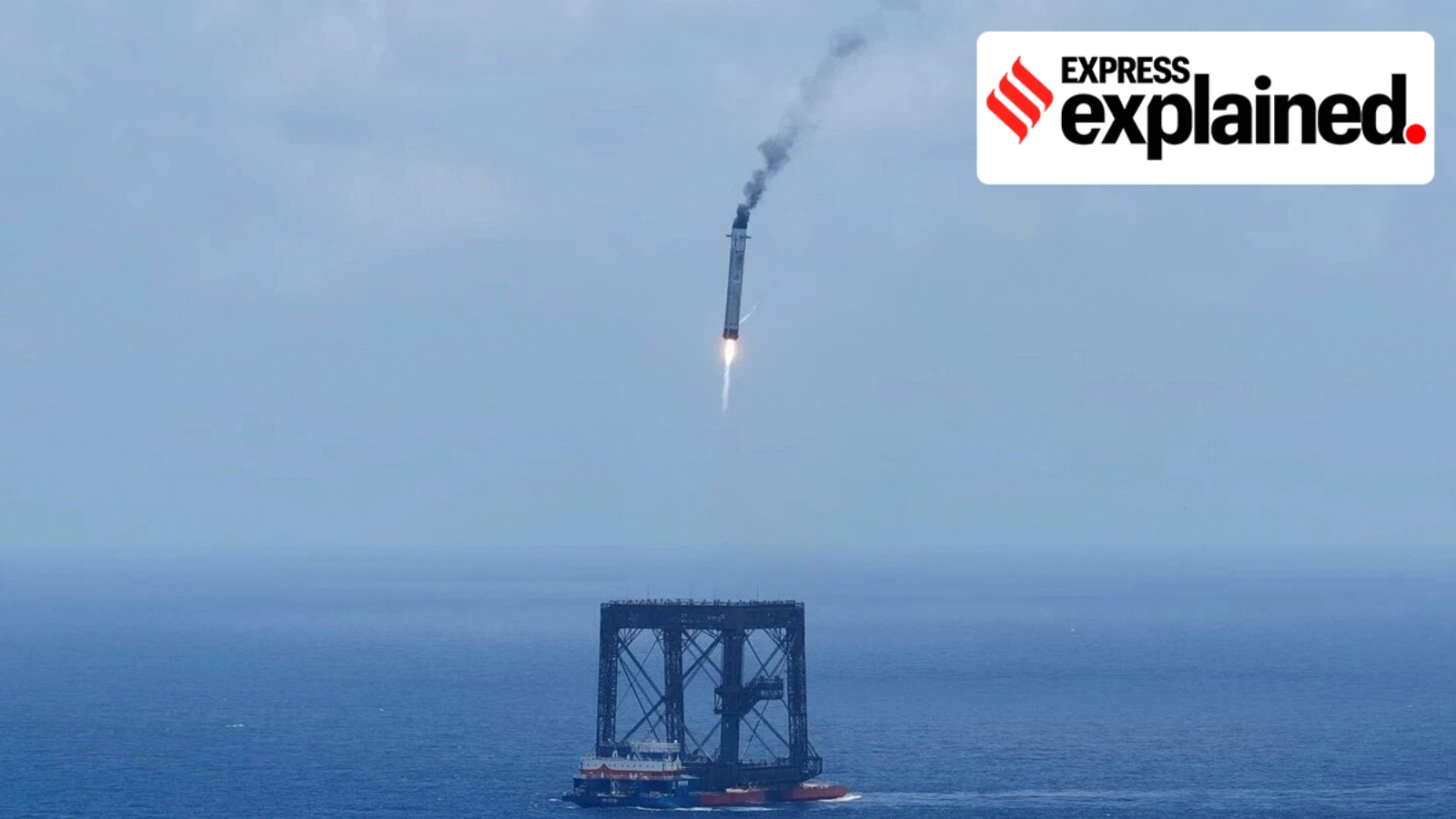
China on Friday successfully landed a reusable rocket for the first time — a milestone for the country’s space programme that will challenge American companies’ dominance in the technology. The Long March 10B rocket — which can carry a payload of up to 16 metric tons to low Earth orbit — lifted off from the Wenchang Commercial Space Launch Site in Hainan, Southern China around noon (local time). Low Earth orbit is a region between 160 km and 2,000 km above the Earth. Six minutes after liftoff, the rocket’s booster — the part that houses the engine and provides the initial thrust — separated from its upper stage and began a controlled descent to a floating platform on the sea. There, it was caught by a net. Before China, only Elon Musk’s SpaceX and Jeff Bezos’s Blue Origin demonstrated the ability to launch and land rockets. So how does China’s technology differ from previous reusable rockets and what strategic implications does this step have? We explain. The mechanics of re-entry  All rockets lift off in …

‘Trailblazer in human spaceflight’: Astronaut Sunita Williams retires from NASA after 27 years of service

‘Trailblazer in human spaceflight’: Astronaut Sunita Williams retires from NASA after 27 years of service

NASA astronaut Suni Williams has officially retired on December 27, 2025, after a career spanning 27 years, a press release from the agency stated. Sunita Williams is known for completing three missions aboard the International Space Station. (AFP) “Suni Williams has been a trailblazer in human spaceflight, shaping the future of exploration through her leadership aboard the space station and paving the way for commercial missions to low Earth orbit,” NASA Administrator Jared Isaacman said. ALSO READ | ‘India is amazing’: Sunita Williams’s reply when asked how it looked from space | Watch “Her work advancing science and technology has laid the foundation for Artemis missions to the Moon and advancing toward Mars, and her extraordinary achievements will continue to inspire generations to dream big and push the boundaries of what’s possible. Congratulations on your well-deserved retirement, and thank you for your service to NASA and our nation,” he added. Record-breaking spaceflight career Williams logged a total of 608 days in space, the second-highest cumulative time achieved by a NASA astronaut. She is also tied …

SpaceX Launches 23 Starlink Satellites on Falcon 9 Rocket From Cape Canaveral

SpaceX Launches 23 Starlink Satellites on Falcon 9 Rocket From Cape Canaveral

SpaceX has successfully sent another batch of Starlink satellites into space on Monday, marking its second launch of the day. At 10:34 p.m. EDT (0234 GMT on April 29), a brand-new Falcon 9 rocket carried 23 Starlink broadband satellites, including 13 equipped with direct-to-cell capability, from NASA’s Kennedy Space Centre in Florida. Earlier today, a separate Falcon 9 launched 27 Starlink satellites from Vandenberg Space Force Base in California. The rapid double mission highlights SpaceX’s pace in expanding its Internet constellation, which already stands as the largest of its kind ever deployed. Brand-New Falcon 9 Lands After Launching 23 Starlink Satellites to Orbit According to a Space.com report, this launch was significant as it was the first flight for this specific Falcon 9 rocket’s first stage. SpaceX’s boosters see multiple missions, with one record-setting booster achieving 27 flights to date. Despite being brand new, the first stage of the Falcon 9 made a flawless landing approximately eight minutes after launch, gently landing on the “A Shortfall of Gravitas” droneship stationed in the Atlantic Ocean. Meanwhile, the …

Amazon Launches 27 Satellites to Start Building Project Kuiper Internet Constellation

Amazon Launches 27 Satellites to Start Building Project Kuiper Internet Constellation

A United Launch Alliance (ULA) Atlas V rocket has been launched carrying 27 of Amazon’s Project Kuiper broadband spacecraft. The launch took place from Florida’s Cape Canaveral Space Force Station on April 28, 2025, at 7:01 PM EDT (4:31 AM IST). It is reported to be the first of more than 80 launches, which are planned to deploy a megaconstellation for Project Kuiper. The ultimate end goal for Amazon is to provide end-to-end network service, which means routing data both to and from the satellites and from the internet to the satellites and from the satellites to a customer’s terminal antenna. The effort is expected to start covering customers later this year. The remaining 80-plus launches will be performed by Atlas V and its successor, ULA’s new Vulcan Centaur rocket. Amazon’s Upgraded Project Kuiper Satellites Aim for Orbit to Rival Starlink Expansion According to a Space.com report, the 27 satellites will be initially placed at an altitude of 280 miles (450 kilometres) and will later manoeuvre themselves to their operational height of 392 miles (630 kilometres). Interestingly, reports …

SpaceX Successfully Deploys 21 Starlink Satellites, Loses Falcon 9 Booster

SpaceX Successfully Deploys 21 Starlink Satellites, Loses Falcon 9 Booster

A Falcon 9 rocket carrying 21 Starlink satellites was launched by SpaceX from Cape Canaveral Space Force Station on March 2. Liftoff took place at 9:24 p.m. ET on March 3, with the mission including 13 satellites equipped with direct-to-cell capabilities. The first stage of the rocket successfully landed on the droneship “Just Read the Instructions” stationed approximately 400 kilometres off Florida’s coast. However, the booster, designated B1086, was lost shortly after landing due to damage sustained by one of its landing legs. Booster Loss After Landing According to SpaceX, a fire at the aft end of the booster resulted in structural damage, leading to its collapse. The incident occurred after the rocket had completed its return to Earth and made contact with the landing platform. Data from this failure will be examined to improve the reliability of future Falcon 9 missions, as stated in SpaceX’s official mission description. Mission Details and Starlink Expansion The deployment of the 21 satellites took place approximately 65 minutes after launch, marking another step in the expansion of SpaceX’s …

ISRO successfully conducts crucial test for semi-cryogenic engines required for ‘heavy’ space launches in future | Bangalore News

ISRO successfully conducts crucial test for semi-cryogenic engines required for ‘heavy’ space launches in future | Bangalore News

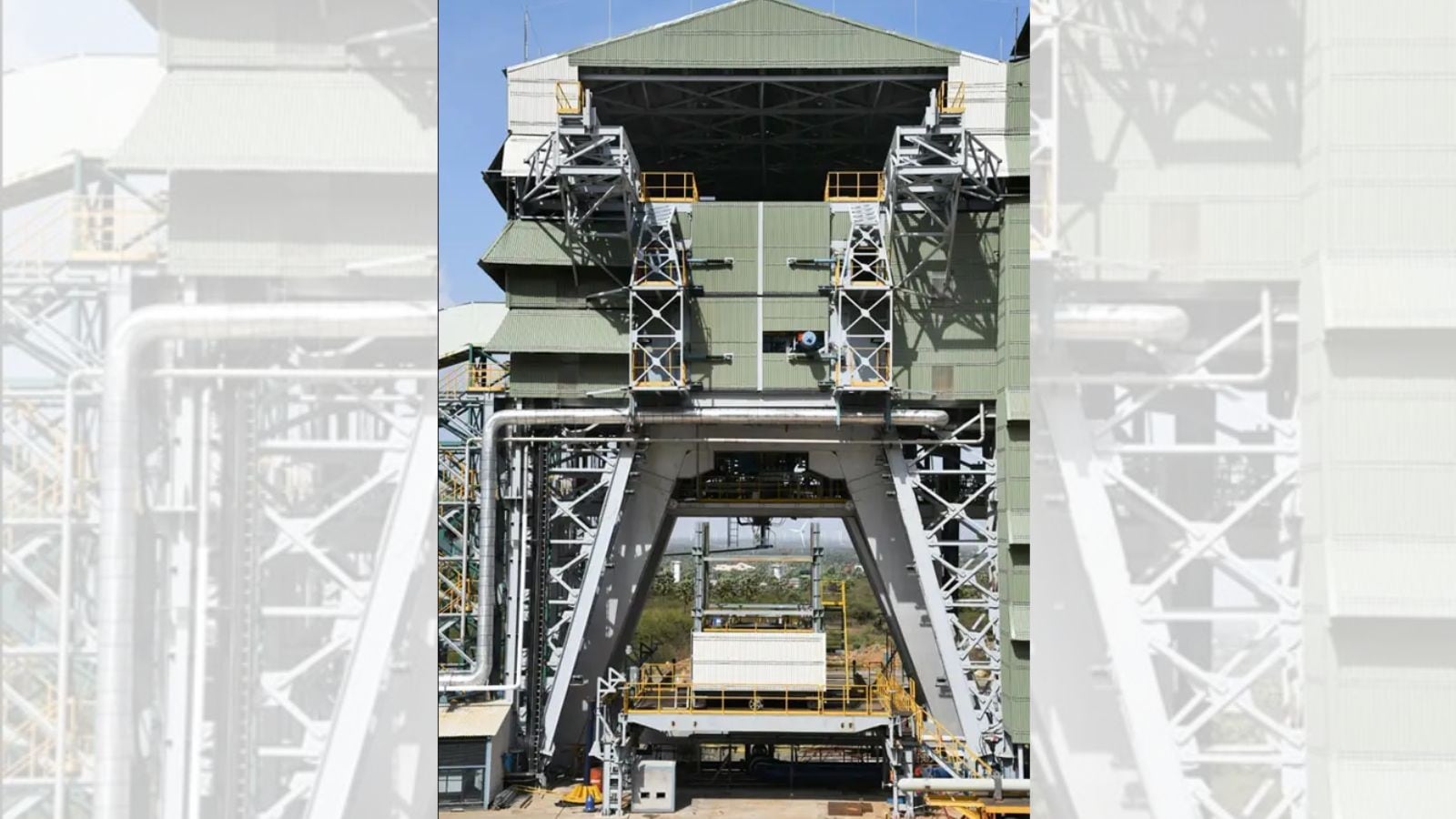
The Indian Space Research Organisation (ISRO) recently successfully conducted the hot test on a semi-cryogenic engine (SE2000), going a step closer to finalising the crucial cryogenic stage where powering the booster stages of launch vehicles is realised. Scientifically, this test is known as the Power Head Test Article (PHTA) and the first hardware test for the development of semi-cryo engines. “The Power Head Test Article, without the thrust chamber, has been successfully realised. It is about 3 metres in height. This is one of the propulsion systems we have been developing and it may take about two years to succeed,” said ISRO chairman V Narayanan during the recently held Physical Research Laboratory (PRL)-organised Amrut Vykhayaan (PKAV). PHTA is a significant precursor test done to validate the integrated performance of some of the engine’s critical subsystems, such as the gas generator, turbo pumps, pre-burner and control components. The test involves performing a hot-firing for an extremely brief duration of not more than 4.5 seconds. Story continues below this ad Earlier, in July 2023, a similar test …

SpaceX’s Dragon to Reboost ISS for First Time, Paving Way for Future Deorbit Mission

SpaceX’s Dragon to Reboost ISS for First Time, Paving Way for Future Deorbit Mission

SpaceX is set to carry out a first-of-its-kind manoeuvre on November 8, with its Dragon cargo capsule performing a “reboost” of the International Space Station (ISS). The 12.5-minute engine burn will lift the ISS to a higher altitude, addressing the gradual orbital decay caused by Earth’s atmospheric drag. This task has traditionally been managed by Russian Soyuz vehicles, but the reboost by a SpaceX capsule signifies a shift in ISS maintenance responsibilities. Reboost to Gather Data for Future Operations As per a report by Space.com, the data from this reboost will support the design of a larger SpaceX Dragon vehicle, intended to deorbit the ISS when its mission ends, likely in the early 2030s. According to Jared Metter, SpaceX’s Director of Flight Reliability, the results from this reboost test will inform future developments for a U.S.-led deorbit vehicle, which will be necessary as the ISS ages and new commercial stations become operational. U.S.-Russia Collaboration on ISS Remains, Despite Tensions While Russian Soyuz craft have traditionally handled ISS altitude adjustments, shifting political dynamics have affected international …

ISRO’s Aditya L1 going to Sun? Why solar flyby mission from Earth is so tough | Latest News India

The Indian Space Research Organisation (ISRO) is scheduled to carry out a key operation to switch on Aditya L1’s engine on Saturday, aiming to successfully position the solar probe into its intended orbit. Aditya L1 Unlike the Chandrayaan 3 mission, where the Vikram lander touched down on the lunar south pole, Aditya L1 will not land on the Sun. Instead, it will revolve at the first Lagrange Point in the Earth-Sun system. This point is located 15 lakh km away from Earth. Remarkably, the 15 lakh km distance represents only 1 per cent of the total 15 crore km separation between Earth and the Sun. Wrap up the year gone by & gear up for 2024 with HT! Click here Follow here: Aditya L1 live updates Has any probe ‘touched’ the Sun? In December 2021, the National Aeronautics and Space Administration or NASA’s Parker Solar Probe achieved the unprecedented feat of flying by around the Sun. This marked the first time in history that a spacecraft using other celestial bodies navigated through the Sun’s upper …