All posts tagged: marine biology

Cuttlefish May Communicate Using Tentacle Waves, Study Finds

Cuttlefish May Communicate Using Tentacle Waves, Study Finds

Cuttlefish is known for displaying quite a few number of methods to communicate. The list containing the methods like changing colours and body patterns, releasing ink for courtship displays, males using tentacle motions to show aggression towards other males makes their communication system complex. A new research by Sophie Cohen-Bodénès and Peter Neri, neuroscientists at École Normale Supérieure, in France suggests the possibility of cuttlefish using their tentacles to wave and signal at each other in order to make interaction. Studying the waving patterns According to the study, posted on the bioRxiv preprint server, the researchers studied the common cuttlefish (Sepia officinalis) and the dwarf cuttlefish (Sepia bandensis), observing four consistent arm wave gestures: “up,” “side,” “roll,” and “crown.” When videos of these gestures were shown, cuttlefish often responded by mimicking them—especially when the footage was upright—indicating directional recognition. Additionally, the movements produced vibrational waves in the water. Using a hydrophone, the team recorded these vibrations and found that cuttlefish responded only to original, unaltered versions. This suggests that the sequence of vibrations carries meaning, …
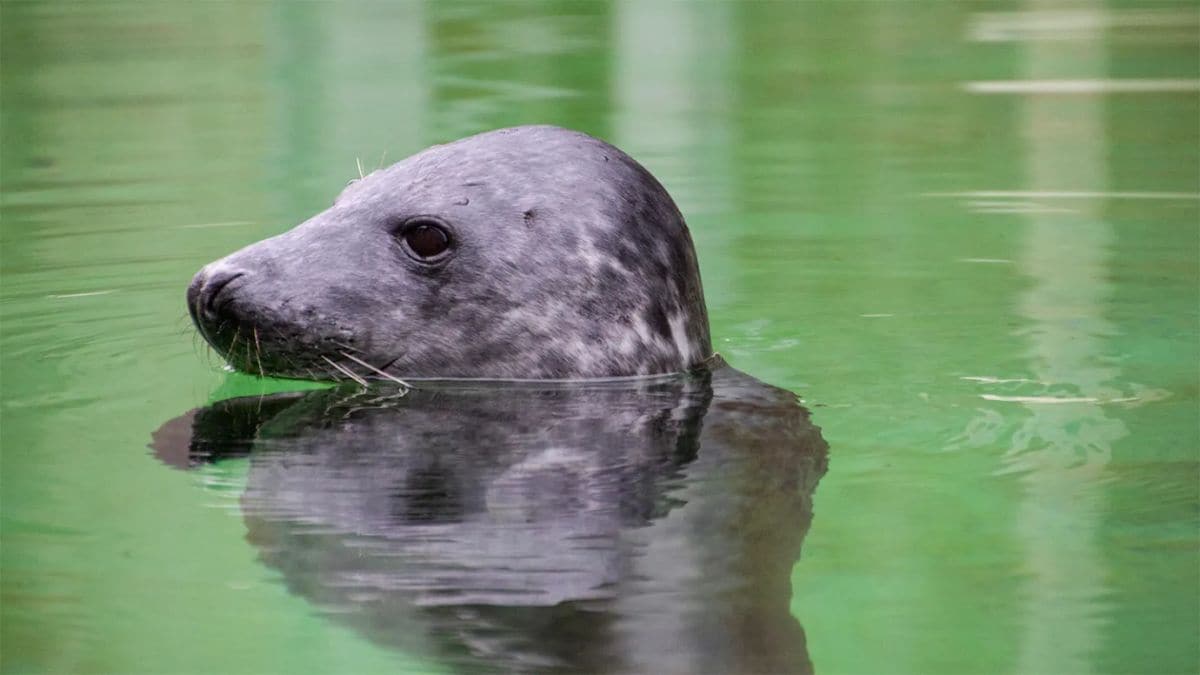
Study Finds grey Seals Can Track Blood Oxygen to Prevent Drowning

Study Finds grey Seals Can Track Blood Oxygen to Prevent Drowning

Marine mammals rely on oxygen to survive, yet some species stay underwater for long periods without breathing. Scientists at the University of St Andrews wanted to understand how gray seals manage their time underwater without relying on carbon dioxide buildup as a signal. Six adult gray seals were placed in a controlled environment to observe their diving patterns. The seals were only allowed to surface at a designated chamber, where researchers adjusted oxygen and carbon dioxide levels to test their responses. Research Confirms Oxygen as the Primary Trigger According to the study published in Science, different air compositions were tested to measure their effect on dive times. The air in the breathing chamber was adjusted across four conditions: normal air, increased oxygen, reduced oxygen, and heightened carbon dioxide levels. When oxygen levels were increased, seals stayed underwater for longer. When oxygen was reduced, they surfaced sooner. Carbon dioxide changes did not alter their behavior, suggesting that oxygen, not carbon dioxide, determines when they come up for air. Unique Adaptation in Marine Mammals Researchers says that …

Solitary Dolphin in Baltic Sea Talks to Himself, Researchers Think it’s a Sign of Loneliness

Solitary Dolphin in Baltic Sea Talks to Himself, Researchers Think it’s a Sign of Loneliness

A bottlenose dolphin residing alone in the Baltic Sea has been documented producing thousands of vocalisations, potentially as a result of loneliness. Known locally as Delle, this dolphin was first noticed in the Svendborgsund channel near Funen Island, Denmark, in 2019. Bottlenose dolphins typically thrive in social pods, but no other dolphins have been seen in the area. The University of Southern Denmark deployed underwater recorders to monitor the impact of Delle’s presence on local harbour porpoises. Unexpectedly, 10,833 sounds were recorded over 69 days between December 8, 2022, and February 14, 2023. Dr Olga Filatova, cetacean biologist and lead researcher, reported hearing an extensive range of sounds, including whistles and tonal noises. These sounds are often associated with social interactions among dolphins, yet Delle was entirely alone. Unpacking the Recordings Among the captured vocalisations were 2,291 whistles and 2,288 burst-pulses—clicks often linked to aggression or excitement. Delle also produced three distinctive whistles resembling “signature whistles”, unique sounds used by dolphins as individual identifiers. These findings, detailed in the journal Bioacoustics on October 31, led …

Panda-Coloured Amphipod Confirmed as New Species, Discovered Along Japan’s Coastline

Panda-Coloured Amphipod Confirmed as New Species, Discovered Along Japan’s Coastline

Researchers in Japan have officially recognised a new amphipod species, Melita panda, which features black-and-white coloring resembling a panda. Discovered in Japan’s coastal waters, the species has now been classified through detailed morphological and genetic research by Hiroshima University’s team, as published in ZooKeys. The identification of Melita panda underlines the need for continued taxonomic studies to support biodiversity conservation efforts. New Discovery in Coastal Biodiversity Originally found in Wakayama Prefecture during the 1990s, Melita panda was re-evaluated as part of a broader study on amphipods, a group of small, shrimp-like crustaceans found worldwide. Professor Ko Tomikawa and colleagues from Hiroshima University note that many marine species in Japan remain unclassified, hindering conservation efforts. Their study highlighted that species diversity in Japan’s coastal areas requires continued investigation to understand the full spectrum of local biodiversity. Identifying Melita panda: Genetic and Morphological Analysis Using DNA sequencing and morphological analysis, researchers identified Melita panda’s distinct black-and-white pattern along with unique physical traits. These include forward-positioned gnathopods (claws) and distinct bristle-like setae, which distinguish it from its closest …

Researchers Create Innovative 3D Maps to Understand Octopus Arm Systems

Researchers Create Innovative 3D Maps to Understand Octopus Arm Systems

Researchers at San Francisco State University have taken a significant step in understanding the complexity of octopus arms by creating three-dimensional maps that detail the intricate nervous system within the arms. Unlike humans, whose brains control all motor functions, octopus arms seem to function semi-independently, almost as if each arm possesses its own “spinal cord.” This autonomy helps these creatures to perform complicated tasks. These tasks can range from opening jars and using tools, all while the brain has limited direct control over each arm. Advanced Mapping Offers New Insights The research, led by Robyn Crook, Associate Professor and Associate Chair of the SF State Biology Department, addresses a long-standing question in marine biology: how do octopus arms manage such complex behaviours without constant input from the brain? Using advanced 3D imaging techniques, Gabrielle Winters-Bostwick, a postdoctoral fellow, and Diana Neacsu, a graduate student, have created detailed anatomical and molecular maps that reveal the unique organisation of octopus arms. Winters-Bostwick’s study used molecular tags to highlight different types of neurons, unveiling that the neurons at …