All posts tagged: Nehru

The Original Sin? How the First Amendment Reshaped Indian Democracy

The Original Sin? How the First Amendment Reshaped Indian Democracy

June 18, 2026, will mark 75 years since Rajendra Prasad gave his reluctant assent to the First Amendment — a “seismic shift” in India’s constitutional architecture, the aftermath of which the country’s pre-eminent legal scholar Upendra Baxi labelled the “Second Constitution”. Few seemed to have recalled the grim events of 1951, but it was a moment that continues to course through the nation’s body politic, and one that has had profound and deleterious effects on its democracy and constitutional order. On January 26, 1950, the Republic of India, described by the Oxford don Kenneth Wheare as the world’s greatest experiment in democratic government, was inaugurated to great acclaim. Many had considered it an impossibility: Clement Attlee had even cautioned Jawaharlal Nehru against it, calling republicanism of the kind India was contemplating an alien import from Europe. At the heart of this transition lay the country’s new constitution, containing what The New York Times approvingly termed “the most detailed document of fundamental rights found anywhere,” widely seen to reflect India turning the page on its colonial …

Sharad Pawar slams Mahajan on Blue Star remarks, defends Nehru-Gandhi legacy

Sharad Pawar slams Mahajan on Blue Star remarks, defends Nehru-Gandhi legacy

MUMBAI: NCP (SP) president Sharad Pawar on Wednesday criticised Maharashtra water resources minister Girish Mahajan for his remarks against former prime minister Indira Gandhi and Operation Blue Star. He said speeches like Mahajan’s could tarnish the image of the country. Mumbai, India. June 10, 2026 – Sharad Pawar, chief of the National Congress Party (NCP/SP), addressed party members at the YB Chavan Centre in South Mumbai during the party’s 27th foundation day anniversary. The event marked the party’s foundation day, and Jayawant Patil, Shashikant Shinde, Supriya Sule, Rohit Pawar and other leaders were also present. Mumbai, India. June 10, 2026. (Photo by Raju Shinde/HT Photo) (Raju Shinde) Pawar also defended the Nehru-Gandhi family while responding to remarks made by Mahajan, who had described Operation Blue Star as a “black day”. Mahajan also referred to those killed during the military action as “martyrs” and criticised then prime minister Indira Gandhi, who had ordered military action against militants holed up in the Golden temple in Amritsar. He made these remarks at an event to commemorate the anniversary …

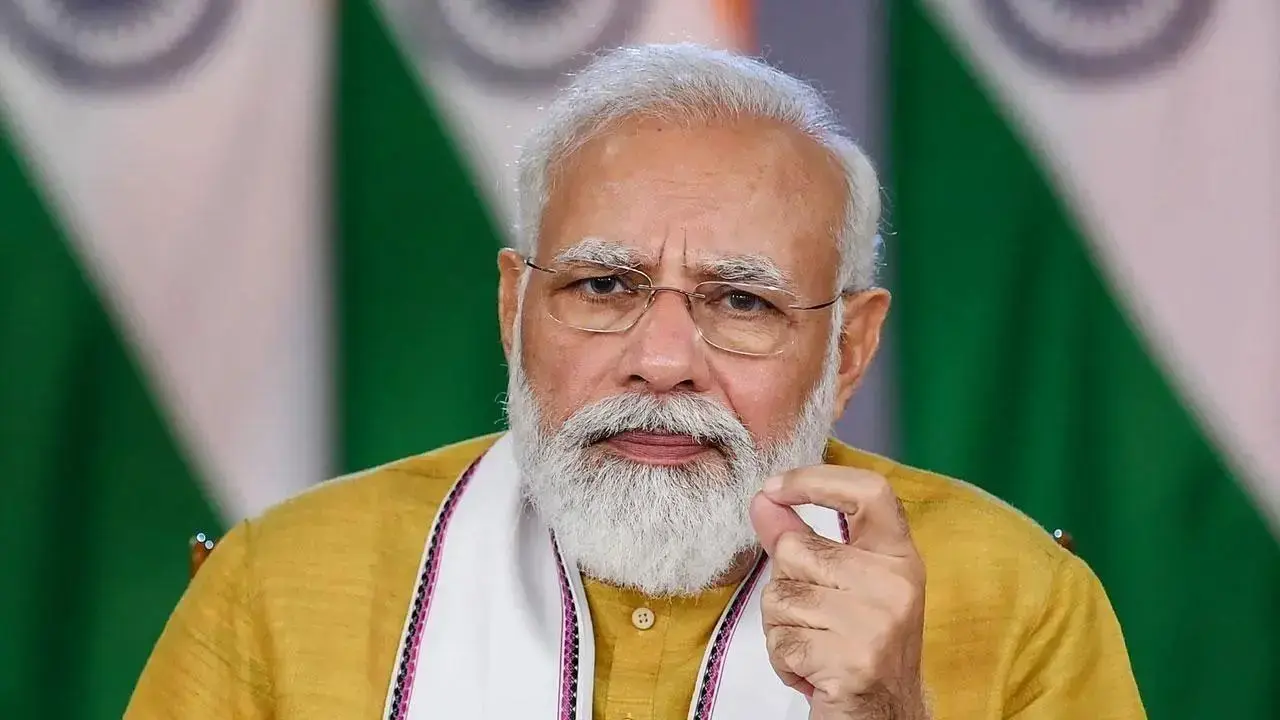
PM Modi becomes India`s longest-serving elected PM; surpasses Jawaharlal Nehru

PM Modi becomes India`s longest-serving elected PM; surpasses Jawaharlal Nehru

Prime Minister Narendra Modi on Wednesday became India`s longest-serving elected Prime Minister, surpassing the record previously held by India`s first Prime Minister, Jawaharlal Nehru. With 4,399 days in office as an elected Prime Minister, PM Modi overtook Nehru`s tenure calculated from 1952 onwards, when the country`s first general elections were held and a democratically elected government took charge. Modi surpasses Nehru`s post-election tenure The comparison excludes Nehru`s period as head of the interim government between 1947 and 1952, before India conducted its first general elections. Based on tenure as an elected Prime Minister, PM Modi has now served longer than any other leader in the country`s history. The milestone comes nearly 12 years after Modi first assumed office in May 2014. Since then, he has led the Bharatiya Janata Party (BJP)-led National Democratic Alliance (NDA) to consecutive victories in the 2019 and 2024 Lok Sabha elections, securing a third successive term as Prime Minister. Continuous tenure sets Modi apart Although former Prime Minister Indira Gandhi spent more than 14 years in office overall, her tenure …

PM Modi to become India’s longest-serving elected PM on June 10, surpass Nehru

PM Modi to become India’s longest-serving elected PM on June 10, surpass Nehru

Prime Minister Narendra Modi is set to become India’s longest continuously serving democratically elected prime minister on June 10, overtaking the record held by independent India’s first prime minister, Jawaharlal Nehru. Prime Minister Narendra Modi waits before the arrival of Myanmar’s President Min Aung Hlaing for a meeting at the Hyderabad House in New Delhi. (AFP) Modi, who first took oath as prime minister on May 26, 2014, will complete 4,399 consecutive days in office on June 10. This will surpass Nehru’s record of 4,398 days, which spanned from May 13, 1952, when he took oath after India’s first general elections, until his death on May 27, 1964. The milestone marks another landmark in Modi’s political career. He had already overtaken former prime minister Indira Gandhi’s longest uninterrupted tenure on July 25, 2025. Gandhi served continuously as prime minister from January 24, 1966, to March 24, 1977 — a period of 4,077 days. The record comes against the backdrop of a dramatically transformed India. When Nehru led the country in its early years after Independence, …

PM Modi pays tribute to Jawaharlal Nehru on death anniversary

PM Modi pays tribute to Jawaharlal Nehru on death anniversary

Prime Minister Narendra Modi on Wednesday paid homage to former Prime Minister Pandit Jawaharlal Nehru on his death anniversary. PM Modi took to social media `X` and said, “Paying homage to former Prime Minister Pandit Jawaharlal Nehru on his death anniversary.” Paying homage to former Prime Minister Pandit Jawaharlal Nehru on his death anniversary. — Narendra Modi (@narendramodi) May 27, 2026 Jawaharlal Nehru was born in Allahabad on November 14, 1889. He received his early education at home with the help of private tutors. At the age of 15, he travelled to England for higher studies. After studying at Harrow, he joined Cambridge University, where he completed his studies in Natural Sciences. Later, he qualified as a barrister from the Inner Temple in London. Nehru returned to India in 1912 and soon became actively involved in politics. Even during his student years, he was deeply interested in movements against foreign rule across the world. He closely followed the Sinn Féin movement in Ireland, which strengthened his commitment to India’s struggle for freedom. In 1912, he …

Javed Habib reveals grandfather cut Mahatma Gandhi’s hair, got a rare gift from Jawaharlal Nehru | Bollywood News

Javed Habib reveals grandfather cut Mahatma Gandhi’s hair, got a rare gift from Jawaharlal Nehru | Bollywood News

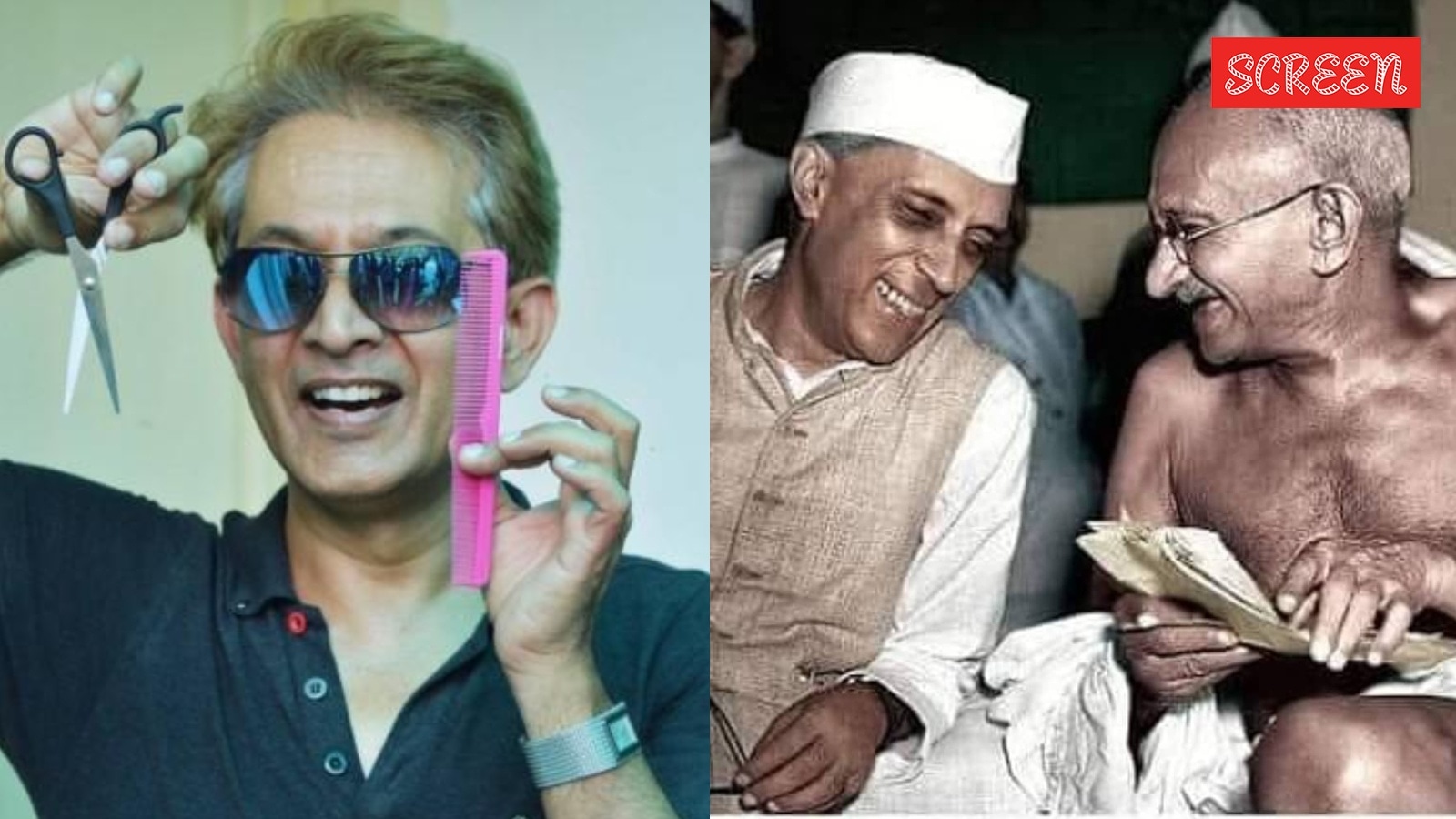
4 min readNew DelhiUpdated: May 4, 2026 12:02 PM IST Hairstylist Javed Habib is known for styling many Bollywood stars, including, Salman Khan, Shah Rukh Khan, Aishwarya Rai, Kareena Kapoor, and Priyanka Chopra Jonas. After opening one of the most successful salon chains, he has become a popular figure in the hair styling industry. Now, in a recent interview, Javed opened up about his grandfather Nazir Ahmed, who was a barber by profession, and his job at the President’s house. He also revealed that his granddad was the barber to Mahatma Gandhi and Jawaharlal Nehru. During a candid chat with The Lallantop, he was asked about his family’s legacy of cutting hair, starting from his grandfather. “My grandfather started working at the Rashtrapati Bhavan in 1935. It was called the governor’s house at that time. He got a job in the night department,” he said. Javed’s grandfather used to cut everyone’s hair at the President’s house. “So whoever came there, used to get their hair cut from him. Sabki gardan mere dada ke saamne jhukti …

India’s First Prime Minister Wasn’t Jawaharlal Nehru, Here’s What Happened In 1915 | India News

India’s First Prime Minister Wasn’t Jawaharlal Nehru, Here’s What Happened In 1915 | India News

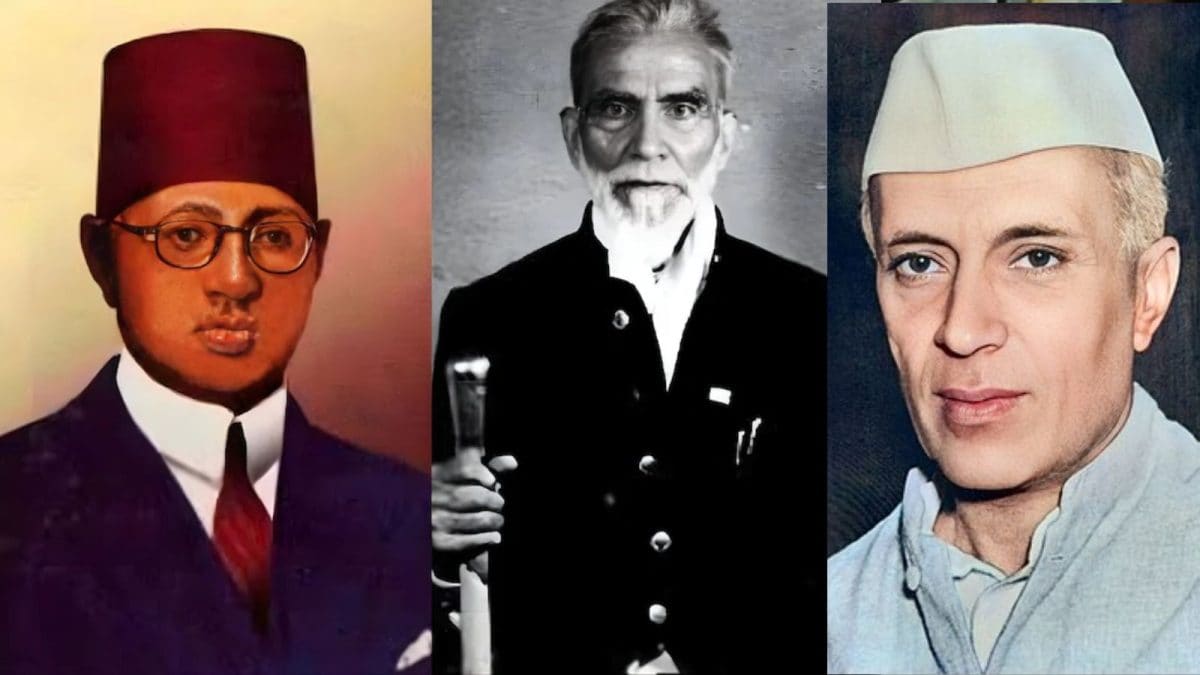
Last Updated:February 23, 2026, 20:49 IST Maulana Barkatullah, a scholar and seasoned political activist, had earlier campaigned for India’s freedom in countries including the United States and Japan Raja Mahendra Pratap Singh led the Provisional Government of India in Kabul in 1915, aided by Maulana Barkatullah and Maulana Ubaidullah Sindhi (News18 Hindi) Long before the midnight tryst with destiny in 1947, when Jawaharlal Nehru took oath as independent India’s first Prime Minister, a bold but largely forgotten experiment in self-rule had already been attempted far from home. In the middle of the First World War, on December 1, 1915, a group of Indian revolutionaries proclaimed the formation of the Provisional Government of India in Kabul, staking a claim to complete independence decades before it was realised. The Kabul Provisional Government, 1915 At the height of World War I, with the British Empire deeply engaged on multiple fronts, revolutionaries sought to internationalise their struggle. In Kabul, they announced what they described as the first “Provisional Government of India” (Hukumat-e-Mukhtara-e-Hind), an exile administration aimed at rallying global …

Delhi: Clashes erupt at Jawaharlal Nehru University after student protest march

Delhi: Clashes erupt at Jawaharlal Nehru University after student protest march

Tensions flared on the campus of Jawaharlal Nehru University (JNU) after student groups aligned with the Left and Right accused each other of unleashing violence during a protest march in early hours of Monday. According to students, the alleged incident took place at around 1.30 am on Monday, where several students got injured in an alleged stone pelting after a scuffle broke out among students. According to the statement, the Jawaharlal Nehru University Students` Union (JNUSU) had called for a “Samta Juloos” towards the East Gate, demanding the resignation of Vice-Chancellor Santishree Dhulipudi Pandit and the revocation of a rustication order. Protesters alleged the administration did not engage with the march and instead allowed Akhil Bharatiya Vidyarthi Parishad (ABVP) members to confront them. However, ABVP rejected the allegations and accused Left-backed organisations of provoking clashes and spreading misinformation about the incident. Left-backed groups, including All India Students` Association (AISA), claimed ABVP activists pelted stones at the JNUSU encampment and attacked “unarmed students,” leaving several injured. According to the purported videos shared by several students caught …

Assam CM Himanta Sarma Takes A Dig At Nehru As He Counters Congress Criticism On Moran ELF | India News

Assam CM Himanta Sarma Takes A Dig At Nehru As He Counters Congress Criticism On Moran ELF | India News

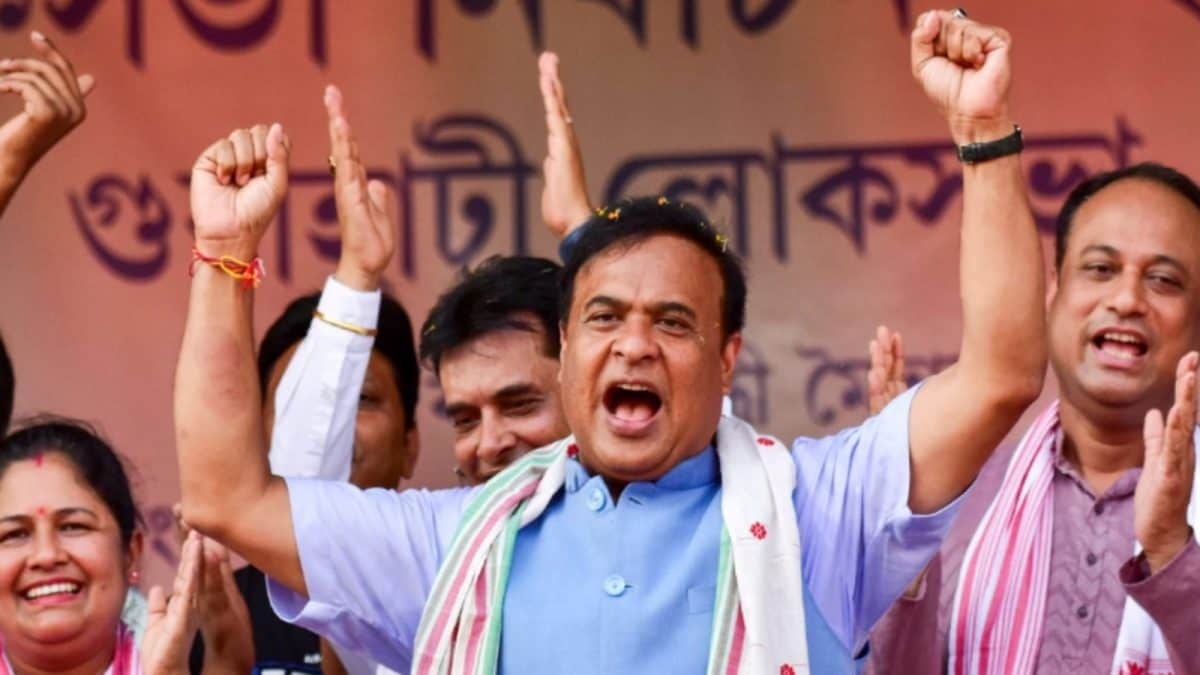
Last Updated:February 15, 2026, 15:08 IST Assam CM Himanta Biswa Sarma: “No PM will say my heart goes for Assam. Instead the new line will be that we will defeat enemies from the soil of Assam.” Assam Chief Minister Himanta Biswa Sarma Assam Chief Minister Himanta Biswa Sarma on Sunday said that the newly inaugurated Emergency Landing Facility (ELF) on the Moran Bypass in Assam’s Dibrugarh will provide strategic security to India’s Northeast and strengthen the region’s defence preparedness, even as he slammed the opposition for mocking the project. The Chief Minister invoked former Prime Minister, the late Jawaharlal Nehru, who said “my heart goes out to the people of Assam” in 1962 when China had attacked Arunachal and advanced to Tezpur town in Assam. The opposition, including Assam Congress President Gaurav Gogoi and Akhil Gogoi, have questioned the ELF project, terming that it has nothing to do with the development of Assam. “We don’t want war but assets are for security which will mainly benefit the public. We have written for more ELFs, so …

Jawaharlal Nehru Requested Her To Sing On Independence Day, Even Mahatma Gandhi Heard Her Bhajans

Jawaharlal Nehru Requested Her To Sing On Independence Day, Even Mahatma Gandhi Heard Her Bhajans

Over the decades, Indian cinema and music have been shaped by voices that went far beyond entertainment. Long before film soundtracks dominated popular culture, songs were deeply woven into devotion, patriotism, and collective emotion. Music was a way to comfort, inspire and unite people, especially when the nation was still finding its voice against the British Raj. Before television screens and cinema halls became common, radio was the heartbeat of Indian households. Families gathered around it for news, prayer, and music. At the time, one singer’s voice carried an unmistakable calm and strength. Her songs resonated so deeply that they reached the highest offices of the country, touching leaders, freedom fighters and ordinary citizens alike. She became a presence not just in homes, but in the emotional fabric of a nation in transition. That singer was Juthika Roy, later known fondly as “Adhunik Meera.” Born on April 20, 1920, in Amta in Bengal’s Howrah district, Roy’s musical journey began at a remarkably young age. She recorded her first album in 1932 when she was just …