All posts tagged: OBC

Congress to strongly push for OBC quota in women`s reservation law

Congress to strongly push for OBC quota in women`s reservation law

The Congress will strongly push for including OBCs in the women’s quota in legislatures and raise this demand from various platforms prominently going forward. This assertion was made at a meeting of the party’s National OBC Congress Advisory Council in which Rahul Gandhi, former chief ministers Bhupesh Baghel (Chhattisgarh) and Ashok Gehlot (Rajasthan), party general secretary Sachin Pilot and OBC Department chairperson Anil ‘JaiHind’ Yadav participated. The meeting was held at the party headquarters here. Disclaimer: We do not own any of the content, ideas, images, or text presented here. All rights belong to their respective owners. For more information and to view the original source, please visit the following link: Source link
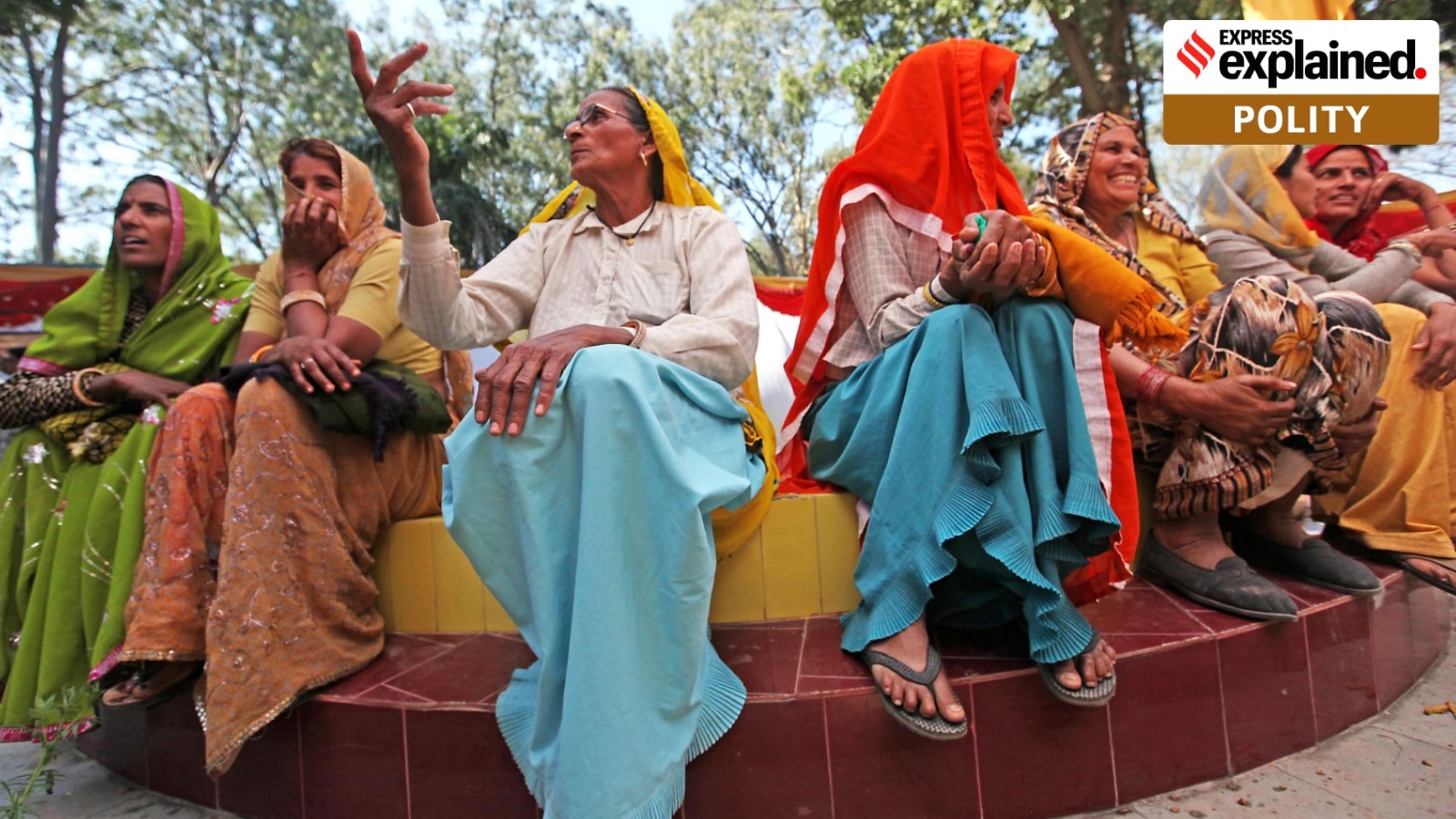
States’ rights, OBC inclusion: Before legislature, the debates over 33% women’s reservation in local bodies | Explained News

States’ rights, OBC inclusion: Before legislature, the debates over 33% women’s reservation in local bodies | Explained News

On Friday (April 17), the Constitution (One Hundred and Thirty-First Amendment) Bill, 2026, for delimitation and the subsequent application of 33% women’s reservation in the legislature was defeated in Lok Sabha. The Opposition primarily criticised it over the delimitation process and its advancement by the government. Back in 2023, parties across the political spectrum had lent their support to women’s reservation in the legislature with the passage of The Constitution (One Hundred and Twenty-Eighth Amendment) Bill. But the first nationwide quotas to ensure greater political participation of women came into effect in the 1990s. The Constitution (Seventy-third Amendment) Act, 1992 and The Constitution (Seventy-fourth Amendment) Act, 1992 took effect in 1993. They reserved 33% of the seats for women in Panchayati Raj institutions and urban local bodies, respectively. What prompted these Acts then, and what was the nature of political debates at the time? Here is a brief history. From committees, to states, to country First, it is important to understand the significance of the 73rd and 74th Constitutional amendments. Before these Acts, India’s Constitution …

Why can’t women’s quota be implemented in existing House of 543? What Oppn, govt have said, and why OBC question remains| India News

Why can’t women’s quota be implemented in existing House of 543? What Oppn, govt have said, and why OBC question remains| India News

After the Constitution (131st Amendment) Bill, 2026 fell in the Lok Sabha on Friday — the first defeat of a bill in PM Narendra Modi’s government of 12 years so far — one question cuts through the noise of the political battle: Why can’t 33% reservation for women simply be implemented in the existing 543-seat Lok Sabha, right now? The plan, which failed, was to increase the Lok Sabha seats by a flat 50% for now to 816, to a maximum of 850 at some point; and thus give one-third reservation to women as these additional seats are created. The Opposition was up in arms against this seat-increase and delimitation exercise being hastened by using old census data even as larger questions remained unanswered. Legal position of 2023 law The 33% reservation for women in the Lok Sabha and state assemblies is already law. The Nari Shakti Vandan Adhiniyam was passed unanimously by Parliament in September 2023, and notified in the gazette just this week, on April 16, 2026, even when a debate on its …

‘EWS can’t claim parity with SC, ST, OBC in age, attempts’

‘EWS can’t claim parity with SC, ST, OBC in age, attempts’

The Delhi High Court has held that candidates from Economically Weaker Sections (EWS) cannot claim parity in upper age limit and number of attempts with those from Scheduled Caste (SC), Scheduled Tribe (ST) and Other Backward Categories (OBC) in central government recruitments, including Union Public Service Commission (UPSC) exams, observing that the disadvantages faced by socially backward classes are distinct from those arising from economic deprivation. A bench of Justices Anil Kshetarpal and Amit Mahajan delivered the judgment while dismissing petitions filed by EWS candidates seeking similar relaxations as available to SC, ST, and OBC categories. Also Read: 2026-27 academic session: Punjab starts RTE admissions after delay, window open till April 25 “Since it cannot be said that the handicaps faced by socially backward classes and economically deprived classes are the same, different ancillary concessions and relaxations ought to be provided to both categories. The EWS category cannot claim automatic parity with SC, ST, OBC in ancillary considerations such as age relaxation or enhanced attempts,” the court held. The court noted that EWS hardship arises …

Opposition protests in Rajya Sabha over BJP MP’s OBC reservation remarks

Opposition protests in Rajya Sabha over BJP MP’s OBC reservation remarks

The Rajya Sabha on Monday witnessed a walkout by several opposition parties over BJP member K Laxman`s remarks that OBC reservation is being misused in the name of religion. Leader of the House and Union Minister J P Nadda criticised the walkout, saying the Congress leadership and the opposition`s INDIA alliance are neither interested in debates nor have any respect for democratic values or the Constitution. During Zero Hour, Laxman raised the issue of OBC reservation, and said their quota is being misused in the name of religion. He said some states are extending reservations to Muslims and requested the government to order a comprehensive review of such religion-based reservations. While he was speaking, certain opposition members raised objections to Laxman`s remarks. Later, almost the entire opposition staged a walkout from the House. Nadda said the opposition parties are disrespectful to the Constitution and do not respect the parliamentary procedures. He further said opposition parties consider Muslims as a vote bank, while accusing them of engaging in appeasement politics. This story has been sourced from …

Income Cannot Alone Decide OBC ‘Creamy Layer’ Status: Supreme Court | India News

Income Cannot Alone Decide OBC ‘Creamy Layer’ Status: Supreme Court | India News

Last Updated:March 13, 2026, 14:35 IST Supreme Court court rejected the Centre’s plea to rely solely on income/wealth for PSU and private sector employees. The Supreme Court of India. (File) The Supreme Court has clarified that a candidate’s exclusion from the OBC quota cannot be decided solely based on parental income. A bench of Justices P S Narasimha and R Mahadevan ruled that the status and category of a parent’s job must also be considered, with income and wealth acting only as additional criteria. Currently, the threshold income to determine ‘creamy layer’ is Rs 8 lakh per annum. Implications for PSU and private sector wards The ruling affects children of PSU and private sector employees, who were previously judged only on income, unlike government employees, where job category determined OBC eligibility. Children of Group A and B government employees are excluded based on job status, while wards of Group C and D employees remain eligible even if income exceeds the limit. Centre’s 2004 clarification overruled The court rejected the Centre’s plea to rely solely on …

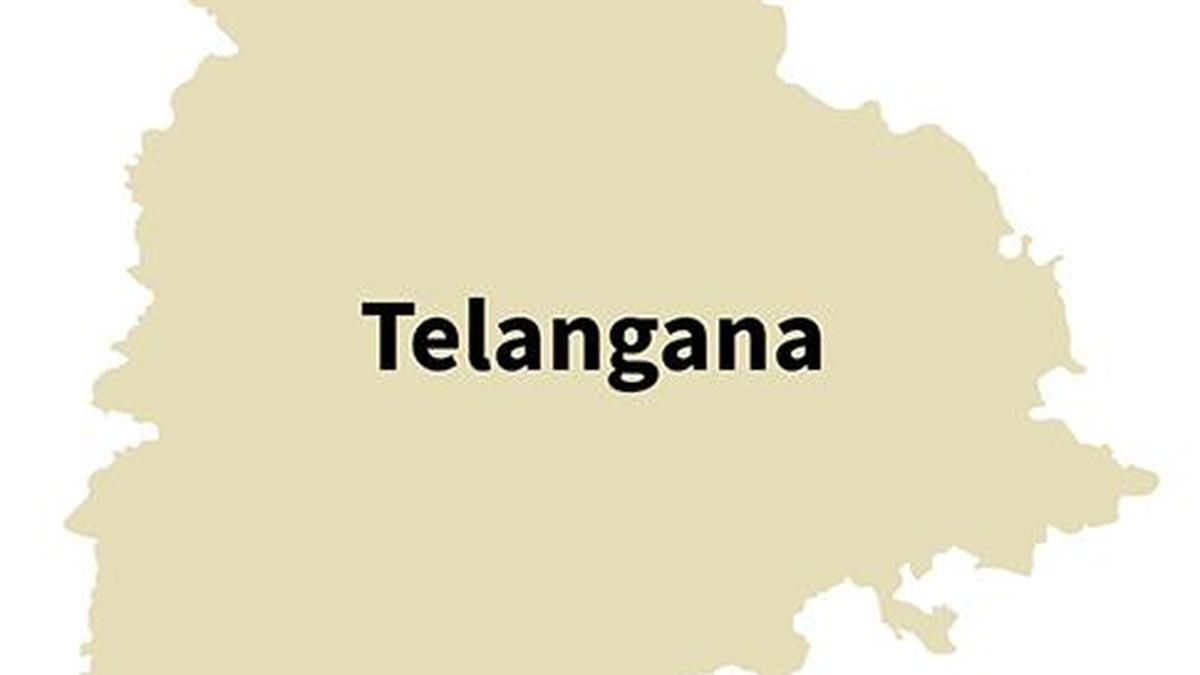
Initiate Census-2027 in Telangana after including 40 more castes in OBC list: Commission for Backward Classes

Initiate Census-2027 in Telangana after including 40 more castes in OBC list: Commission for Backward Classes

Telangana Commission for Backward Classes want 40 more castes to be included in Central OBC list Telangana Commission for Backward Classes urged Chief Secretary K. Ramakrishna Rao to take necessary steps for inclusion of 40 more Backward Castes in the State to the Central Other Backward Classes (OBC) list. The Commission’s Chairperson G. Niranjan said that the Census-2027 should be initiated in the State only after inclusion of the castes in the list.  The House Listing Operations (HLO) in the State are scheduled to begin from May 11. This will be the first fully digital exercise. An option for citizens to voluntarily enter the data through a platform will be provided 15 days prior to the HLO.  “In Telangana State, 130 castes have been recognized as Backward Classes. However, the Central Government has included only 90 castes in the OBC list and has not included 40 castes. Consequently, there is a possibility that the number of BCs in Telangana will be recorded as lower than the actual figure,” as per a press note issued on …

Protest intensifies against new UGC Equity Regulations; PIL filed in Supreme Court, BJP leader resigns over OBC clause

Protest intensifies against new UGC Equity Regulations; PIL filed in Supreme Court, BJP leader resigns over OBC clause

A nationwide controversy has erupted over the University Grants Commission’s newly notified Promotion of Equity in Higher Education Institutions Regulations, 2026, with a public interest litigation (PIL) now before the Supreme Court of India, political resignations in Uttar Pradesh, and protests spreading across several states. On January 13, 2026, the University Grants Commission (UGC) officially notified the Promotion of Equity in Higher Education Institutions Regulations, 2026, replacing the earlier 2012 anti-discrimination framework. However, critics argue that key provisions are vague, one-sided and vulnerable to misuse, raising constitutional and procedural concerns. What the UGC’s 2026 equity regulations mandate Under the new framework, all universities and colleges are required to establish Equal Opportunity Centres, Equity Committees, grievance redressal mechanisms, monitoring teams and 24×7 helplines. These bodies are tasked with addressing complaints from students belonging to Scheduled Castes (SC), Scheduled Tribes (ST) and Other Backward Classes (OBC). Also Read | Dharamshala Dalit college student death: UGC orders probe, says safety paramount Purpose of the Regulations: The new rules aim to promote fairness and inclusion in higher education. They …

‘Beautiful Girl Can Distract A Man’: Congress MLA’s Bizarre ‘Rape Theory’ Sparks Row | India News

‘Beautiful Girl Can Distract A Man’: Congress MLA’s Bizarre ‘Rape Theory’ Sparks Row | India News

Last Updated:January 17, 2026, 13:01 IST Sparking a massive row, Baraiya stated that women belonging to backward communities are not even beautiful, but still get raped because it is written in their scriptures. Congress MLA Phool Singh Baraiya from Bhander triggers a major political storm in Madhya Pradesh following his comments on rape and religious texts. Congress MLA Phool Singh Baraiya from Bhander in Madhya Pradesh sparked a massive controversy after he claimed that most rapes in India occur in the Scheduled Castes (SC), Scheduled Tribe (ST) and Other Backward Classes (OBC) communities. He further went on to explain his rape theory behind the statement and stated that if a person sees an “extremely beautiful woman” while travelling, their mind may get distracted, leading to rape. Referring to Scheduled Castes, Scheduled Tribes and Other Backward Classes (OBC) communities, the Congress MLA suggested that women belonging to the backward section of society are targeted due to what he described as a “distorted belief system” rooted in their ancient texts. Baraiya claimed that perpetrators believe sexual violence …

Oppn leaders expresses outrage after ‘OBC’ man killed in Meerut with brick on Jan 5| India News

Oppn leaders expresses outrage after ‘OBC’ man killed in Meerut with brick on Jan 5| India News

Meerut , Samajwadi Party chief Akhilesh Yadav and Bahujan Samaj Party president Mayawati on Sunday expressed displeasure over the killing of a backward youth in the Sardhana area of Meerut, reacting nearly a week after the incident. Oppn leaders expresses outrage after ‘OBC’ man killed in Meerut with brick on Jan 5 Describing the incident as extremely brutal and shameful, both leaders urged the government and the administration to remain constantly vigilant and proactive to prevent such crimes. In a post on X, Mayawati said that the killing of a youth belonging to the Kashyap community, categorised under the Other Backward Classes , deserved the strongest condemnation. She stressed that anti-social and criminal elements must have fear of the law. In his post, SP chief said, “We raise our voice on behalf of the entire PDA community against the heinous act committed by goons who burned a young man from the Kashyap community alive in Jwalagarh, in the Sardhana area.” Responding to Mayawati and Akhilesh’s post, the Meerut police said the case was not recent …