

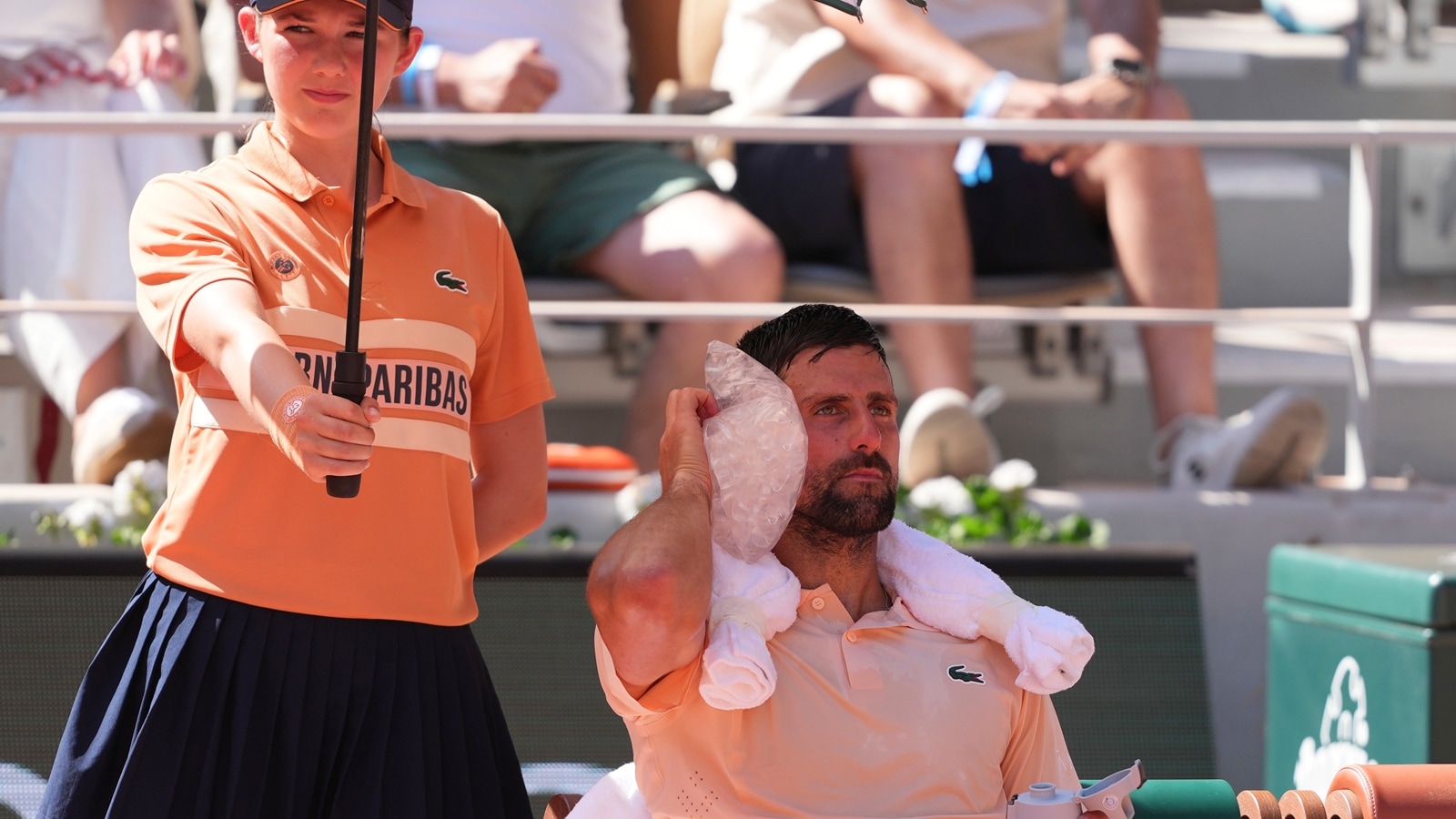
Why Roland Garros groundskeepers are turning to salt to save clay from heatwave
For decades, clay courts have been associated with long rallies, high bounces and physically draining tennis. But at this year’s French Open, players have repeatedly said Roland Garros is playing faster than usual. The reason is not a change in balls or court construction alone — it is the weather. Paris is currently experiencing an unusually intense early-summer heatwave, with temperatures crossing 35°C during the opening week of the tournament. Groundskeepers say the conditions are unlike anything they have dealt with in late May. “What we’re experiencing is unprecedented,” Philippe Vaillant, head of court maintenance at Roland Garros, told the Associated Press. “Even the weather services say it themselves: it’s unprecedented to have temperatures this high for such a long period at this time of year.” The heat is fundamentally altering how clay behaves. Why hot weather changes clay courts Clay courts are moisture-dependent surfaces. Unlike hard courts, their playing characteristics are directly tied to how much water is retained beneath the top layer of crushed brick. When temperatures rise sharply, moisture evaporates faster. The …