All posts tagged: SelfDriving

Why the safety features of self-driving cars are making passengers “sitting ducks” for angry protesters

Why the safety features of self-driving cars are making passengers “sitting ducks” for angry protesters

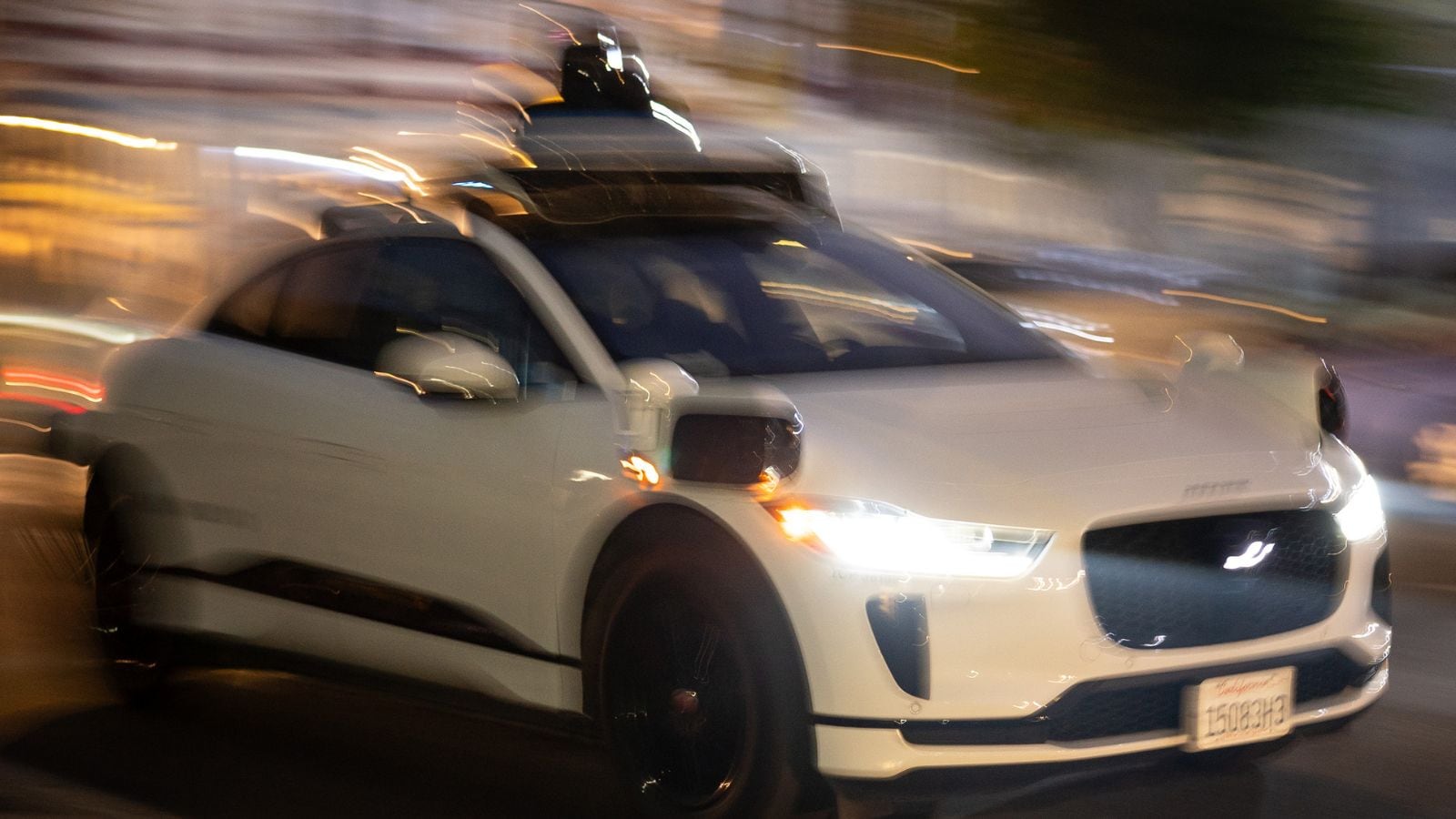
In January, Doug Fulop was riding home from a night out in San Francisco when a man crossed the street in front of his car, doubled back and began screaming at him. The man punched the car’s windows and tried lifting up the vehicle. He then yelled that he wanted to kill Fulop and the other two passengers for giving money to a robot. A taxi driver would have simply driven away. But Fulop’s vehicle had no driver — it was a self-driving Waymo. “We felt helpless,” said Fulop, 37, who works in the tech industry. Since autonomous cars started roaming San Francisco streets almost four years ago, they have elicited an array of reactions from humans, including angry protests against the vehicles. That has created an unexpected hazard for passengers of self-driving cars all around the city: being stuck inside the vehicle during an anti-robot rant. Self-driving cars are designed to stop moving if a person is nearby. People can take advantage of that function to harass and threaten their passengers. In 2024, a …
This Brain-Inspired Chip “Sees” 4x Faster Than the Human Eye—And It’s Solving the Self-Driving Safety Crisis

This Brain-Inspired Chip “Sees” 4x Faster Than the Human Eye—And It’s Solving the Self-Driving Safety Crisis

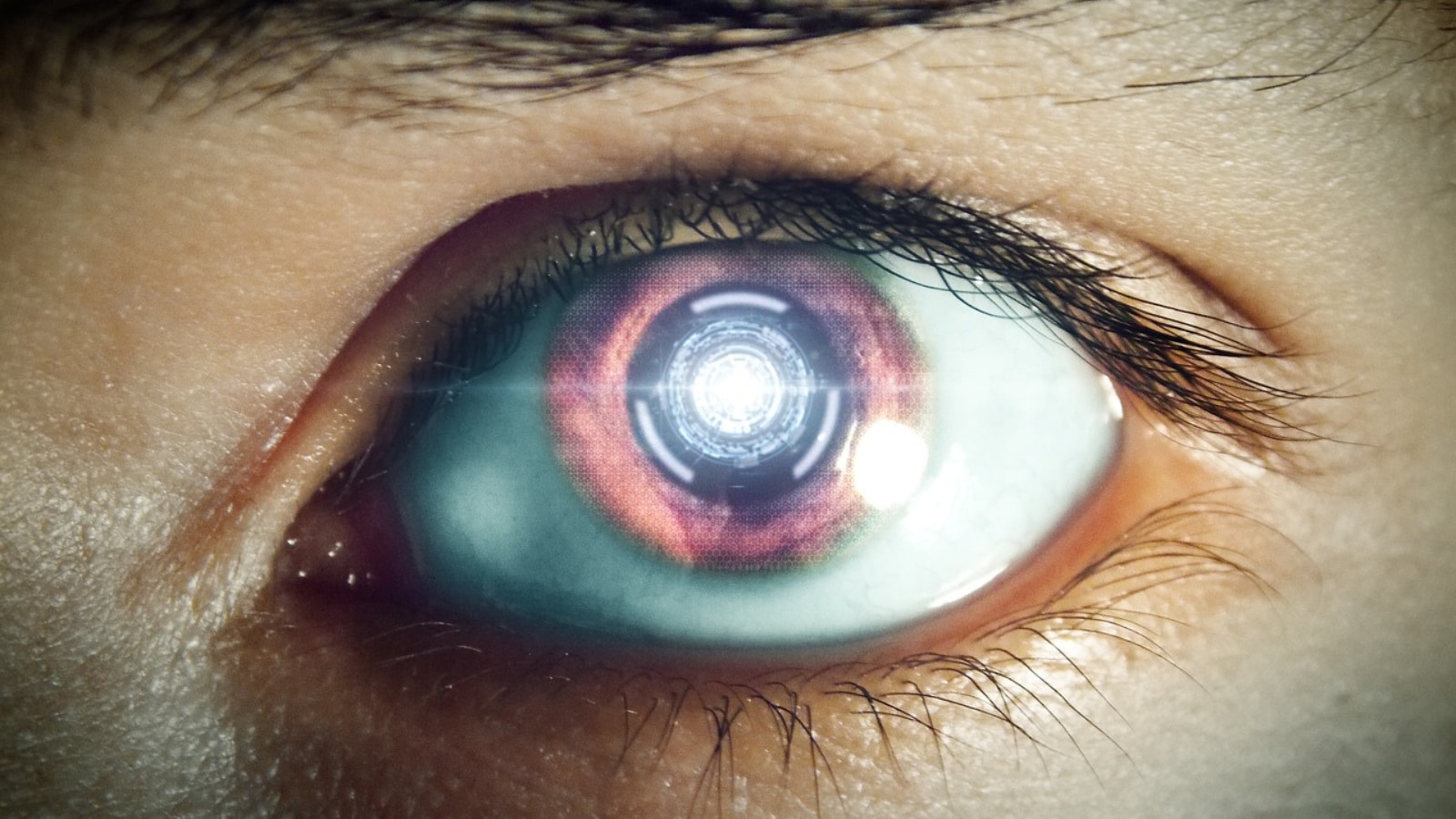
3 min readNew DelhiFeb 14, 2026 03:02 PM IST A new chip, inspired by the human brain, is helping robots see and respond in real time. Developed by researchers from China’s Beihang University and the Beijing Institute of Technology, the chip can detect object movement four times faster than the human eye. The breakthrough, which builds on neuromorphic engineering, drew inspiration from a lesser-known brain structure called the lateral geniculate nucleus (LGN). Located between the retina and the visual cortex, the LGN functions both as a relay and a filter, allowing the human visual system to focus processing power on fast-moving or rapidly changing objects. A conventional robotic vision system uses cameras to capture static frames and track motion using brightness changes from one frame to the next. This method is reliable, but it is quite slow as processing a single frame often takes more than half a second. In applications like self-driving vehicles at high speeds, this delay is quite crucial, as a fraction of a second can cause the vehicle to crash. To …

I rode in one of the UK’s first self-driving cars

I rode in one of the UK’s first self-driving cars

I never really believed self-driving cars would make it to the UK, so you can imagine my surprise when I found myself clambering into one of Wayve’s autonomous vehicles for a journey around north London a few weeks ago. In June, the company announced plans with Uber to begin trialing Level 4 fully autonomous robotaxis in the capital as soon as 2026, part of a government plan to fast-track self-driving pilots ahead of a potential wider rollout in late 2027. Alphabet-owned Waymo, now a staple fixture of US cities like San Francisco, Los Angeles, and Phoenix, also has its eyes on London, announcing plans for its own fully driverless robotaxi service in 2026, one of its first efforts to expand beyond the US. My skepticism on whether self-driving cars will work in London isn’t unfounded. On many levels, London is a robotaxi’s worst nightmare. At every possible turn, the city is at odds with autonomy. Its road network is narrow, winding, and hellish to navigate, a morass of concrete that emerged over centuries, designed to …

NHTSA staffers evaluating the risks of self-driving cars were reportedly fired by DOGE

NHTSA staffers evaluating the risks of self-driving cars were reportedly fired by DOGE

Elon Musk’s Department of Government Efficiency (DOGE) fired about 30 members of the National Highway and Traffic Safety Administration (NHTSA) in February, and many of them were part of a department that assesses the risks of self-driving cars, according to the Financial Times. One worker laid off from the NHTSA’s so-called “office of vehicle automation safety” told the FT that DOGE’s actions could “weaken NHTSA’s ability to understand self-driving technologies.” Another worker said it’d be “ironic” if the firings would slow down Tesla’s plans for autonomous vehicles. The firings also came just months after the NHTSA released a new framework that could ease regulation on self-driving cars, but in exchange, companies would need to share more data with the regulator. Disclaimer: We do not own any of the content, ideas, images, or text presented here. All rights belong to their respective owners. For more information and to view the original source, please visit the following link: Source link

Self-driving cars: Google and others map the road to automated vehicles

Self-driving cars: Google and others map the road to automated vehicles

Google and a number of automakers are spearheading the movement to get automated vehicles on America’s roads. Self-driving cars are street legal in three states, and Google’s fleet has collectively logged over 300,000 miles of time on the road. However, there are several obstacles in the path of widespread adoption, with legal and moral opposition to the concept coming from all corners. Follow this StoryStream to track the technology’s progress as it transitions from experimental testing to consumer reality that could save thousands of lives. Disclaimer: We do not own any of the content, ideas, images, or text presented here. All rights belong to their respective owners. For more information and to view the original source, please visit the following link: Source link

NHTSA finally releases new rules for self-driving cars — but there’s a twist

NHTSA finally releases new rules for self-driving cars — but there’s a twist

The National Highway Traffic Safety Administration announced a new “voluntary national framework for the evaluation and oversight” of autonomous vehicles, a bureaucratic first step that could eventually open the floodgates for fully driverless cars. But there’s a twist: the agency wants self-driving car companies to cough up more data. The proposed rules were first announced last year as the ADS-Equipped Vehicle Safety, Transparency and Evaluation Program, also known as AV STEP. This program would allow the agency to authorize the sale and commercialization of more vehicles without traditional controls, like pedals and steering wheels, without hitting the annual cap on the number of exemptions to safety requirements. NHTSA is promising “an exemption pathway that is tailored for ADS-equipped vehicles,” suggesting a less onerous, time-consuming process for the release of fully driverless vehicles. In exchange, the agency is requesting more data from the companies that operate driverless cars, arguing that greater transparency is needed to foster public trust in the technology. “AV STEP would provide a valuable national framework at a pivotal time in the development of …

Tesla starts pushing Full Self-Driving access for some Cybertrucks

Some Tesla Cybertruck owners are starting to get Full Self-Driving (FSD) access on their vehicles. The company’s polarizing electric pickup truck has lacked the driver-assistance software feature since its launch in November 2023. Now, members of the Cybertruck Owners Club (as reported by Electrek) are reporting that the update has been installed on their vehicles. Tesla had promised that FSD would come to the Cybertruck in September, after the launch of the Autopark feature — and with today’s news, it would appear that it just hit that deadline. It’s the latest version of FSD (12.5.5), and to start, it’s coming to Cybertrucks set up for the early access program. The update includes a promised vision-based attention monitoring system for drivers who are wearing sunglasses. Whole Mars Catalog, a Tesla fan account on X, posted over 20 minutes of footage testing the new update in a Cybertruck, and it mainly operated as it does in other Teslas. At about the six-minute, 20-second mark in the video, the driver needed to intervene when the Cybertruck almost drove …

Tesla slashes Full Self-Driving price to $8,000 ahead of earnings report

The price for Tesla’s Full Self-Driving (FSD) software package was supposed to get more expensive over time — but instead, it’s getting cheaper. Tesla has discounted the $12,000 feature — that has been marketed as eventually enabling fully autonomous capabilities despite just being a Level 2 driver-assist system — to $8,000. The price cut comes ahead of Tesla’s earnings on April 23rd, in which Elon Musk is sure to face questions about the adjustment. For years, Musk has insisted that the software package would only grow in value, possibly to a price over $100,000. In reality, the cost of FSD peaked in 2022 when it was raised to $15,000 and later fell to $12,000. Earlier this month, Tesla also reduced the price of the subscription version of FSD from $199 to $99 per month. With the new pricing, it would take almost six years and nine months of subscribing to reach the current pay-in-full price. The automaker is also eliminating the ability to purchase Enhanced Autopilot, which is the company’s $6,000 advanced driver-assist system. As Teslarati …

Teen charged in Waymo self-driving taxi arson incident

The investigation was conducted by the SFPD Arson Task Force, which identified the suspect and developed probable cause for the search warrant. The district attorney’s office has filed charges against the minor while the juvenile probation department is deciding whether to put the suspect in custody before a court hearing. The February 10th fire was reportedly caused by lit fireworks that were tossed inside the vehicle as it was surrounded by a crowd in Chinatown. Involved suspects were seen smashing windows and other parts with skateboards before leaving a fiery carcass for firefighters to put out. Source link

People are afraid of self-driving cars — can the industry change that?

Forget the fact that most autonomous vehicles operate each day safely, anonymously, and without fanfare. There are hundreds in operation today in California, Arizona, Texas, and elsewhere, and the numbers are only going to increase. But when they do make mistakes, people tend to notice. Numerous public opinion polls have shown declining support for autonomous vehicles (AV) over the years and a rise in outright hostility toward the technology. The autonomous vehicle industry’s main lobbying group — yes, of course it has one — is intent on reversing this trend before it gets much worse. The Autonomous Vehicle Industry Association (AVIA) represents Cruise, Waymo, Zoox, Motional, and others as well as the US Chamber of Commerce and the Alliance for Automotive Innovation, which lobbies for the auto industry. Today, it released something it’s calling its “TRUST Principles,” which is basically an action plan for dealing with these negative headlines and spiraling poll numbers. “With today’s announcement, the AV industry is sending a message: we believe that public trust in autonomous vehicles is essential to their …