Chandrayaan-3 detects surprisingly active plasma over the Moon’s south pole | Technology News
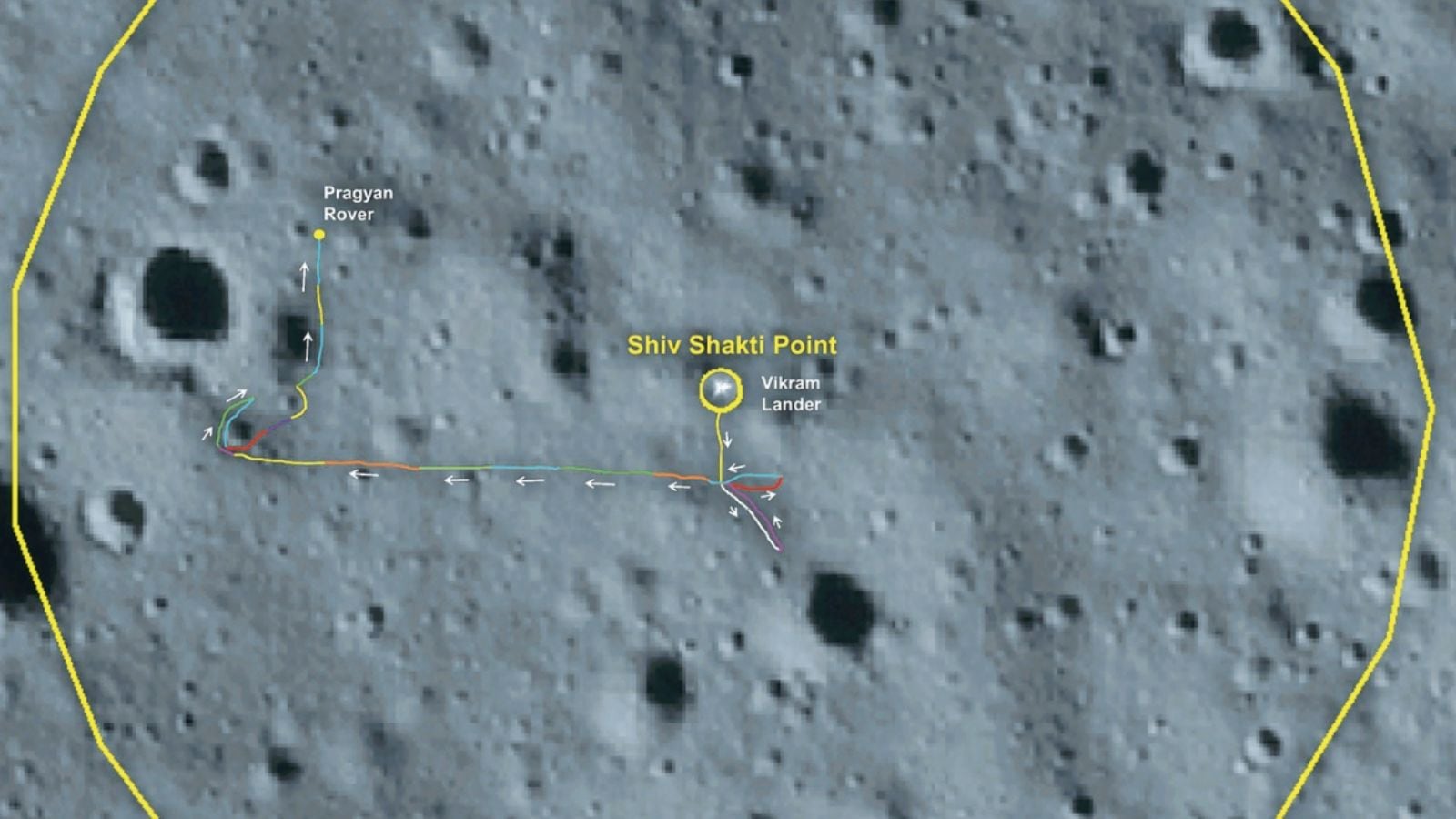
Scientists have discovered that the area around the Moon’s south-polar region is much more electrically alive than we thought. Data from India’s Chandrayaan-3 mission from its lander Vikram show that just above the surface, the “plasma” (a mix of charged particles) is far denser and more energetic than earlier remote observations. Plasma is often described as the fourth state of matter, a blend of charged particles such as ions and free electrons. Although it is electrically neutral overall, it behaves very differently from ordinary gas due to its strong response to electromagnetic forces. On the Moon, this thin plasma layer, sometimes called the lunar ionosphere, is shaped by a complex mix of processes. A constant flux of solar wind streams of electrons and ions rushed out from the Sun and strikes the Moon’s airless surface. Through the photoelectric effect, high-energy sunlight also removes electrons from surface atoms, increasing the ionised environment. The Moon receives a new supply of charged particles from our planet’s extended magnetic field as it drifts into Earth’s magnetotail for a few …