All posts tagged: space missions

NASA Reschedules SPHEREx and PUNCH Missions, Now Set for March 7 Launch

NASA Reschedules SPHEREx and PUNCH Missions, Now Set for March 7 Launch

NASA has once again delayed the launch of its SPHEREx and PUNCH missions, now scheduled for March 7. Originally planned for February 27, the launch has faced multiple postponements. The two missions, set to travel aboard a SpaceX Falcon 9 rocket, were initially rescheduled for March 4. However, the latest delay has been attributed to the availability of a launch window at Vandenberg Space Force Base in California. Liftoff is now expected at 10:09 p.m. EST from Launch Complex 4E. Reason for Delay and Mission Overview According to NASA, the initial postponements were due to extended checks and processing of the Falcon 9 rocket. The latest delay, as per sources, is due to scheduling constraints on the Western Range. The SPHEREx mission, formally known as the Spectro-Photometer for the History of the Universe, Epoch of Reionissation and Ices Explorer, is an infrared telescope designed to survey the sky and gather data on the early universe. Unlike the James Webb Space Telescope, which focuses on deep-space observations, SPHEREx will provide a broad-field view in infrared wavelengths. …
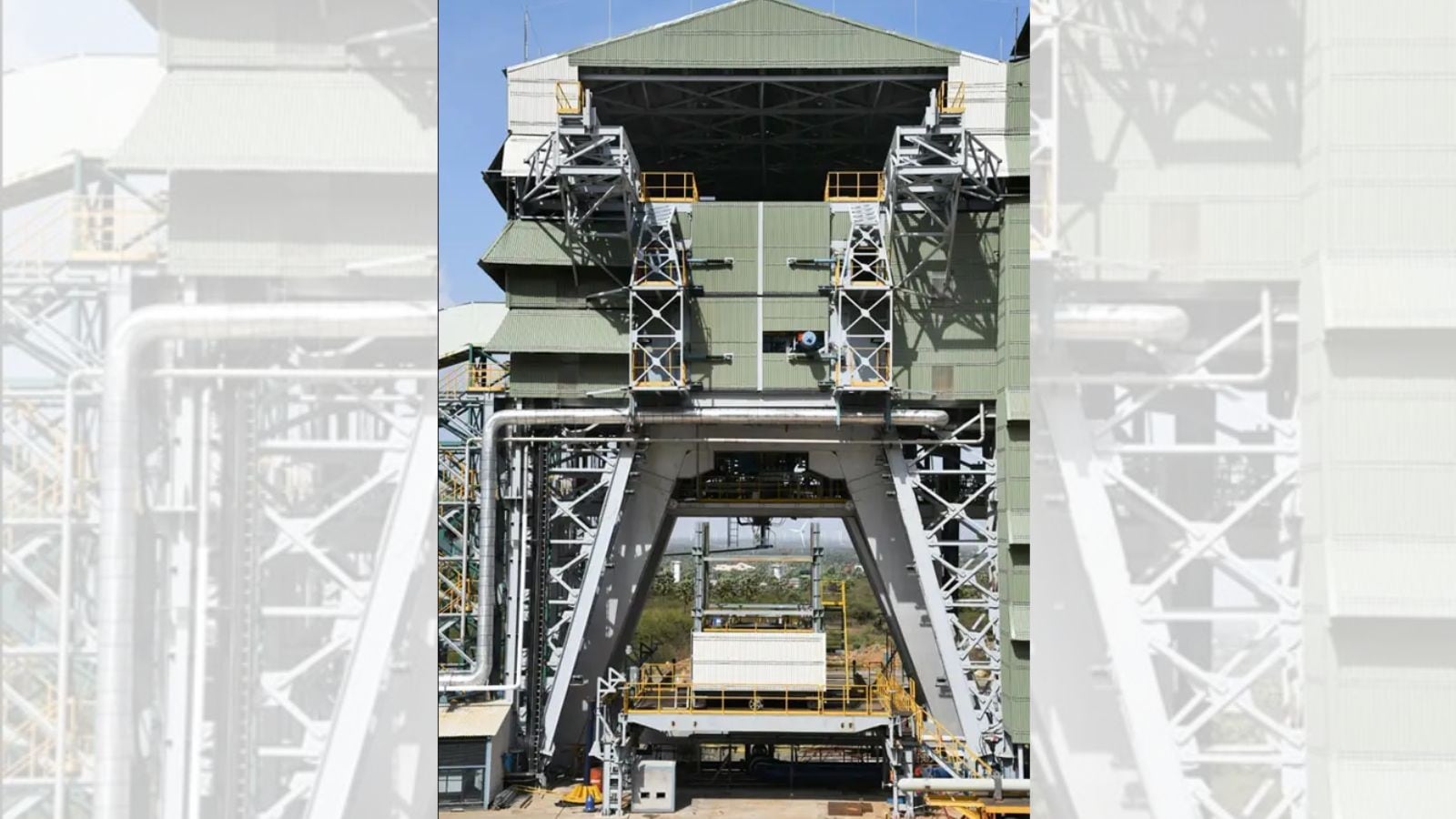
ISRO successfully conducts crucial test for semi-cryogenic engines required for ‘heavy’ space launches in future | Bangalore News

ISRO successfully conducts crucial test for semi-cryogenic engines required for ‘heavy’ space launches in future | Bangalore News

The Indian Space Research Organisation (ISRO) recently successfully conducted the hot test on a semi-cryogenic engine (SE2000), going a step closer to finalising the crucial cryogenic stage where powering the booster stages of launch vehicles is realised. Scientifically, this test is known as the Power Head Test Article (PHTA) and the first hardware test for the development of semi-cryo engines. “The Power Head Test Article, without the thrust chamber, has been successfully realised. It is about 3 metres in height. This is one of the propulsion systems we have been developing and it may take about two years to succeed,” said ISRO chairman V Narayanan during the recently held Physical Research Laboratory (PRL)-organised Amrut Vykhayaan (PKAV). PHTA is a significant precursor test done to validate the integrated performance of some of the engine’s critical subsystems, such as the gas generator, turbo pumps, pre-burner and control components. The test involves performing a hot-firing for an extremely brief duration of not more than 4.5 seconds. Story continues below this ad Earlier, in July 2023, a similar test …

Atmos Space Cargo’s Phoenix Capsule Set for First Orbital Test on SpaceX Mission

Atmos Space Cargo’s Phoenix Capsule Set for First Orbital Test on SpaceX Mission

A cargo-return technology developed by Germany-based Atmos Space Cargo is set to undergo its first in-space test with an upcoming SpaceX mission. The company’s Phoenix capsule will be launched aboard the Bandwagon 3 rideshare mission, scheduled for no earlier than April. The capsule has been designed to facilitate the safe return of high-value materials from orbit, particularly benefiting the biomedical sector. The test mission aims to gather crucial data on the capsule’s subsystems, onboard payloads, and reentry performance. Mission Objectives and Scientific Payloads According to reports, the Phoenix capsule will carry four payloads, including a radiation detector from the German Aerospace Center (DLR) and a bioreactor from UK-based Frontier Space. The mission’s primary goals include testing Phoenix’s performance in orbit, evaluating data from customer experiments, and deploying its proprietary inflatable atmospheric decelerator (IAD) for reentry stabilisation. This technology, acting as both a heat shield and parachute, is intended to enable a controlled descent back to Earth. Challenges in Returning Space Cargo Industry experts highlight that while the cost and complexity of launching experiments into space …

NISAR Satellite by NASA and ISRO to Monitor Earth Like Never Before

NISAR Satellite by NASA and ISRO to Monitor Earth Like Never Before

A collaboration between NASA and the Indian Space Research Organisation (ISRO) has resulted in the NISAR (NASA-ISRO Synthetic Aperture Radar) satellite, which is set to launch in a few months. This mission, designed to track and monitor Earth’s dynamic surface, will use synthetic aperture radar technology to measure changes in land and ice formations. Capable of delivering precise data down to centimetre-level accuracy, NISAR will contribute significantly to understanding natural disasters, ice-sheet movements, and global vegetation shifts. Unique Dual-Band Technology According to an official press release by NASA, NISAR is equipped with two radar systems: the L-band with a wavelength of 25 centimetres and the S-band with a 10-centimetre wavelength. This dual-band configuration enables detailed observations of various features, from small surface elements to larger structures. These advanced radars will collect data frequently, covering nearly all land and ice surfaces to provide a comprehensive view of Earth’s transformations. Technology and Data Applications As per reports, synthetic aperture radar technology, first utilised by NASA in the 1970s, has been refined for this mission. The data from …

SpaceX Launches NROL-149 Spy Satellites for NRO with Successful Rocket Landing

SpaceX Launches NROL-149 Spy Satellites for NRO with Successful Rocket Landing

A Falcon 9 rocket launched the National Reconnaissance Office (NRO)’s NROL-149 mission from Vandenberg Space Force Base, California, at 8:19 a.m. EST on December 17, as per reports. The flight carried next-generation spy satellites designed for the United States’ intelligence needs. The reusable first-stage booster successfully landed on the drone ship “Of Course I Still Love You” in the Pacific Ocean, marking SpaceX’s 384th recovery of an orbital-class rocket. According to mission details shared by SpaceX, this was the company’s 127th launch of the year. Details of the Mission and Payload The NROL-149 mission is reported to be part of a broader initiative by the NRO to deploy “proliferated architecture” satellites, described in earlier mission updates as smaller, resilient spacecraft equipped for advanced reconnaissance capabilities. These satellites, believed to be based on SpaceX’s Starlink platform but modified for intelligence purposes, are intended to enhance national security operations, as per sources. The NRO confirmed in a post on X (formerly Twitter) that this launch concluded its eighth and final mission for 2024. Booster Reuse and Flight …

ISRO Successfully Launches PSLV-C59 Carrying ESA’s Proba-3 Satellites

ISRO Successfully Launches PSLV-C59 Carrying ESA’s Proba-3 Satellites

ISRO’s PSLV-C59 mission, carrying the European Space Agency’s Proba-3 satellites, was successfully launched on December 5, 2024, from the Satish Dhawan Space Centre in Sriharikota. The launch, initially delayed by a day due to an anomaly, occurred at 4:04 PM IST. The mission’s objectives, including deploying the satellites into their designated orbit, were achieved with precision, according to ISRO Chairman S. Somanath. Mission Objectives and Achievements The Proba-3 mission is a part of ESA’s in-orbit demonstration initiatives. It comprises two spacecraft designed to perform precise formation flying, achieving control down to a single millimeter. Details shared by ESA reveal that the satellites will create artificial solar eclipses in orbit, enabling extended studies of the Sun’s corona. Shortly after separation, the Yatharagga ground station in Australia confirmed receiving signals from the satellites, a per several reports. Telemetry data is being processed at ESA’s mission control center in Redu, Belgium. Josef Aschbacher, ESA’s Director General, described the successful liftoff as a significant step for the mission’s objectives, in a statement.. Operational Plans for Proba-3 The satellites, stacked …

NASA Astronaut Sunita Williams Health Deteriorates Amid Extended ISS Mission, New Photo Raises Concern

NASA Astronaut Sunita Williams Health Deteriorates Amid Extended ISS Mission, New Photo Raises Concern

Concerns over the health of astronaut Sunita Williams have surfaced after a recent photo showed her appearing visibly thin, following her extended mission on the International Space Station (ISS). Williams, aged 59, and fellow astronaut Barry Wilmore were initially scheduled for an eight-day mission aboard Boeing’s Starliner spacecraft. However, due to a malfunction, they have been stranded on the ISS since their docking on 6 June, with Williams now marking over 150 days in orbit. Health Implications of Extended Space Missions As per a report by DailyMail, Dr Vinay Gupta, a pulmonologist based in Seattle, expressed concern after reviewing the recent image, noting signs of significant weight loss. He explained that the body burns more calories in space as it adapts to unique conditions, requiring astronauts to consume high-calorie diets. Calorie intake alone may not be enough, as Dr Gupta observed indications of a possible caloric deficit that could be affecting Williams’ appearance and well-being. Space conditions intensify physiological stress due to factors like reduced oxygen levels and the body’s increased metabolic rate in response …

Gaganyaan Scheduled for 2026, Chandrayaan-4 to Launch by 2028: ISRO

Gaganyaan Scheduled for 2026, Chandrayaan-4 to Launch by 2028: ISRO

Delivering a major update on India’s space objectives, ISRO Chairman S Somanath announced new timelines for upcoming missions, including the ambitious Gaganyaan and Chandrayaan-4 projects. Speaking at the Sardar Patel Memorial Lecture held at Akashvani, Somanath, he provided details on the Gaganyaan mission. As per Somanath, India’s first manned space endeavour is now expected in 2026. He revealed that Chandrayaan-4, aimed at returning samples from the lunar surface, is slated for launch in 2028. The ISRO chairman shared insights into India’s joint missions, specifically a collaboration with Japan’s space agency JAXA. This mission, initially referred to as LUPEX (Lunar Polar Exploration), will be designated as Chandrayaan-5. In this mission, India will provide the lander while JAXA will supply the rover, a significant upgrade from Chandrayaan-3’s smaller rover. With a much larger payload of 350 kg, Chandrayaan-5 will be equipped to conduct extensive scientific research on the Moon’s surface. Focus on Indigenisation and Expanding India’s Role in the Global Space Market Addressing the audience, Somanath told the importance of self-reliance in space technology, acknowledging the progress …

NASA’s Hubble and New Horizons Collaborate for Uranus Observation, Shedding Light on Exoplanet Imaging

NASA’s Hubble and New Horizons Collaborate for Uranus Observation, Shedding Light on Exoplanet Imaging

NASA’s Hubble Space Telescope and New Horizons spacecraft have joined forces to observe Uranus, a planet known for its mysterious atmosphere. Hubble, from its position in low-Earth orbit, captured detailed images of Uranus‘ atmosphere, including clouds and storms, while New Horizons, located 6.5 billion miles away, observed the planet as a small dot. These combined observations offer astronomers important insights into imaging distant exoplanets around other stars, providing essential context for future missions. A Unique Perspective on Exoplanet Imaging Lead author Samantha Hasler from the Massachusetts Institute of Technology, who works with the New Horizons team, explained that the collaboration between these two spacecrafts serves as a test case for observing distant exoplanets. Hubble’s close-up view of Uranus, in combination with New Horizons’ distant observation, helps researchers learn how gas giants similar to Uranus might appear when observed from light-years away. Valuable Insights for Future Missions The observations revealed that Uranus was dimmer than predicted in New Horizons’ data, providing a new understanding of how light is reflected at different angles. This discovery has significant …

SpaceX Falcon 9 Successfully Launches NROL-113 Mission, Deploying Spy Satellites for US

SpaceX successfully launched a batch of next-generation spy satellites for the United States National Reconnaissance Office (NRO) late on 5th September 2024. A Falcon 9 rocket lifted off from Vandenberg Space Force Base in California at 11:20 p.m. EDT, sending classified satellites into orbit. The mission, designated NROL-113, is part of the NRO’s new satellite network aimed at enhancing its reconnaissance capabilities. This was SpaceX’s second launch of the day, following an earlier mission from Florida that deployed 21 Starlink internet satellites. Falcon 9’s Smooth Landing The first stage of the Falcon 9 rocket, which had already been reused 19 times, landed successfully on SpaceX’s droneship, “Of Course I Still Love You,” which was stationed at the Pacific Ocean. This marks the booster’s 20th launch and landing, with 14 of those missions being for SpaceX’s Starlink programme. The successful recovery of the booster is another milestone for SpaceX, showcasing its proficiency in reusing rockets to reduce the cost of space missions. NRO’s Proliferated Architecture NROL-113 is the third mission under the NRO’s “proliferated architecture,” a …