All posts tagged: spacex falcon 9

China lands a reusable rocket for the first time: Why this matters for the space race | Explained News

China lands a reusable rocket for the first time: Why this matters for the space race | Explained News

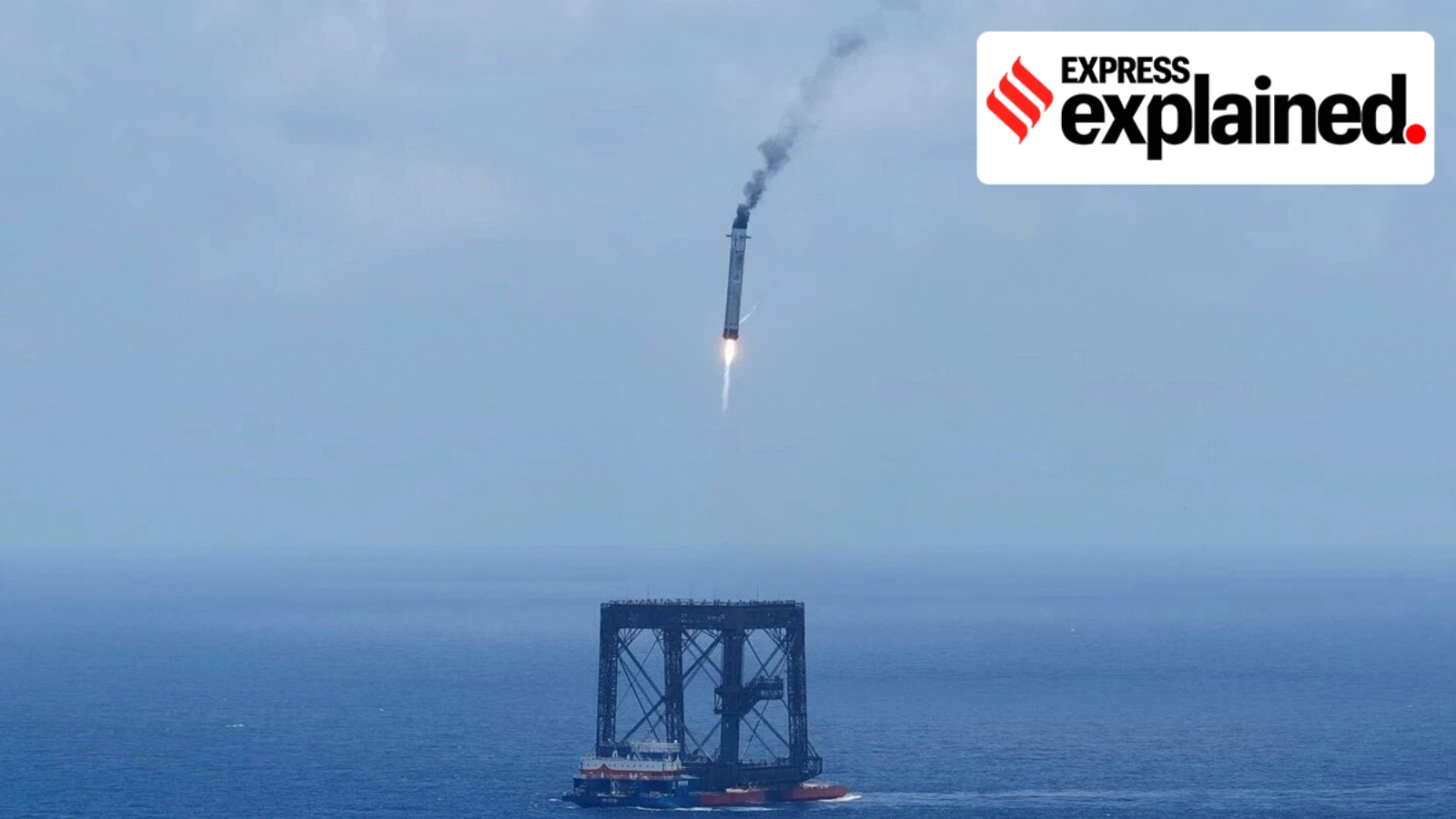
China on Friday successfully landed a reusable rocket for the first time — a milestone for the country’s space programme that will challenge American companies’ dominance in the technology. The Long March 10B rocket — which can carry a payload of up to 16 metric tons to low Earth orbit — lifted off from the Wenchang Commercial Space Launch Site in Hainan, Southern China around noon (local time). Low Earth orbit is a region between 160 km and 2,000 km above the Earth. Six minutes after liftoff, the rocket’s booster — the part that houses the engine and provides the initial thrust — separated from its upper stage and began a controlled descent to a floating platform on the sea. There, it was caught by a net. Before China, only Elon Musk’s SpaceX and Jeff Bezos’s Blue Origin demonstrated the ability to launch and land rockets. So how does China’s technology differ from previous reusable rockets and what strategic implications does this step have? We explain. The mechanics of re-entry  All rockets lift off in …

NASA’s IMAP Spacecraft Prepares to Map the Solar System’s Edge

NASA’s IMAP Spacecraft Prepares to Map the Solar System’s Edge

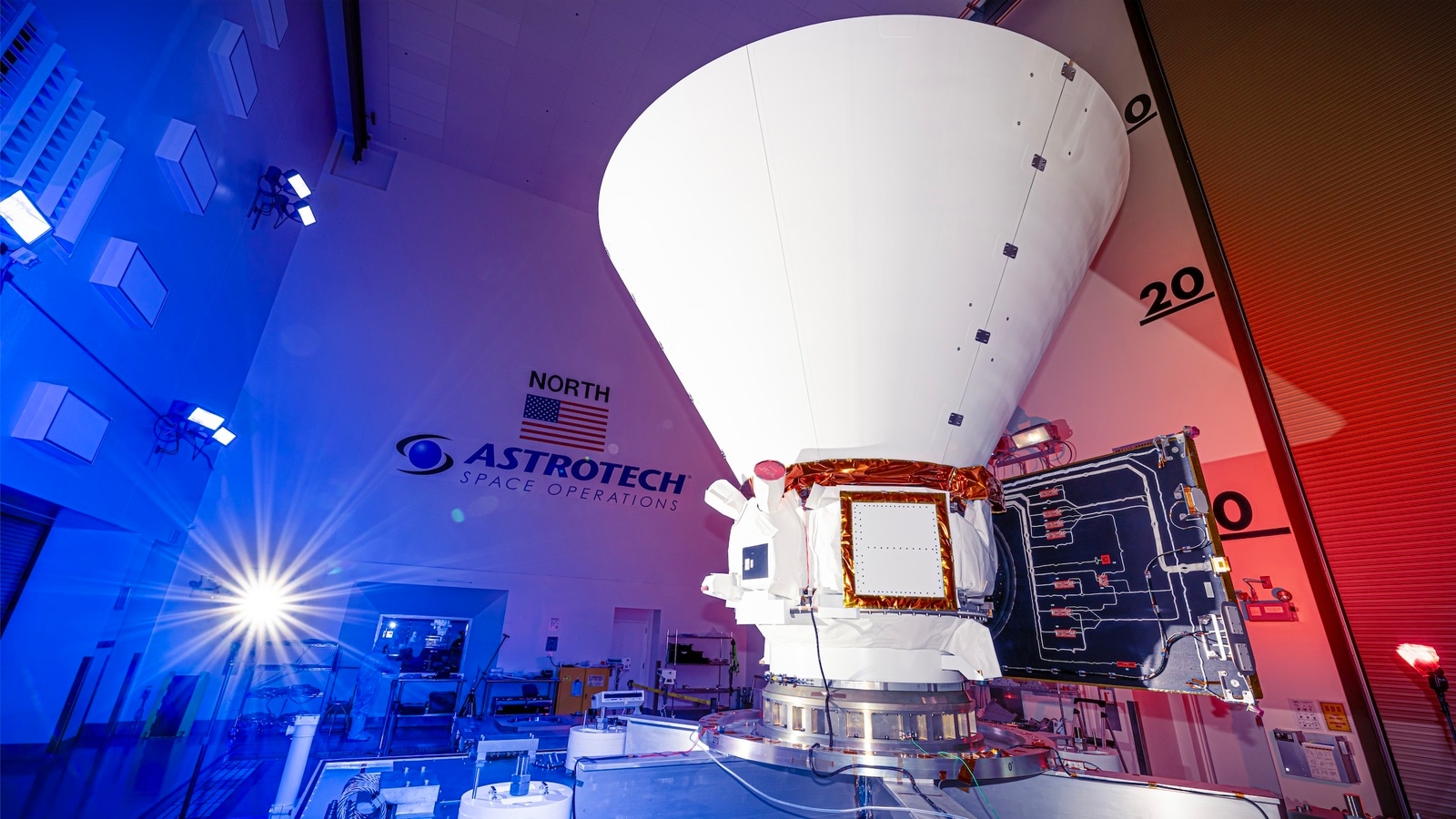
On may 10th, a semitrailer delivered NASA’s Interstellar Mapping and Acceleration Probe or IMAP to the Astrotech space operations facility all the way from NASA’s Marshall Space Flight Center in Huntsville, Alabama. The IMAP mission is a modern-day celestial cartographer that will map the solar system by studying the heliosphere, a giant bubble created by the Sun’s solar wind that surrounds our solar system and protects it from harmful interstellar radiation. Tentatively scheduled for launch no earlier than fall 2025 on a SpaceX Falcon 9 rocket from Launch Complex 39A at NASA Kennedy, IMAP will be processed fuelled and encapsulated by the technicians in Astrotech facility. About the mission According to reported  NASA’s blog, The IMAP mission will orbit the Sun at a location called Lagrange Point 1 (L1), which is about one million miles from Earth towards the Sun. From this location, IMAP can measure the local solar wind and scan the distant heliosphere without background from planets and their magnetic fields. The spacecraft will use 10 scientific instruments to study and map the …

Three things to know about SPHEREx, NASA’s new space telescope | Explained News

Three things to know about SPHEREx, NASA’s new space telescope | Explained News

National Aeronautics and Space Administration (NASA) is tentatively scheduled to launch its new megaphone-shaped space telescope on Friday (February 28) aboard a SpaceX Falcon 9 rocket from Vandenberg Space Force Base in California. During its short two-year mission, the observatory will help better understand things about the formation of the universe, the growth of all galaxies across cosmic history, and the location of water and life-forming molecules in the Milky Way galaxy. Here are three things that you need to know about the new space telescope, called Spectro-Photometer for the History of the Universe, Epoch of Reionization and Ices Explorer (SPHEREx) Will make the “most colourful” map of cosmos ever SPHEREx will map the universe while detecting two kinds of cosmic light, optical and infrared. While the human eye can see optical light, infrared light is invisible to it. That is an issue when it comes to studying the cosmos as it is the infrared light that contains information about the farthest reaches of space, the stars being born, and the details of galactic structures. …

NASA SPHEREx Telescope to Map the Universe and Search for Life’s Ingredients

NASA SPHEREx Telescope to Map the Universe and Search for Life’s Ingredients

A groundbreaking mission designed to enhance understanding of the universe’s origins and the potential for life within our galaxy is set to be discussed in an upcoming NASA briefing. The SPHEREx (Spectro-Photometer for the History of the Universe, Epoch of Reionization and Ices Explorer) mission will be previewed during a news conference scheduled for 12 p.m. EST on Friday, January 31. The telescope, which is planned for launch no earlier than February 27, promises to offer critical insights into cosmic history and life-forming molecules. Insights from the SPHEREx Mission According to NASA’s SPHEREx mission details, the observatory will survey the entire sky using near-infrared light. Its goals include exploring how galaxies evolved, understanding the structure of the universe, and locating water and organic molecules in regions where stars and planets are formed. Over 450 million galaxies and 100 million stars in the Milky Way are expected to be studied, providing vital data for researchers. The spacecraft, developed by BAE Systems, features three concentric cones to reduce heat and light, ensuring precise measurements. Contributions to the …

Two Private Lunar Landers Launch Aboard SpaceX Falcon 9 for Moon Missions

Two Private Lunar Landers Launch Aboard SpaceX Falcon 9 for Moon Missions

Two private lunar landers have been launched into space, marking a milestone in lunar exploration. The landers, Firefly Aerospace’s Blue Ghost and Resilience by Japanese company ispace, were carried aboard a SpaceX Falcon 9 rocket. The mission took place early on January 15, from NASA’s Kennedy Space Center in Florida. The Falcon 9’s first stage landed successfully on the droneship “Just Read the Instructions,” stationed in the Atlantic Ocean, after completing its role in the mission. Blue Ghost: NASA Payloads and Lunar Research According to space.com, the mission plan named “Ghost Riders in the Sky,” Blue Ghost is set to operate under NASA’s Commercial Lunar Payload Services (CLPS) program. The lander, equipped with ten NASA research and technology payloads, is expected to conduct studies on lunar regolith and other elements of the moon’s environment. It will spend 25 days in Earth orbit for systems checks and partial payload operations before heading to lunar orbit. A landing in Mare Crisium, on the moon’s near side, is anticipated after 16 days in orbit. Resilience’s Journey and Payload …