

4 min readJun 15, 2026 09:13 PM IST
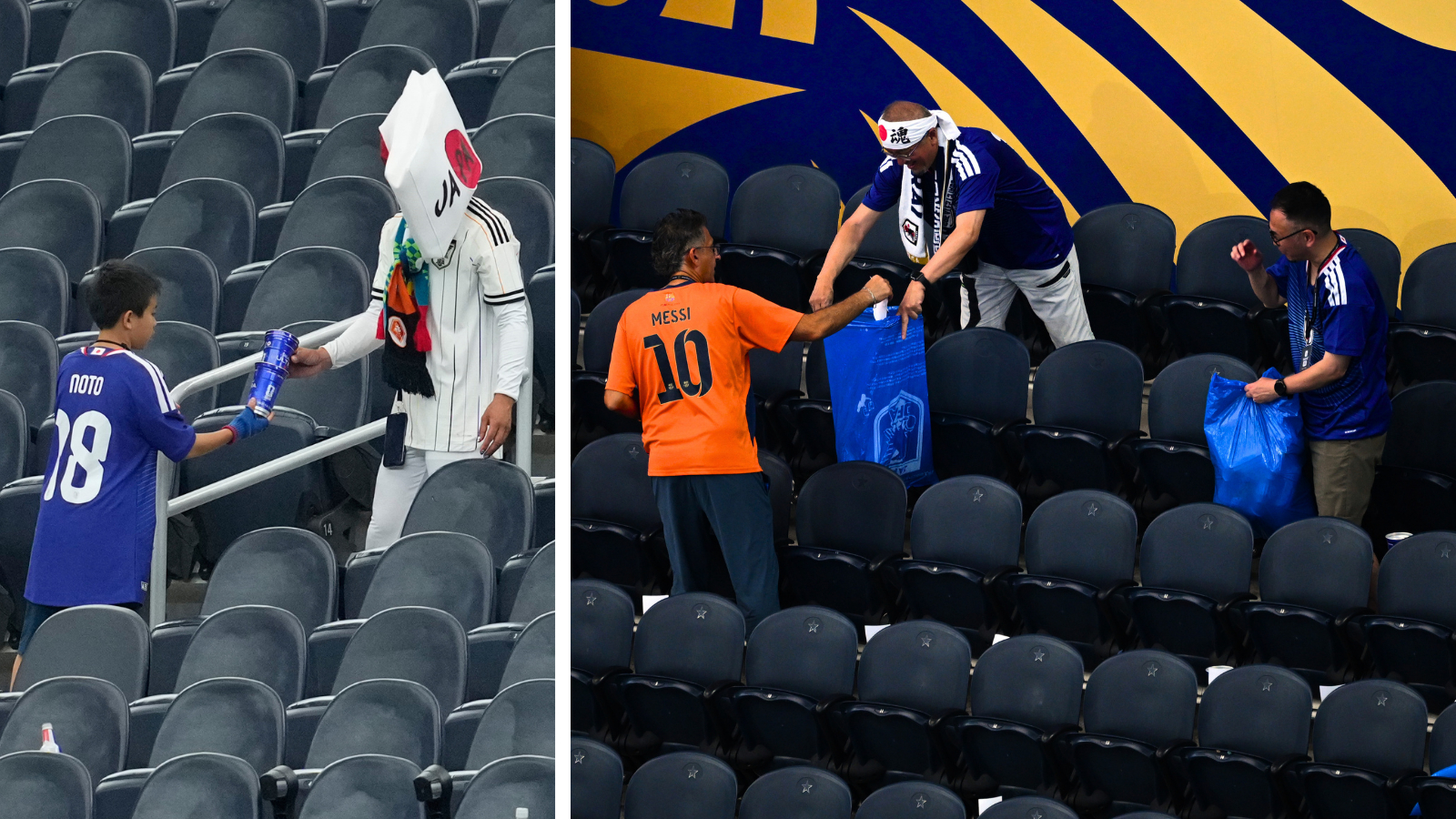
Shortly after Japan’s 2-2 draw against the Netherlands, a familiar sight unfolded at AT&T Stadium in Texas: Japanese fans cleaning up trash, putting it into blue bags they had carried in. The football world first witnessed the Samurai Blue supporters leaving stadiums spotless at France 1998, Japan’s maiden World Cup appearance. For those in Japan, it was no surprise. Cleanliness is not a habit. It is infrastructure.
“In the Japanese system, cleaning begins at elementary school when the kids are six to seven years old. They will clean the classroom and the lobbies with brooms and wipes. They will serve food. Cleaning is linked to discipline and responsibility. When these kids go to university, this culture continues. This is what you are seeing at the World Cup. The brain is wired to do the cleaning,” said Dr Randeep Rakwal, a professor at the Tsukuba International Academy of Sport Studies, who traces his roots to Daryaganj in Delhi and has lived in Japan for over three decades.
Tokyo University’s official curriculum includes cleaning activities that fall within the non-cognitive category, skills considered as important as academic ones.
The reason Japan fans clean the stadium after each game. Respect. 🤝🇯🇵 pic.twitter.com/o9qJUOLefY
— FIFA (@FIFAcom) June 15, 2026
Haruka Takeda, a social scientist studying mental health in para athletes, points to a philosophy the Japanese carry even when they leave their shores. Kita toki yorimo kirei ni suru, or leave the place cleaner than when you arrived. “Many Japanese people are familiar with this idea from a young age. Children are taught to clean classrooms and public spaces themselves, so cleaning is not seen as someone else’s responsibility but as something everyone contributes to. For many Japanese football fans, cleaning the stadium after a match is a way of showing respect for the venue, appreciation to the host country, and consideration for the people who will use the space next,” said Takeda, a student at TIAS.
ALSO READ | How Kamada became Japan’s unlikely hero in World Cup classic vs Netherlands
The practice extends well beyond schools. In the community where Rakwal has lived for 25 years in Yatabe, residents gather once every two months, Soji Shimasu, I will clean, to clear the lanes, overgrown grass, fallen leaves, the odd cigarette stub. Japan is an aging society, and for elderly residents who can no longer participate, neighbours clean on their behalf. “If my wife says I have to join the cleaning if she is not there, I will plan my schedule and give the community cleaning priority,” he said.
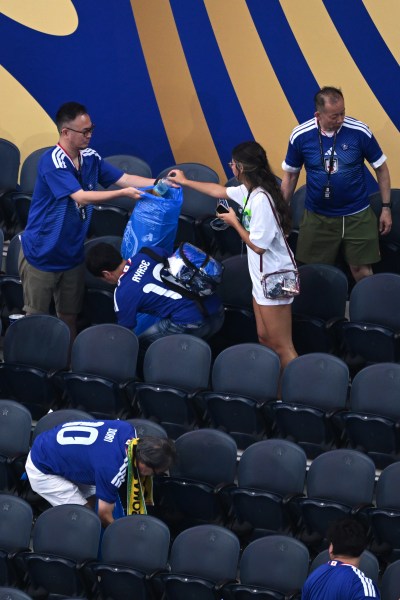 For the people of Japan, cleanliness is not a habit. It is infrastructure. (AP)
It extends to businesses too. White and blue-collar workers clean the area outside their company premises as a matter of course. “Every shop, company, business will do the cleaning. There is a Toyota showroom in my area,” Rakwal said. “They will be in their official dress, cleaning the surroundings.”
Even a toffee wrapper is not carelessly discarded. In train stations, where bins are rare, the wrapper goes back into the pocket and home. “It is the same concept that has moved to the sporting world,” Rakwal said.
Story continues below this ad
Rakwal traces the roots of this national discipline to a single moment. When Tokyo became the first Asian city to host the Olympics in 1964, the capital was transformed as a symbol of post-war Japan: gleaming buildings, cleaned waterways, the first Shinkansen unveiled ten days before the opening ceremony. Omotenashi, selfless hospitality, became non-negotiable.
“Cleanliness started with the 1964 Olympics,” he said. “It was a directive that foreigners were coming, so Japan must be clean. Before the Olympics, Japan had a garbage problem. Tokyo Bay was contaminated. You couldn’t even fish. Then they cleaned up everything.”
In Dallas on Sunday night, the blue bags were doing the same work, in a different country, for the same reason.
Disclaimer: We do not own any of the content, ideas, images, or text presented here. All rights belong to their respective owners. For more information and to view the original source, please visit the following link: