

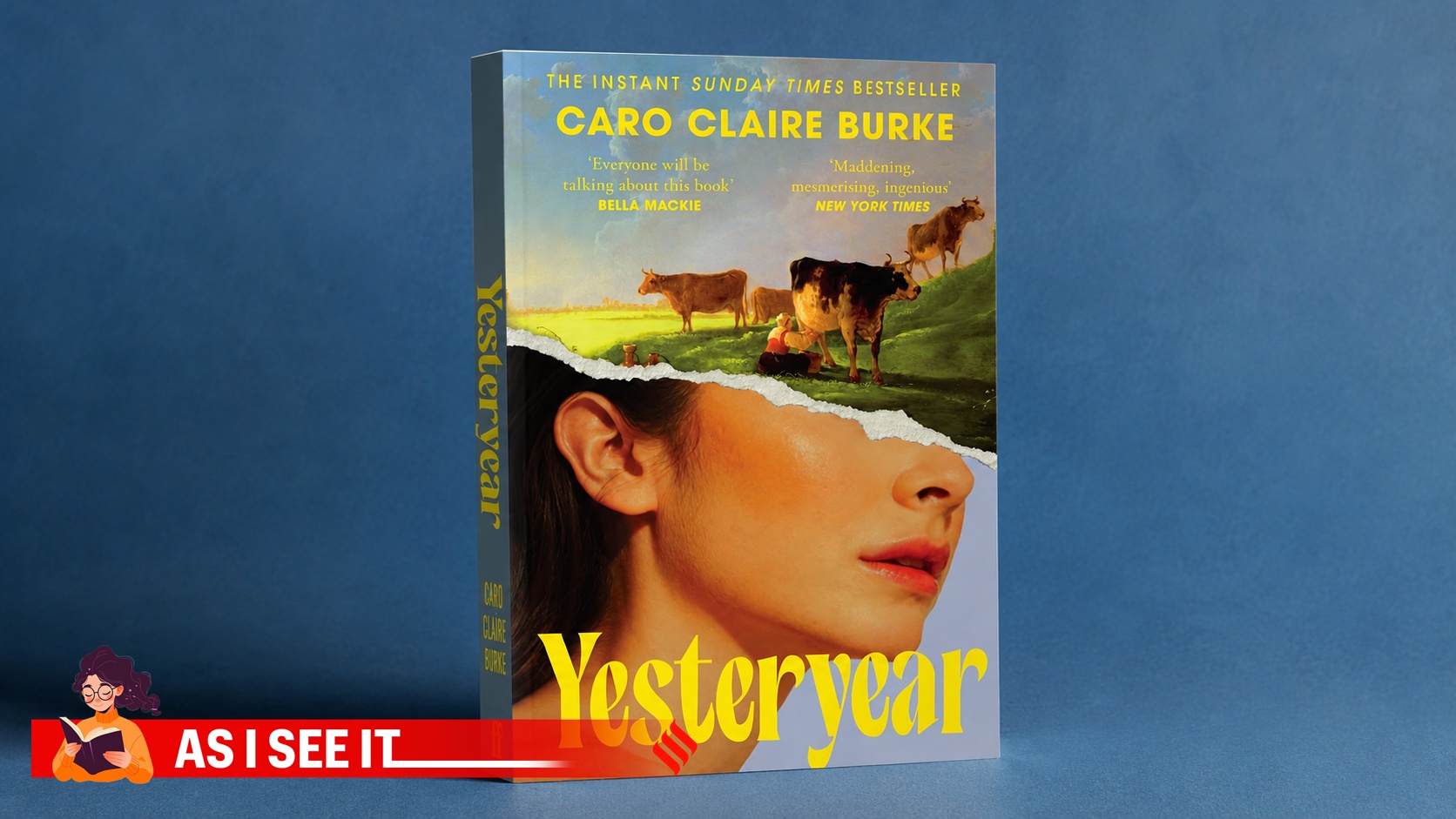
An unflickring yearning for things of the past, a time one had never lived in, can make the premise of Yesteryear, the celebrated new novel by Caro Claire Burke, sound like a dream.
Summaries floating about the internet described a social media influencer who suddenly found herself in the 19th century. For the hopeless romantics among us, it was enough that someone in the novel is waking up in the past, in the 1850s no less, when Dickens and the Bronte Sisters were writing their masterpieces and Uncle Tom’s Cabin was beginning to create waves. Never mind that it is a trad-wife, a creation of the internet age, that goes back to the past, it is still the past.
But then there is another kind of anticipation for readers who pick up on the subject of that line: a trad wife – a woman who claims to love all that is traditional including the imposed gender roles and the lack of modern tools. She is going to a time when what she has been preaching about was the reality.
Natalie Heller Mills, the 32 year old protagonist, plunges into irony from the offset: thriving on modern day technology to shun all that’s modern. She is on Instagram, telling her millions of followers everyday how wonderful life is, when you do everything from scratch. The satire begins right there, as you are inside Natalie’s head, furiously working out the details – the smile, the expression, the modernities to be hidden from camera, and most of all the picture of a happy family living on a ranch, far from the city life of Idaho, US. .
In creating her large and growing family, she does stick to the stereotype: moulding a tough male head out of a soft-hearted man, and nurturing five children aged between an adolescent and a toddler with a sixth on the way. But even that comes out of an agreement she has with her wealthy politician father-in-law, who is sponsoring the expenses of the ranch. You are left wondering if that’s what she really wants.
The unreadable heroine
Natalie, through the book, remains unreadable, even as you are consistently inside her head. You learn that she had an orthodox upbringing and relies on her faith to make her decisions, censoring even her thoughts of foul language. But you are never sure if she really believes, or is only following a way of life she had been taught. It is never clear if she is working so much to keep up the pretence of a woman in love with the past, because that’s what she thinks is the right way to live.
In that way, she remains mysterious, but charmingly so. You rarely get a glimpse of Natalie’s true feelings. One of those moments comes after her first childbirth when she reflects about the truth of motherhood that no woman tells another. “It’s the long, golden string of insincerity that threads together the entire human race: a shared agreement between women to insist back and forth in endless conversation that this thing we spend our whole lives preparing for—this thing we were born for—is anywhere close to what we thought it would be.”
Story continues below this ad
Natalie struggles with her relationship with her firstborn, a girl called Clementine, while she tries to make sure her husband Caleb does not end up as a kindergarten teacher. The rules of patriarchy seem so deeply ingrained in her that she despises the softness of her husband, who wants a job that will have him hanging out with children, which he loves best. She recognises the traits in her husband as those of a woman, and her own ambitions as those of a man, and desperately tries to set this right. She does not want to be like the ‘angry women’ commenting on her posts, but spends hours obsessing over the life of her more liberated college mate Reena.
But this is where Natalie’s character becomes confusing. This is not a woman who is incapable of thinking out of the box, shaking away the indoctrinations of a young age and forming her own conclusions. She has been to Harvard. And she is clever enough to figure out what the internet would like to see, what sells, what is to be hidden. There is no innocence in any of her projects.
Somewhere, you believe, her wires crossed. She has the brains, but she has not tried to figure out what exactly she wants to do with it. She hasn’t been able to kick away the conditioning or submit entirely to her situation, putting her in between reality and the fakeness of her world.
Past and present collide
What Caro does well is the plotting. Natalie-like, you think, as you admire the way she has divided the plot into the present, the past and the future and carefully placed the characters and parts of the story, crumb by crumb, until you reach the final pages and figure out what has been going on. When Natalie wakes up in the past, what you wait for and not get is her lack of curiosity, a basic interest or surprise that you think someone who has been plucked out of reality would experience. It is not only marked by the traits of another century, but people who resemble her family. Yet all she keeps saying is, this home that is not my home, this family that is not my family. She comes up with various explanations, including a possible abduction and a reality show, but does not wonder how she is in another time. In place of excitement or fear is a resignation, a subdued acceptance of her new reality. But then this makes sense only when the author completes her cycle of time and reaches the future.
Story continues below this ad
How this is done could be disappointing to readers of time travel, but it comes from a lot of careful plotting and writing. Despite the long list of characters (Natalie’s mother and sister, her family with Caleb, the in-laws, the college and school friends, the employees and so on) the book is centred on Natalie. Admirably, there is no attempt to explain away the meanness of her, justify the absolute lack of kindness in her that even her ever-patient mother could not stand.
“You think kindness is some silly frivolous side virtue, when it is in fact the whole damn thing!”
You may feel sorry for her, or else anger. You may also feel a complete indifference. Natalie has not been built as a character you can relate to, much less understand, except in her very rare moments of self-honesty.
The novel may work as a satire, depending on how you look at it, of social media trends or patriarchy or blind faith. But it might not leave an aftertaste.
Story continues below this ad
(As I See It is a space for bookish reflection, part personal essay and part love letter to the written word.)
Disclaimer: We do not own any of the content, ideas, images, or text presented here. All rights belong to their respective owners. For more information and to view the original source, please visit the following link: