

Last Updated:
A tripartite MoU between the Centre, the state, and Tata Sons for land allocation and project modalities was already signed last year. The UP cabinet cleared the project on Tuesday
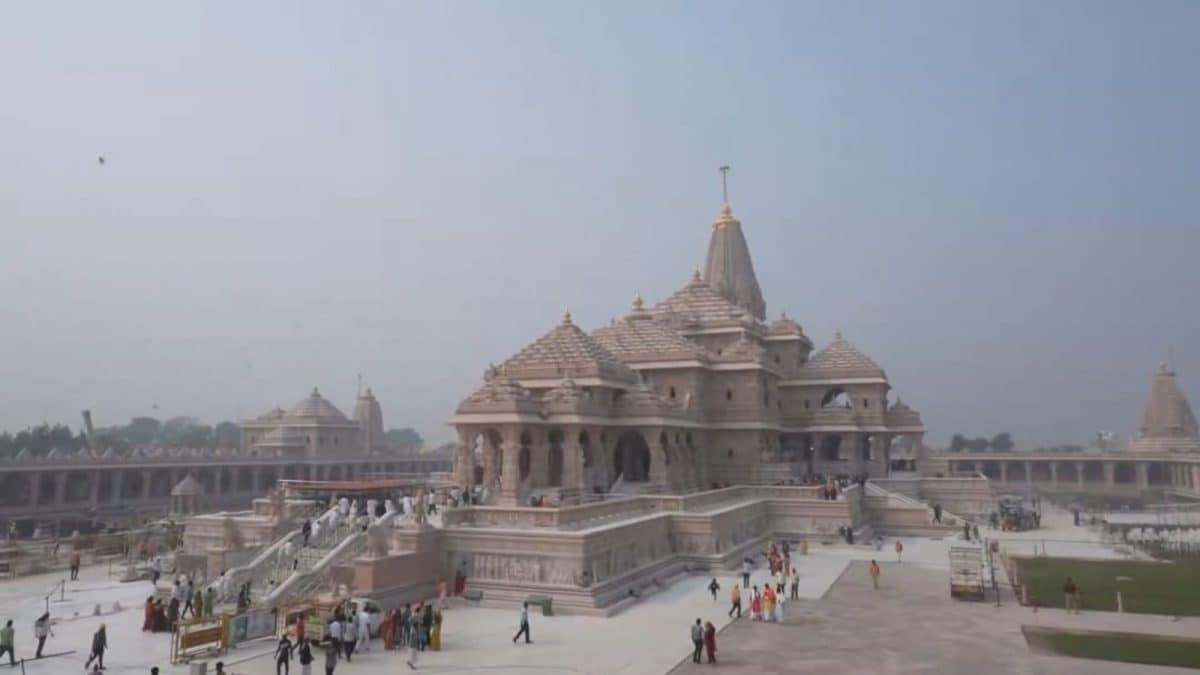
The temple museum is expected to act as a major attraction that complements the Ram Mandir complex (above), giving visitors an extended cultural experience and dispersing crowd pressure across the city. Image/X
Uttar Pradesh’s temple town Ayodhya got yet another feather in its cap on Tuesday, as the state government approved the expansion of the proposed temple museum and cleared Tata Sons to develop and operate the 52-acre world-class project.
Briefing reporters after the cabinet meeting chaired by Chief Minister Yogi Adityanath, Parliamentary Affairs Minister Suresh Kumar Khanna said Tata Sons had expressed willingness to construct a state-of-the-art museum and manage it through a not-for-profit special purpose vehicle (SPV) under its CSR commitments. The SPV, formed under Section 8 of the Companies Act, will include representatives from the Union government, the Uttar Pradesh government, and Tata Sons.
Initially proposed on 25 acres of nazul land in Manjha Jamthara village of Ayodhya, the temple museum required additional space to align with the scale and architectural vision put forward by Tata Sons. The company requested more land to execute the project’s expansive design, which aims to blend heritage, technology, and immersive cultural experiences.
“Accordingly, an additional 27.102 acres will now be transferred—free of cost—from the Housing and Urban Planning Department to the Tourism Department, taking the total project area to 52.102 acres,” Khanna said.
A tripartite MoU between the union government, the state, and Tata Sons for land allocation and project modalities was already signed on September 3, 2024.
Officials said the expanded temple museum is envisioned as one of the largest cultural institutions of its kind in India. The facility will narrate the civilisational heritage of Ayodhya through curated galleries on temple architecture, archaeological discoveries, the Ram Katha tradition, and the evolution of the city as a spiritual centre.
The museum is expected to use digital installations, immersive storytelling, multimedia presentations, and thematic pavilions to appeal to global visitors. Khanna said this marked “an important step toward developing Ayodhya as a global centre of culture and spirituality”. He said that the museum will provide a deeper and more structured understanding of Ayodhya’s historical layers.
Ayodhya has seen a dramatic rise in pilgrim and tourist footfall since the Pran Pratishtha ceremony at the Shri Ram Janmabhoomi Temple in January 2024. The city currently receives an estimated 2 to 4 lakh visitors daily, putting pressure on existing infrastructure and heightening demand for more tourist-centric cultural spaces.
The temple museum is expected to act as a major attraction that complements the Ram Mandir complex, giving visitors an extended cultural experience and dispersing crowd pressure across the city. Its development coincides with ongoing upgrades across Ayodhya—improved road networks, expanded airport facilities, riverfront beautification, public amenities, and increased hospitality infrastructure.
The museum project forms a central part of the state’s broader plan to position Ayodhya as a “world heritage-ready” spiritual and cultural hub. The additional land will accommodate not just museum galleries but also ancillary facilities like auditoriums, research centres, sculpture parks, landscaped walkways, and cultural event zones.
Officials said the involvement of Tata Sons ensures access to high-quality execution, institutional management, and design expertise. The Section 8 SPV structure, they added, will help ensure transparency, long-term governance, and non-commercial operation.
Alongside the expansion of the temple museum, the Uttar Pradesh cabinet also cleared several key proposals aimed at strengthening urban infrastructure, welfare services, and sports governance across the state. The cabinet approved major drinking water projects for Bareilly and Kanpur, which will overhaul ageing pipelines and enhance supply networks in densely populated urban areas. It also passed a crucial policy reform extending service-related relief to state-appointed athletes participating in international events, ensuring smoother leave provisions and stronger institutional support during competitions. In addition, the government sanctioned the establishment of Divyang Rehabilitation Centres in every administrative division of the state, creating a comprehensive, decentralised network for disability support, therapy, and rehabilitation.
Khanna said these decisions reflect the government’s focus on simultaneous cultural development, infrastructure expansion, social welfare, and sports promotion.
With the cabinet’s approval, the temple museum project is now ready to move into its implementation phase. Once completed, it is expected to become one of India’s most significant cultural landmarks—a space that documents, preserves, and presents the layered heritage of Ayodhya to millions of visitors each year.
 Click here to add News18 as your preferred news source on Google.
 December 02, 2025, 21:27 IST
Read More
Disclaimer: We do not own any of the content, ideas, images, or text presented here. All rights belong to their respective owners. For more information and to view the original source, please visit the following link: