

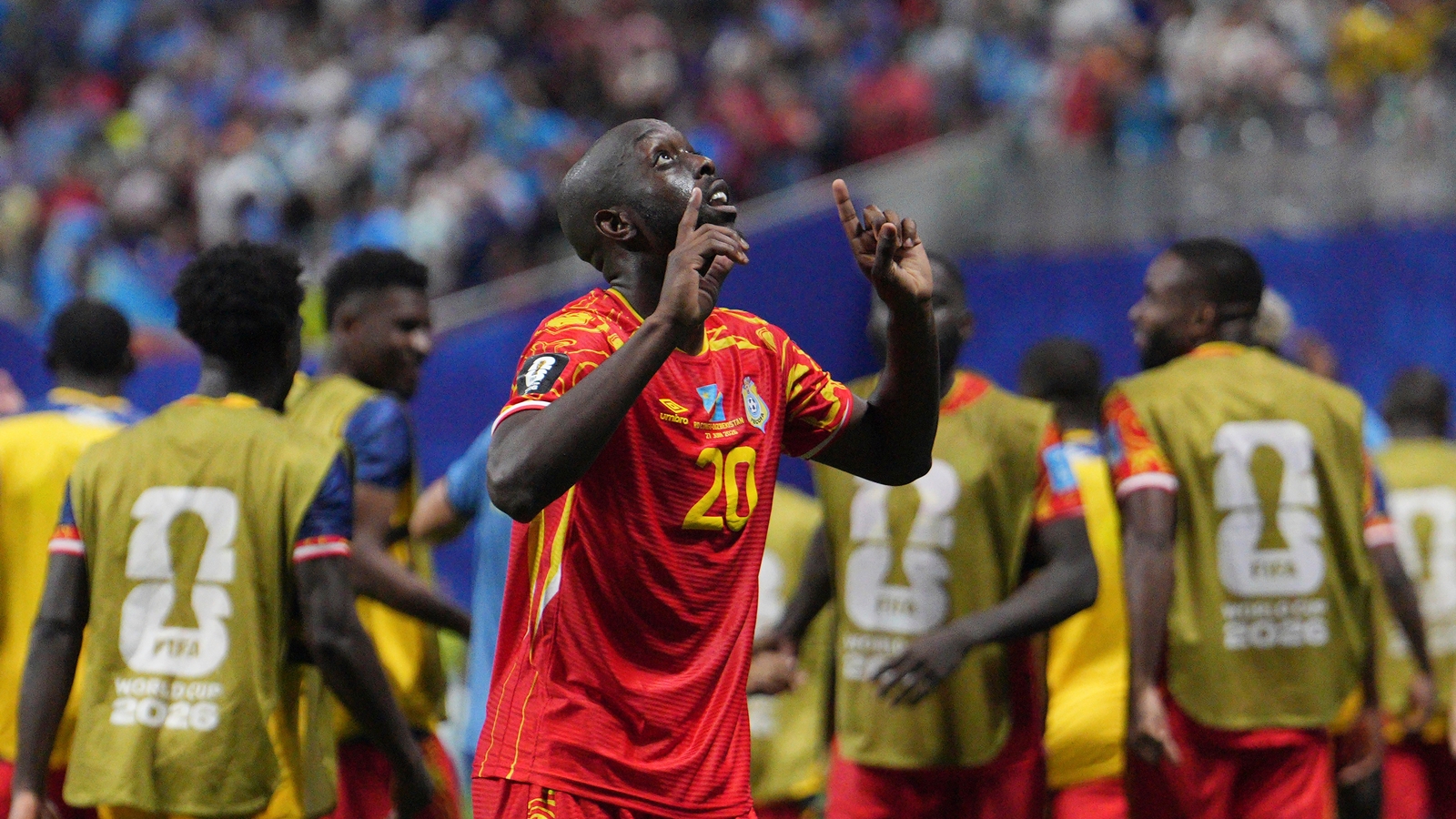
The Congo fans, attired in traditional kanzaku and leopard printed hats, perhaps knew the outcome. They had stocked adequate No 20 jerseys; maybe they knew it was Yoane Wissa’s night. Maybe, they knew if it had to be their night, it had to be Wissa’s night too.
It played out to the perfect script as Wissa pinched a brace to complete a stirring comeback against Uzbekistan and Congo punched their maiden entry into the World Cup knockout stage with a 3-1 win. This incidentally was their first ever victory in the tournament as well, setting it up nicely against England in the Round of 32. And they serenaded the stands with his shirts.
Largely a young crowd, none of them would remember the last time they featured in a World Cup. None of them were born in 1974; the ruling president then was barely in his teens; the republic was only 14 years old. Between the 52 years, the country endured numerous regime changes, natural disasters and epidemic outbreaks. The latest, a burst of Ebola, saw the World Cup-bound players undergoing a 21-day quarantine in a bubble in Belgium. The preparations were hit when the friendly with Chile was cancelled. Once they landed in the US, they had to check their temperature nearly every hour in the first week. Some of their home fans couldn’t get the visa because of the Ebola outbreak.
But they landed with smiling faces, dressed in leopard-design blazers, and their smiles became broader. The festivities had begun soon after Wissa netted the third goal in injury time, a curler from outside the box, a classical Wissa strike. The manager Sébastien Desabre would advise them to keep their focus and see out the game.
When they did, overcoming their emotions, they broke into their traditional dance, the fimbu. The players would gather side by side, hold their left arm up and wave their right as they moved down the pitch in unison. In the background, they played the Congolese pop hit “Fimbu” by Felix Wazeka. The dance—and the name, which translates as whip—has cultural significance. It was once a symbol of Belgian colonial violence, now used mockingly.
Once the fimbu was over, they hoisted Wissa on the shoulders. Fiston Mayele, who scored the important second goal, was pushed away by the broadcasters, to whom he said: “I think that today, what we did, we showed the world that, listen, in Congo we have very, very good players, and today we won.”
The overwhelming limelight, though, was on Wissa, their most recognised footballer, arguably their finest ever. The Newcastle United winger once suffered an acid attack at his home in the suburbs of France, where his parents had settled after escaping the political upheavals in the country. He began as a goalkeeper and liked the duty between the sticks, but his mother intervened and badgered the coach of the local club to play him in the midfield. The coach listened and pushed him into the front.
Story continues below this ad
But football was not his only interest. He played rugby, before making the hard decision to quit it at 14. He then nursed the dream of becoming a policeman, but soon after he turned 16 a scout with French club Châteauroux spotted and took him to the club. “I was initially reluctant, because boys of my age were already playing for big clubs. But I decided to give it a try. I was what they call a late bloomer, but at the academy I picked up things fast,” he told Daily Express. Congo and a host of clubs in the English Premier League would thank the scout for dragging him into the club.
In little time, he became the central piece (even though he plays on the left) in their World Cup. The manager built a team around him and plucked players from the well fleshed-out diasporas spread across Europe. There were a clutch of others with experience at elite club level. Like the ex-Manchester United pair of Aaron Wan-Bissaka, arguably still one of the finest one-on-one defenders, and Axel Tuanzebe.
At the heart of midfield is Samuel Moutoussamy of Congolese and Indo-Guadeloupean ancestry, he is the team’s engine room, inspiring the team with words and deeds. He once explained the guiding philosophy of his team: “We’ll leave our souls on the pitch.” So do they, with an intense and aggressive demeanour. Their defence is difficult to break down. Portugal and Colombia, with ample ammunition, mustered only a goal apiece. The cornerstone is the resolute defence that blocks passing channels. “We have great mental strength. My players know how to fight back and react during adversity,” the manager Desabre had said before the World Cup.
They demonstrated that against Uzbekistan, when they fell behind by a goal, then had the equaliser ruled out for a foul and seemed running into a dead end, before, inevitably, Wissa equalised in the 68th minute, and Mayele grabbed the second 10 minutes later.
Story continues below this ad
On a night without regrets, they had only one. Michel Kuka Mboladinga a.k.a Lumumba Vea, their super fan who stands motionless for the entire duration of every game in tribute to first Congolese PM Patrice Lumumba, had made it to Guadalajara in Mexico for the Colombia match. But the US visa didn’t come through for Atlanta. He had arrived late missing the Houston match against Portugal and watched from elsewhere as Congo made history. In the stands, some fans struck his pose anyway. The Congolese ambassador in Washington had said she hoped he would get a visa if Congo progressed. They are through now. He may yet get there.
Disclaimer: We do not own any of the content, ideas, images, or text presented here. All rights belong to their respective owners. For more information and to view the original source, please visit the following link: