


6 min readJun 21, 2026 06:59 PM IST
The Haitians were defeated, but they didn’t shed tears in the Philadelphia arena. They danced and sang their way to the aisles, chanting the most powerful phrase in their history, ‘Grenadye, Alaso’. Or march forward grenadiers, a tribute to their revolutionaries who drove out the French Army of Napoleon. “We lost, but we fought. We take pride in that, and that’s our tradition,” says Thomas Ehiogene an ardent fan in his 30s.
“To just qualify in the tournament is a big feat, and it has united a nation,” he says. He is not resorting to the usual minnow-speak, but from his own harrowing personal experience. “Most of us here, the fans, and the team, have one thing in common. We don’t have a home,” he says, with a lump in his throat. Now football has brought them under one roof, families that left Haiti decades ago, all battle-scarred, now singing, dancing and praying for their team.
He fled Haiti in 2021, when the president Jovenel Moïse was assassinated in his home, and the wild gangs ran amok. “It became unliveable. They would knock on the doors and demand money. If not they shot us or kidnapped women and children. We fled Port-au-Prince (the capital) a few weeks after the president was killed,” he narrated his escape to the Americas.
An UN report says that nearly 1.4 million were displaced, nearly 20,000 were killed, and twice as many were reported missing. Some escaped to the Dominican Republic, the only country that it shares borders with. The more ambitious ones tried to take the ferry from the Mole Saint-Nicolas harbour jutting out into the Caribbean sea to Cuba and from there to the US. “But many of them were caught and imprisoned in Guantanamo Bay. Luckily, we had the papers and we reached Jamaica. In a couple of years, we got our papers ready and we could come to the USA as refugees,” he says. He and most of his family settled in Miami, where he runs a restaurant with his two brothers.
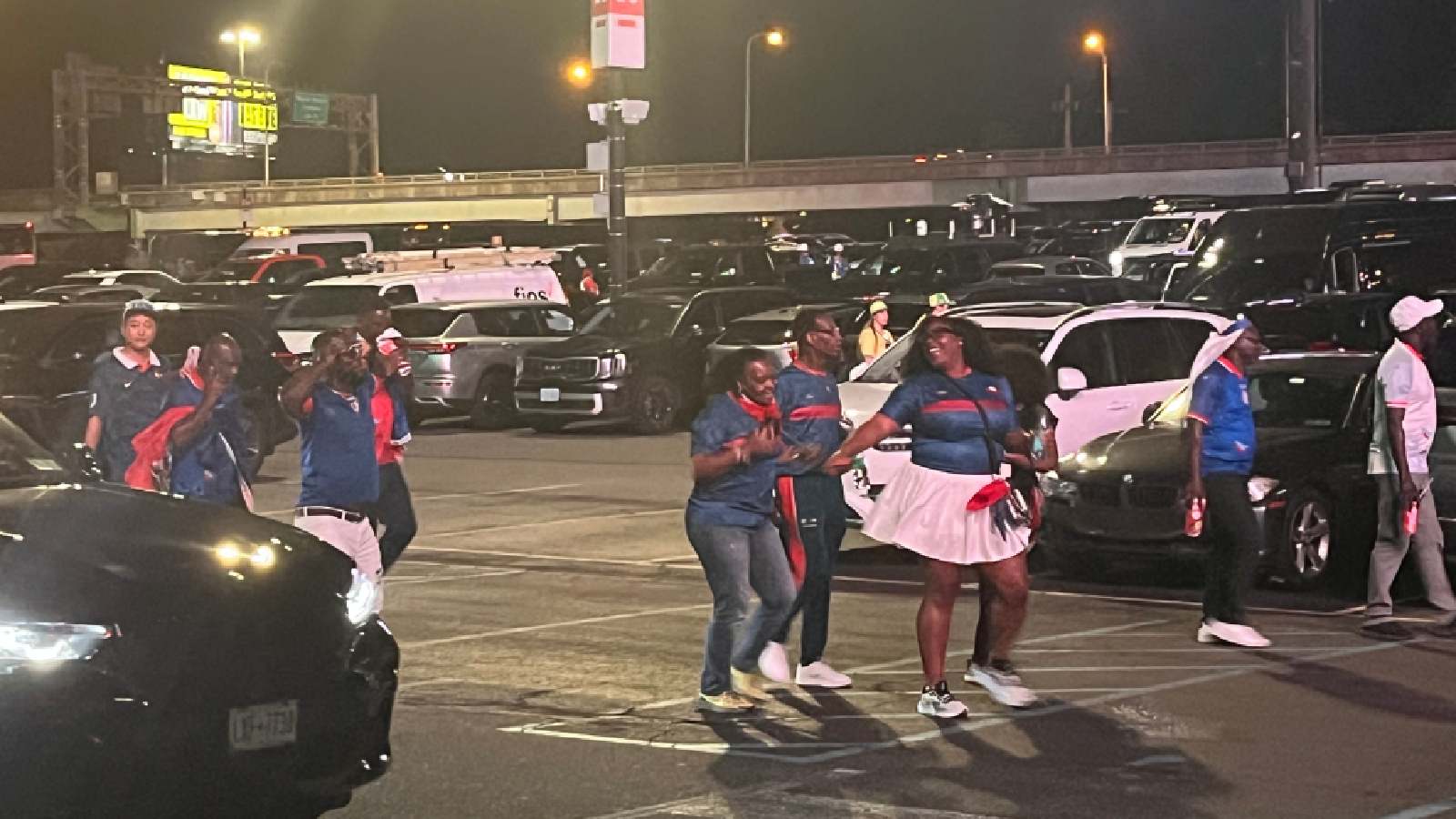 The Haitians were defeated, but they didn’t shed tears in the Philadelphia arena. They danced and sang their way to the aisles, chanting the most powerful phrase in their history, ‘Grenadye, Alaso’. (Express Photo)
Similarly, Haiti’s footballers could not play a single World Cup qualification game in their country, but had to play all their games in Curacao. The gangs overtook and vandalised Haiti’s old stadium Stade Sylvio Cator and destroyed its facilities, rendering it impossible to play. Reminisces Johnson Charles, who had left his country decades ago: “I have been to the stadium, a beautiful one with a lot of palm trees. I have heard from relatives, the entire building has been demolished too. It’s sad that they can’t play, but how can you play in such fear?”
Two years before the gangs seized the stadium, a visiting team was nearly held hostage at gunpoint. When Belize visited Port-au-Prince for a match, a group of armed men held up the team bus for an hour. They left them unharmed and Belize players did not even venture out for practice. A month later they played Canada, and never again have the players enjoyed the feeling of playing at home.
Unsurprisingly, only 10 of the 26 members were born in the country. The rest were bunched from the expat community scattered across the world. Twelve were born in France of Haitian parents, one in Canada, one in Switzerland and two in the United States.
Story continues below this ad
Haiti and America have a long soccer connection—the USA’s first big upset, beating England in 1950, featured a goal from Haiti-born Joe Gaetjens, who worked as a dishwasher. Only one of them, Woodensky Pierre, plays for a Haitian club. He is from Cite Soleil, a seaside slum, which is a base for powerful gang leaders. “There was a moment where I felt like I would never make it to this point because things were very difficult, I had no support, nothing,” he told CNN. “I did not grow up in a rich family, my mom was a street vendor, and my father was always doing side jobs. Football was all I had.”
The 21-year-old defensive midfielder was the last member of his squad to get a visa, as the USA under Donald Trump ended Temporary Protected Status (TPS) for Haitians. A Columbia District Court issued a reprieve on appeal, leaving the Supreme Court to make a verdict. “Where do we go? India?” Charles says, chuckling.
But centuries of living in violence and exile has instilled an unshakeable resistance. “We were the first country to abolish slavery and drove the Europeans out. So we are a small but strong nation, not afraid of tomorrow, always partying and enjoying the moment. If we are asked to leave America we will find a new place. Once you are living away from home, it doesn’t matter where you are living,” the fan adds.
The fans didn’t burden themselves with expectations. An emotional Thomas says: “Strong teams dream of winning the World Cup. But we are just happy to see them because you never know when we would play in another World Cup, or where we will be.” The revelry resumed and will spill on since their last game.
Disclaimer: We do not own any of the content, ideas, images, or text presented here. All rights belong to their respective owners. For more information and to view the original source, please visit the following link: