

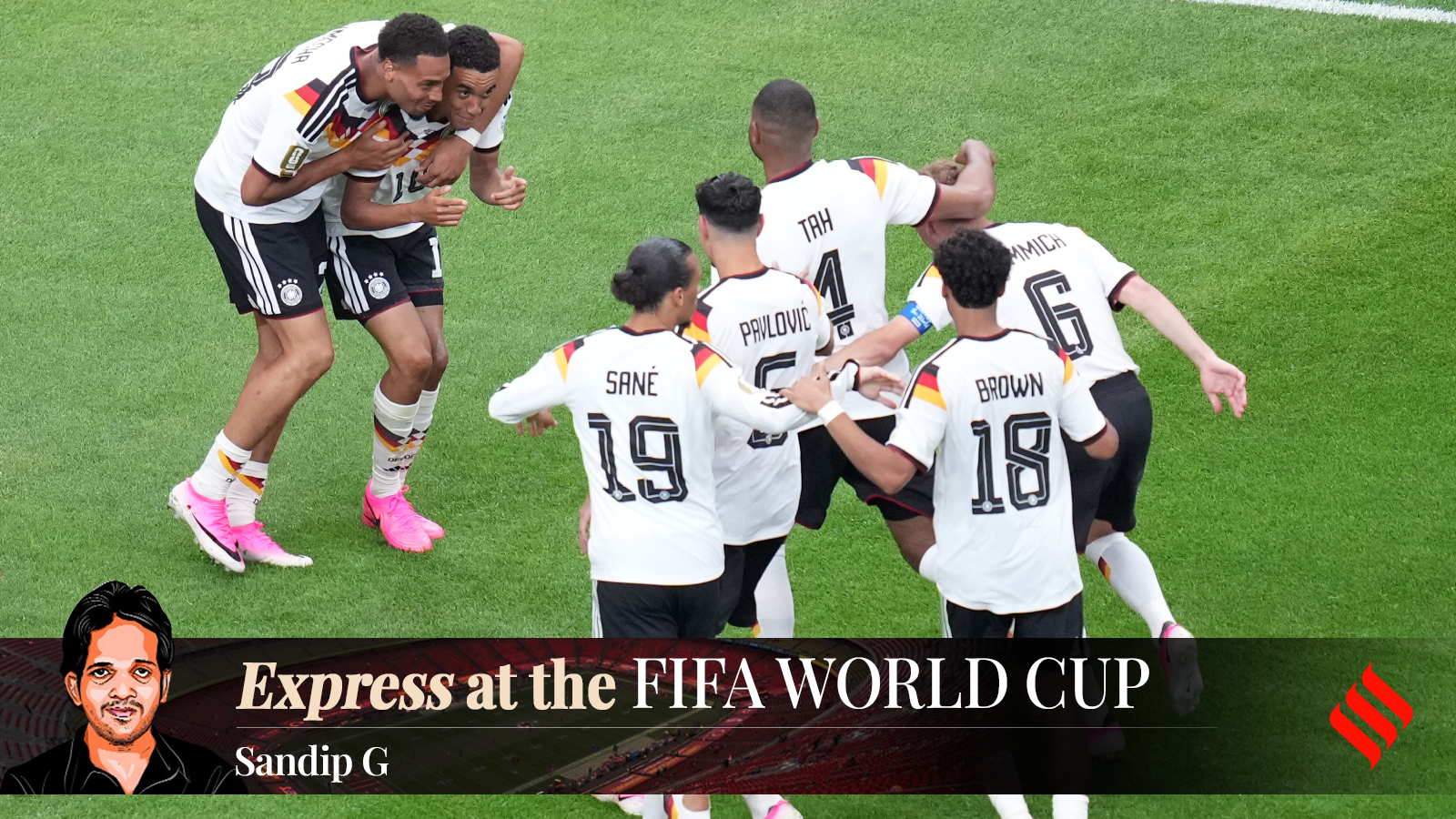
In the German pubs in New York, the frenzy has already frothed up. At Berlin NYC near Grand Central, the manager promises beer at a discounted rate for anyone who could name all the four captains that had won Germany the World Cups. “Germans don’t need any discount for beer I am sure, but we need our fans to be supercharged for the World Cup,” says Matthias Weber, the manager.
His shop is decked with German flags and football crests. He would paste a few posters of the legends before the fans started pouring in for the game against Ecuador on June 25, after the second against Ivory Coast on 21. The German football federation has promised free commute from Times Square to the Metlife Stadium in East Rutherford to those associated with fan groups. “We will give our all — both on and off the pitch — to ensure we share a successful and unforgettable tournament,” the email from the football association to fan groups reads. “It’s here we need the 12th man more than ever before. We should restore our image as the tournament team,” he says.
He—and the nation—has a word for it. Turniermannschaft. The tournament monster, a team defined by their knack of winning or reaching the fag end of tournaments. Group exists in the last World Cup, premature ousters in the European Championship have dented their image. Reform and redemptions are two words the Germans, from fans to press, players to support staff slip into every sentence.
ALSO READ | Messi’s hat-trick, Times Square and a watch party that started on the street
None, though, got the answer they wanted to hear from manager Julian Naglesmann, before leaving to the US. “It’s not my job to create euphoria!” he blunted a reporter’s question on his expectations. Suddenly, the most dynamic manager in Germany, who steered a relegation-threatened Hoffenheim to Champions League spot when he was barely 29, with a dynamic system, a young multicultural group waiting for their ludicrous virtues to be harnessed and a charming talker, became a polarised figure in his country.
In the press, he was likened to the Chancellor. Friedrich Merz. Jürgen Mittag, a professor of sports politics and sociology at the German Sport University Cologne, wrote in DW: “Julian Nagelsmann, with all due caution — be compared to Merz: someone who attempts to push through more far-reaching structural reforms, but in doing so also polarises more strongly and does not always strike the most skilful tone in his communication,” Mittag said.
ALSO READ | Germany at the 2026 World Cup: Neuer un-retires, Musiala returns, and a nation holds its breath
Story continues below this ad
Chancellors and managers—German society and media have always struck parallels. The 2014 World Cup winning manager Joachim Loew was always likened to the then chancellor Angela Merkel, who religiously attended every big game of her country. Coincidentally, they left the office too in the same year, 2021. “The national team coach thus becomes the focal point of this fragmented public sphere and the broader social discourses associated with it,” Mittag wrote.
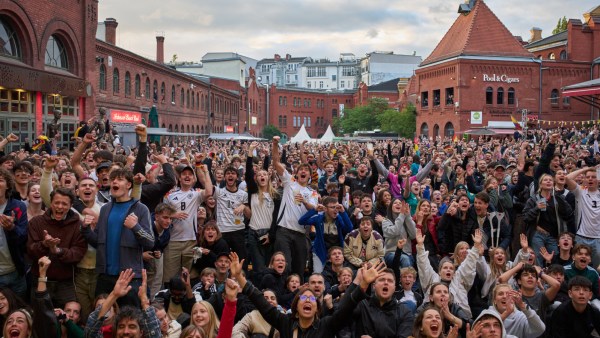 German fans watch FIFA World Cup match between Germany and Curacao, in the inner courtyard of the Kulturbrauerei in Berlin, Germany. (AP)
Germany is going through a cultural transition with multiculturalism at its forefront. Out of the 26 in the squad, 12 have immigrant backgrounds. At the forefront is Jamal Musiala, born to a German mother and a British-Nigerian father. When a team largely composed of immigrants falls, the public misconceives it as a failure of the immigrants.
The fans have more sporting reasons to worry. They bemoan the absence of a leader. Another tongue flexing German term they have— Führungsspieler (fuhrung = lead, spieler = player), embodied by the legendary Franz Beckenbauer, passed onto Lothar Matthäus, Michael Ballack and Philipp Lahm. Joshua Kimmich is their inheritor, but he has not transformed into the powerful leader he was once touted to be. There was a time when he was labelled the next Toni Kroos, but he plateaued. A trustworthy passer and ball circulator, he is bereft of the command the aforementioned names exuded.
ALSO READ | Mexican prisons are reviving cricket — empire brought it, revolution killed it
Story continues below this ad
Goalkeeper Manuel Neuer is certainly one that breathes command, but his declining reflexes and proneness to blunder has pushed him into the heart of another debate. The young versus old, Naglesmann’s reluctance to move away from the past. Two old guards have already retired—Toni Kroos and Ilkay Gundogan—but the manager, the criticism goes, has been unable to assimilate new players to function in his system. Talents have surged, Florian Wirtz and Musiala, but both are wildly inconsistent. Glorious one day, banal the other.
The uncertainty rankles the old-timers, a time when Germany could be banked upon. They were not always a wondrously stylish team, but like the automobiles they manufactured, they were sturdy and durable. They produced an electric performance against first-timer Curacao; the forwards bustled, the midfield imposed. But the lone goal they conceded and the few hairy moments the defence whipped up, injected a few doses of cynicism. The victory was taken with guarded optimism. Wait and watch until the duel between a stronger nation – is the theme among German media. So when it comes to the tournament as a whole it is probably worth withholding judgment on Germany until they have played a team with better pedigree or at least an ability to probe their latent brittleness at set pieces and in defence.
Their next adversaries, Ivory Coast, are not among the elites, but their slippery forwards could trouble Germany’s makeshift backline. Like in the Curacao game, Germany would over-rely on their forward quartet Kai Havertz, Florian Wirtz, Leroy Sane and Musiala. In rhythm, they are a mouthwatering group capable of dismantling defences. But none are synonymous for consistency.
In that sense, Naglesmann’s is the most un-German team in principle, relying on individual dazzle rather than collectivism, wildly erratic, at times confused. Then, to play for Germany, or really any big international team, is to be chased by ghosts of the past: the teams that won, the teams that didn’t. For some teams this can be a weight across their shoulders; for others a wind at their backs. How Nagelsmann and his men deal with the variegated pressures would go a long way in defining both German football and culture. “Just bring the Cup back!” Matthias says. Just be Turniermannschaft again.
Disclaimer: We do not own any of the content, ideas, images, or text presented here. All rights belong to their respective owners. For more information and to view the original source, please visit the following link: