

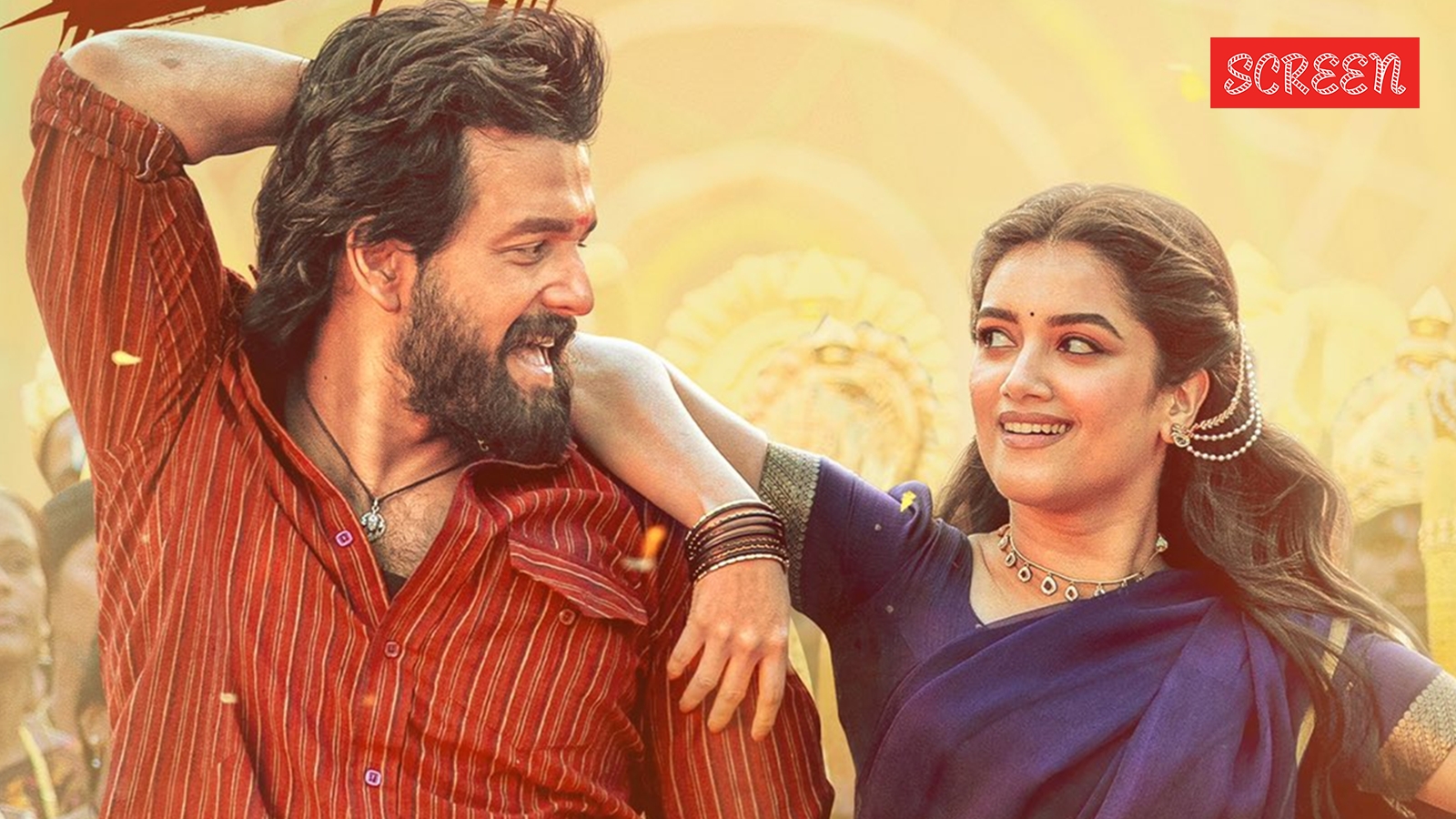
Lenin movie review and rating: Long before cinema existed, the Mahabharata gave Indian storytelling its most durable blueprint for tragedy: two people bound by love and duty, forced onto opposite sides of a conflict neither of them chose. Telugu filmmakers have leaned on that blueprint for decades, but few recent films embrace it as openly as Lenin does. Rather than treating the epic as a passing metaphor, director Murali Kishor Abburu builds his entire village universe around it, using the real-life Bharatham Jatara, a week-long festival rooted in the legend of Draupadi Amman, as the literal and symbolic battlefield on which his characters’ loyalties are tested. It’s an ambitious choice, and for most of its runtime, the film earns the comparison it’s reaching for.
The film opens in 1976 in Srirampuram, a fictional village in Andhra Pradesh, where a young orphan boy wanders in and is taken in by the village head’s family. That boy grows into Lenin, played by Akhil Akkineni, and his life becomes tightly interwoven with two people: Vasanth, the elder son of the household who becomes his closest friend and something like a brother, and Bharathi (Bhagyashri Borse), the daughter of another influential family in the village, who becomes the emotional core of his adult life.
For its first half, Lenin plays out as a fairly recognizable rural drama, the kind built on childhood friendship, community festivals, and a slow-burning love story. There’s warmth here, and the film takes its time establishing the texture of Srirampuram itself: its power structures, its rivalries, and the unspoken rules that govern who belongs where. It’s a patient setup, and viewers expecting an immediate plunge into conflict may find the opening stretch unhurried. But that patience pays off once the pre-interval block arrives, where the film sharply pivots and reveals the fault lines that have been quietly forming beneath the friendship at its center.
From there, Lenin shifts from nostalgic drama into something far more charged. The film leans hard into this framing, going as far as suggesting that no war is more violent than the one fought over love, and by the time the second half settles into its rhythm, that idea has fully taken over the narrative.
Akhil Akkineni is the film’s clearest success story. There’s a rawness to his performance, more polished screen presence. This is arguably the most rooted and committed work of his career so far, and it’s easy to see why early reactions have singled him out. He plays Lenin as a man caught between affection and fury, and he sells both registers convincingly, particularly in the film’s more intense second-half stretches.
Bhagyashri Borse matches him well as Bharathi, bringing a quiet strength to a character who could easily have been reduced to a symbol rather than a person. The supporting cast deserves credit too, Sivaji and Brahmaji, in particular, add real weight to the village’s internal politics, while Easwari Rao brings grounded emotional beats to the family scenes. An unexpected but effective touch is Jr NTR’s voiceover, used sparingly at key narrative turns; it lands with more impact than voiceovers typically manage in films like this, lending certain scenes a sense of scale.
Also Read: Vijay-starrer Jana Nayagan gets ‘A’ certificate; KVN confirms release on July 24
Story continues below this ad
Out of these exceptional performances, Pramod Panju, who plays the role of Vasanth in the film, delivers one of his best performances. Arguably he is the anchor of the movie, blending into the character, and turning into the strongest pillars of the movie.
S. Thaman’s music does a lot of quiet work in establishing the film’s rural identity, leaning into folk instrumentation without tipping into cliché. The songs integrate reasonably well into the narrative rather than feeling like inserted interludes, and the background score amplifies the intensity of the second half without overwhelming it.
Editing by Navin Nooli keeps the pre-interval and interval blocks tight and purposeful, this is where the film’s pacing is at its most confident. The cinematography leans into the earthiness of the village setting, favoring naturalistic tones over glossy visual polish, which suits the story’s grounded ambitions. Where the film occasionally stumbles is in sustaining that same tautness through the second act, where dramatic intensity sometimes takes precedence over narrative economy.
Also Read: I, Nobody movie review: Prithviraj’s heist thriller steals your time, not your attention
Story continues below this ad
Lenin’s biggest strength is its sincerity. It doesn’t use its Mahabharata framing as decoration; it commits to it, letting the festival, the rivalries, and the eventual confrontation build organically out of relationships of character rather than forcing an epic parallel onto an otherwise ordinary plot. Akhil Akkineni’s performance, the well-handled first-half build-up, and Thaman’s score are the film’s clearest assets.
Lenin is a rooted, intense rural drama that uses its epic inspiration with more conviction than most films attempt. It won’t work for audiences looking for a lighter, escapist watch, but for those willing to sit with a slow-building story about friendship, loyalty, and love turning into conflict, it largely delivers , anchored by a career-best performance from Akhil Akkineni. Watch it in theatres if intense, emotionally driven drama is your kind of cinema.
Disclaimer: We do not own any of the content, ideas, images, or text presented here. All rights belong to their respective owners. For more information and to view the original source, please visit the following link: