

3 min readNew DelhiJun 30, 2026 11:00 PM IST
Imagine a plant that doesn’t just grow beside a tree, but climbs onto it, wraps around it, and quietly takes over its entire life. No noise, no sudden collapse. Just a slow, silent takeover that ends with the host tree disappearing completely.
It sounds dramatic, almost villain-like. But this is a very real survival strategy used by a group of plants known as strangler figs from the genus Ficus. And the most surprising part? It doesn’t even start on the ground.
A quiet invasion from above
Strangler figs begin life in the most unexpected way. Their seeds are dropped by birds or other animals onto tree branches, where they begin growing high in the canopy. At first, they behave like harmless hitchhikers, using the host tree only for support.
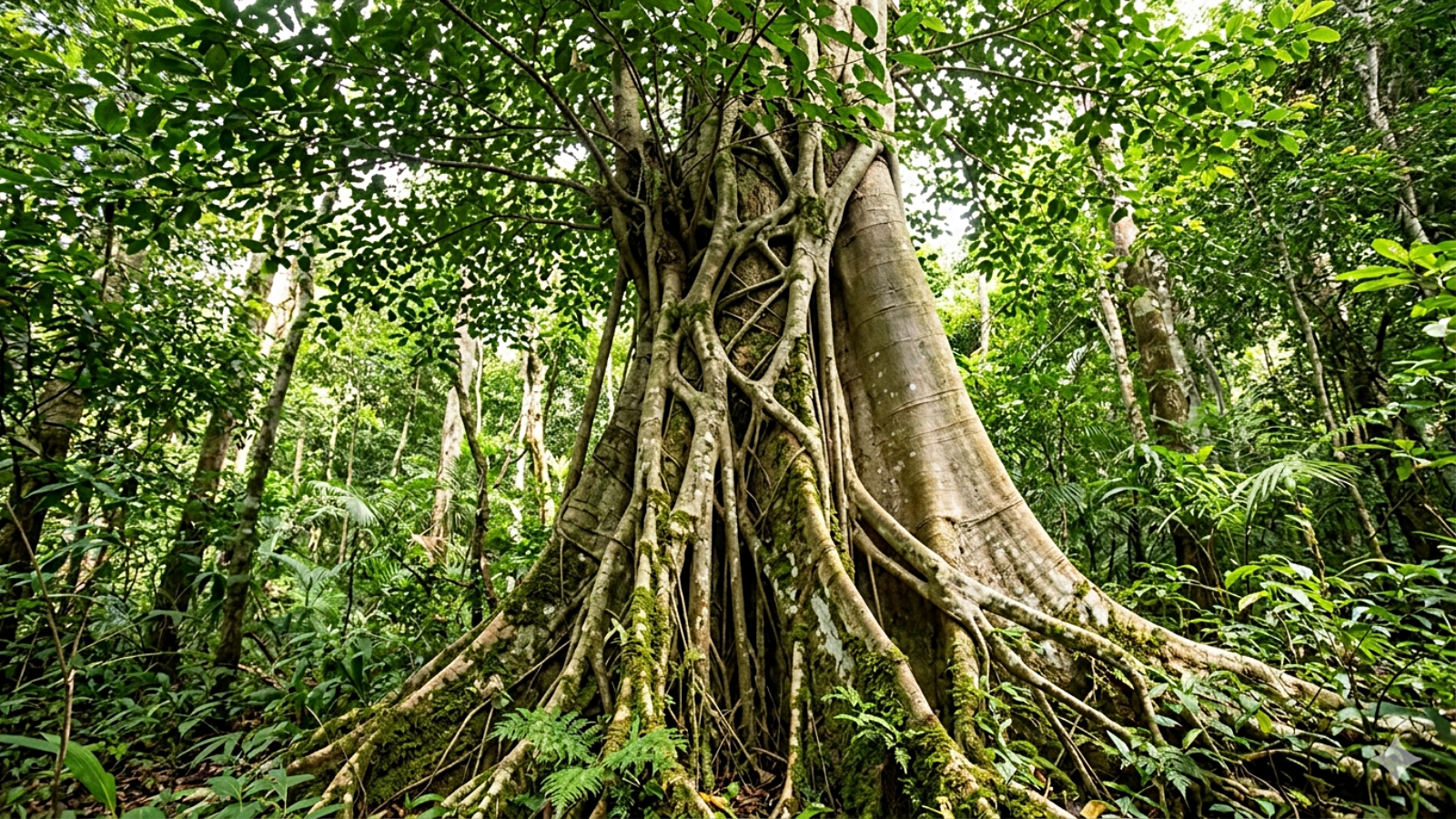
But as they grow, they send roots down toward the forest floor. Once these roots reach the soil, the real transformation begins. The plant rapidly strengthens, thickens to produce trunk-like structures spreading both upward and downward at the same time. This sometimes results in large patches of strangler fig forest all originating from one plant. What started as a tiny passenger slowly becomes a powerful competitor.
Are they actually choking the trees?
Despite the name, strangler figs don’t literally choke trees. The process is more subtle, yet far more effective.
Their roots begin to wrap around the host trunk, forming a tight, cage-like structure. At the same time, their canopy spreads out, blocking sunlight from reaching the original tree. They compete for water, nutrients, and light—all the essentials for survival.
Over time, the host tree weakens under this pressure. Eventually, it dies, leaving the fig standing in its place, often as a hollow structure shaped around the tree it replaced.
Story continues below this ad
Survival of the fittest?
As harsh as it sounds, this strategy is less about destruction and more about survival in crowded forests. On the dark forest floor, young plants struggle to get enough sunlight. By starting life high up, strangler figs skip that struggle entirely. And once they mature, they give back in a big way.
Figs are a major food source for birds, bats, monkeys, and other animals—especially during times when other fruits are scarce. In fact, ecologists often consider them a crucial part of the ecosystem.
So, the strangler fig isn’t actually trying to “kill” another tree. It’s simply following a strategy that works, just like those villains in action films with a sad background story! In the dense, competitive world of forests, growing straight up isn’t always enough. Sometimes, survival means growing around something else and slowly becoming the only one left standing.
Disclaimer: We do not own any of the content, ideas, images, or text presented here. All rights belong to their respective owners. For more information and to view the original source, please visit the following link: