

Last Updated:
Operation Sindoor revealed both India’s strength and capability gaps, said Rajesh Kumar Singh




The experience of Operation Sindoor has served as an ‘important learning curve’ for the top brass, Singh said. File image
At the News18 Rising Bharat Summit in New Delhi on Saturday, Defence Secretary Rajesh Kumar Singh provided a candid assessment of India’s military posture following the landmark Operation Sindoor. Addressing the audience at Delhi’s Bharat Mandapam, Singh framed the 2025 military response as both a validation of India’s indigenous prowess and a critical diagnostic tool that highlighted essential “capability gaps” currently being addressed with wartime urgency.
Lessons from the Field: Power vs Gaps
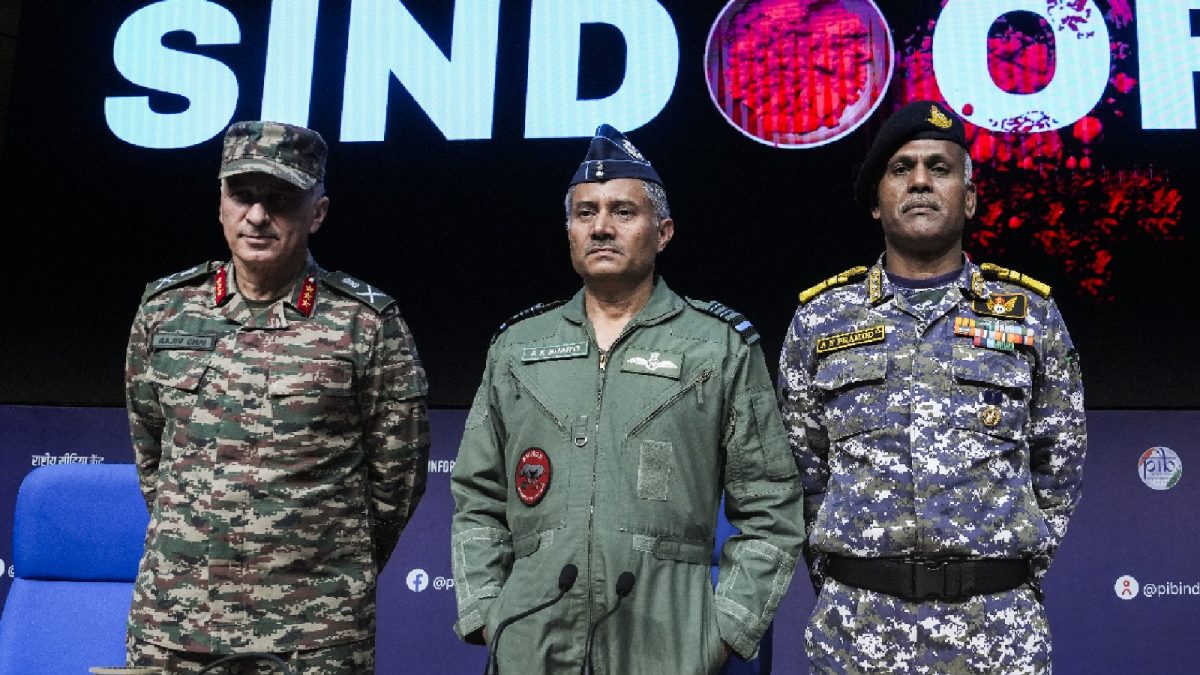
Operation Sindoor, launched on May 7, 2025, was India’s decisive kinetic response to the tragic Pahalgam terror attack, which claimed 26 civilian lives. Singh noted that the operation served as a sophisticated showcase for India’s air power, precision-guided munitions, and diverse unmanned systems. Crucially, he pointed out that the conflict avoided traditional conventional warfare, relying instead on high-tech missile strikes to neutralise terrorist infrastructure in Pakistan and Pakistan-occupied Kashmir (PoK) while strictly avoiding civilian casualties.
However, the Defence Secretary was transparent about the limitations the operation exposed. “Operation Sindoor revealed both India’s strength and our capability gaps,” Singh remarked, noting that the experience has served as an “important learning curve” for the top brass. Every area where a deficiency was identified—particularly in niche technological domains—is now being systematically overhauled.
The Modernisation Surge
To bridge these gaps, the government has authorised a significant 24% jump in the defence modernisation budget for the 2026-27 financial year. This fiscal infusion is already translating into industrial action; India saw a record Rs 2.9 lakh crore in contracts last year and has already bagged an additional Rs 2 lakh crore in the current cycle.
Singh emphasised that the goal is to provide “visibility” to the domestic industry, ensuring the entire value chain understands the long-term requirements of the Army, Navy, and Air Force. This structured approach aims to transition India from a reactive buyer to a proactive developer of frontline hardware.
Replenishment and the ‘Island Advantage’
Addressing concerns regarding the depletion of resources during the 2025 strikes, Singh confirmed that a specialised emergency procurement cell was designed specifically to replace assets used or lost during Operation Sindoor. He clarified that India is not merely “refilling the shelves” but is actively strengthening the inventory with more advanced versions of the equipment used a year ago.
One of the standout successes cited by the Defence Secretary was India’s strategic utilisation of its island territories and its well-developed indigenous missile programme. While praising the success story of “Make in India” in the missile sector, he acknowledged that certain high-end technologies still require collaboration. “There are some niche areas, such as technology transfer, where we need help from our friendly partners,” Singh stated, confirming that India is actively engaging with global allies to secure these critical components.
February 28, 2026, 19:36 IST
Read More
Disclaimer: We do not own any of the content, ideas, images, or text presented here. All rights belong to their respective owners. For more information and to view the original source, please visit the following link: