

3 min readPuneApr 30, 2026 03:35 PM IST
One way trees fight climate change is by removing carbon dioxide (CO₂), a greenhouse gas, from the atmosphere and storing it in their trunks, roots, or other parts. As a tree grows older, this capacity for carbon sequestration increases.
In Pune, where the growing number of vehicles and burning activities raises carbon dioxide in the atmosphere, can one calculate the service rendered by the city’s foremost green space, the Empress Botanical Garden?
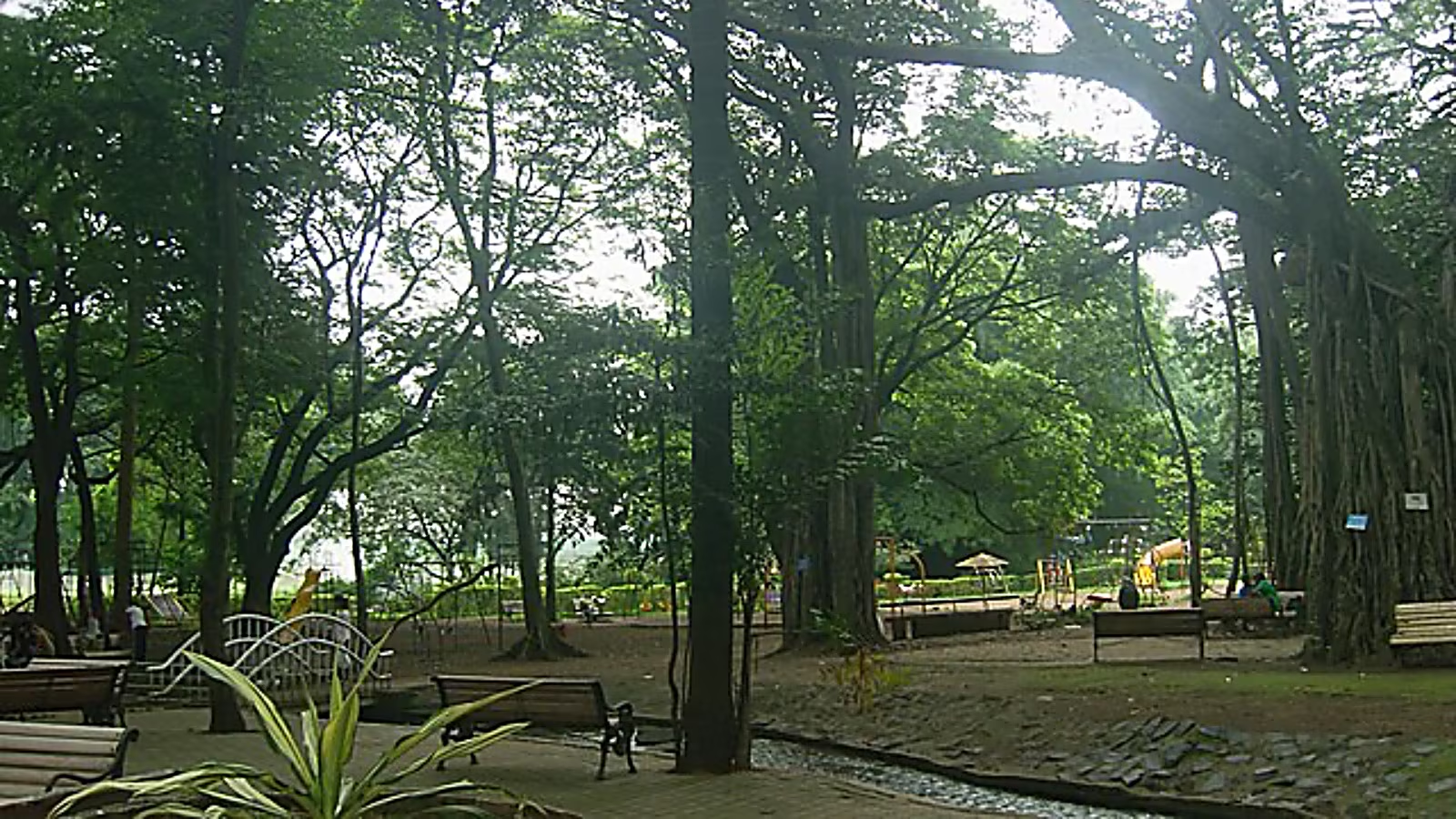
The Empress Botanical Garden has become the first-ever botanical garden in India to complete a carbon sequestration estimation process. It has, effectively, measured exactly how much carbon dioxide has been sequestered by its trees. Many trees in the garden have been standing for more than 100 years.
The project, in collaboration with Pune-based The Green Concept, spearheaded by Dr Rohan Shetti, Dr Aboli Kulkarni, and Dr Girish Kulkarni, involved AI-based models, detailed research, and field surveys to estimate the carbon sequestration potential of the garden’s trees and green cover.
10,143 tonnes of carbon dioxide, 8.76 crore litres of oxygen
As the data differs for each tree, the public can access the information through a dashboard available on the Empress Botanical Garden website. The garden’s environmental impact—its contribution to Pune’s ecosystem—can be understood from the numbers: 1,263 trees have sequestered 10,143 tonnes of carbon dioxide. This means the garden has offset the carbon dioxide produced by 2,205 cars, the emissions of 1,560 households annually, or 21,907 Delhi–Mumbai flights. All the while, the garden has produced 8.76 crore litres of oxygen per year.
“The dashboard also gives people an idea of which species sequester the most CO₂. Ficus benghalensis is the best performer. If we calculate the average for 11 trees, it comes to 527.73 kg of CO₂ per tree. The next best performer is Derris scandens, which sequesters 94.81 kg of CO₂ per tree. Theoretically, we knew all trees were doing stellar service in protecting the city’s ecosystem. But, for the first time, we are able to measure this in values,” said Dr Dhanashree Paranjpe from the Rupa Rahul Bajaj Centre for Environment and Art (RRBCEA) of the botanical garden.
Significantly, India is advancing towards establishing a carbon pricing structure and a regulated carbon pricing ecosystem.
Story continues below this ad
According to a government statement, the carbon credit trading scheme (CCTS) is a mechanism designed to reduce greenhouse gas emissions through carbon pricing. “It involves two key elements—a compliance mechanism for obligated entities, primarily industrial sectors, and an offset mechanism for voluntary participation. The CCTS aims to incentivise and support entities in their efforts to decarbonise the Indian economy,” the statement read.
Even as this takes shape, the Empress Botanical Garden already knows its value in the carbon credit market. Based on the European Union Emissions Trading System carbon pricing of €76.67/tonne of carbon dioxide, the Pune garden has a market value of Rs 8.01 crore. More significantly, Pune now knows that its green lungs are healthy.

Click here to join Express Pune WhatsApp channel and get a curated list of our stories
© The Indian Express Pvt Ltd
Disclaimer: We do not own any of the content, ideas, images, or text presented here. All rights belong to their respective owners. For more information and to view the original source, please visit the following link: