All posts tagged: Orbit

ISRO’s PSLV-C62 Mission To Deploy EOS-N1, 14 Other Satellites In Orbit Today | India News

ISRO’s PSLV-C62 Mission To Deploy EOS-N1, 14 Other Satellites In Orbit Today | India News

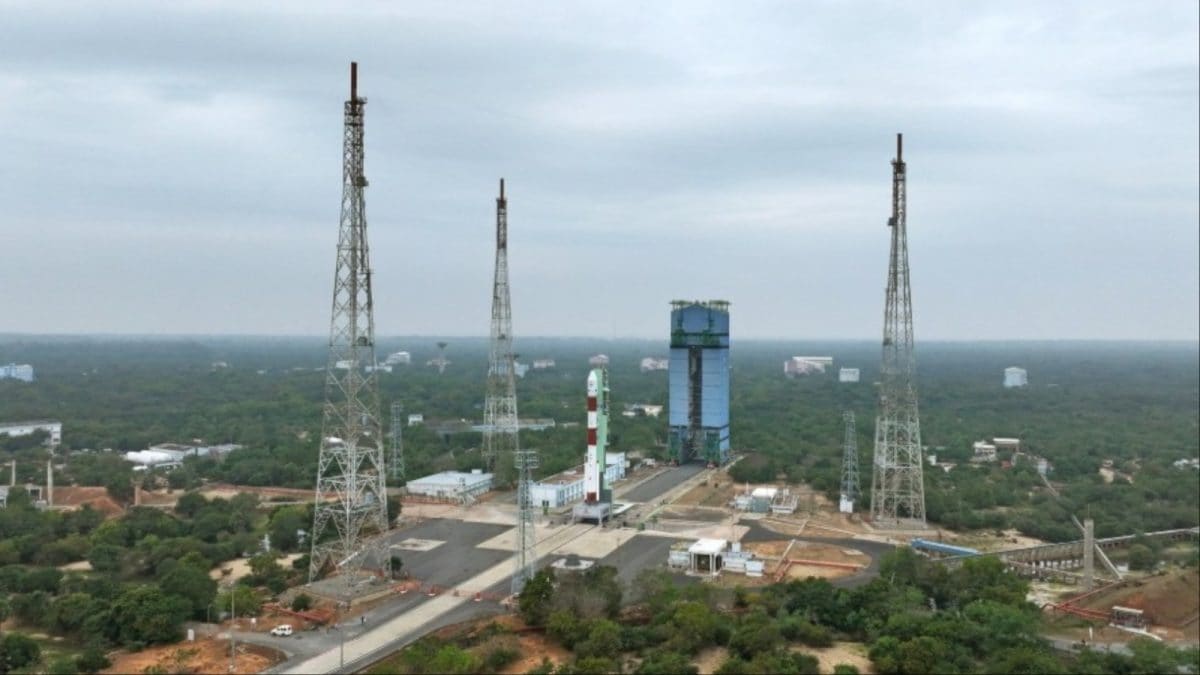
Last Updated:January 12, 2026, 10:12 IST ISRO will launch the PSLV-C62 mission today, carrying the EOS-N1 earth observation satellite and 14 co-passenger payloads as part of NSIL’s ninth dedicated commercial mission. ISRO’s PSLV-C62 will carry EOS-N1 and 15 co-passenger satellites (ISRO) The Indian Space Research Organisation (ISRO) will on Monday launch the PSLV-C62 mission, marking the first space mission of India’s 2026 launch calendar. The Polar Satellite Launch Vehicle will lift off from the First Launch Pad at the Satish Dhawan Space Centre in Sriharikota, carrying the EOS-N1 earth observation satellite along with 14 co-passenger satellites for domestic and international customers. The mission, undertaken by NewSpace India Limited (NSIL), the commercial arm of ISRO, is the ninth dedicated commercial mission executed by NSIL. It also marks the 64th flight of the PSLV, which continues to serve as ISRO’s workhorse launch vehicle. According to ISRO, the PSLV-C62 is a four-stage launch vehicle, standing 44.4 metres tall with a lift-off mass of 260 tonnes. The mission uses the PSLV-DL configuration, equipped with two solid strap-on motors. The …
How the moon kicked Chandrayaan-3 propulsion module into a new orbit

How the moon kicked Chandrayaan-3 propulsion module into a new orbit

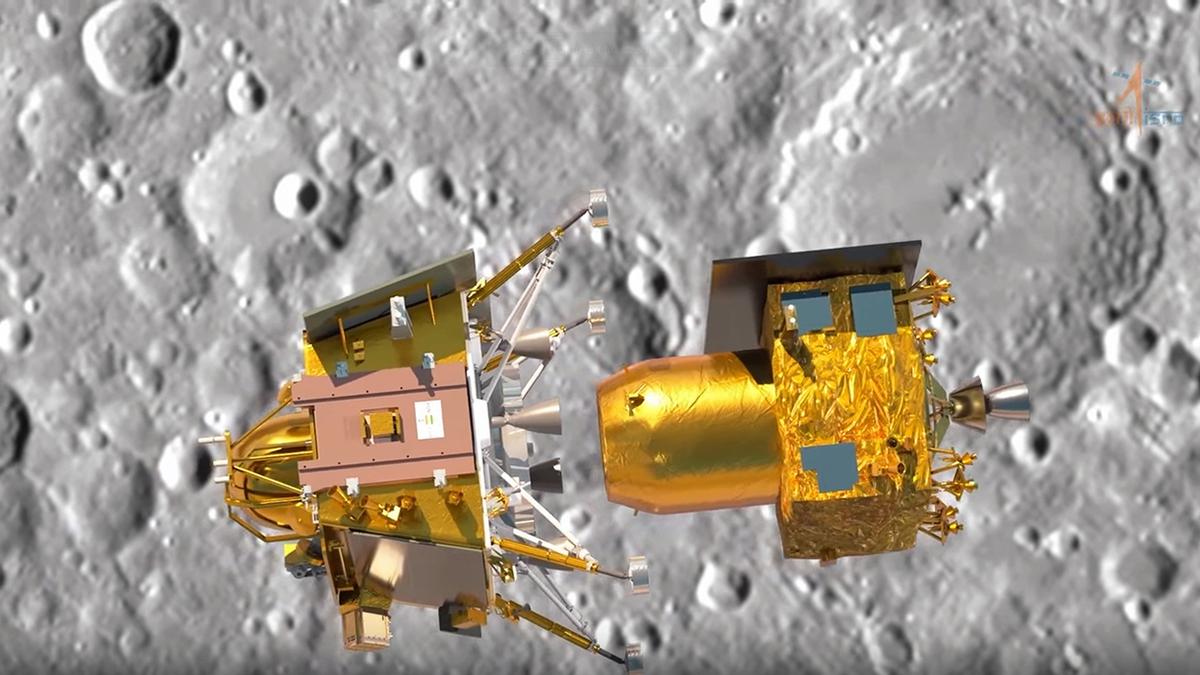
On December 30, astronomer Jonathan McDowell posted on X.com: “The abandoned Chandrayaan-3 propulsion module, left in a 125000 x 305000 km orbit in 2024, had a bit of a tussle with the Moon in November and has now been found in a 365000 x 983000 km x 22 deg orbit”. Dr. McDowell is well-known for, among other things, publishing Jonathan’s Space Report, “an irregular newsletter which attempts to provide a detailed and pedantic historical record of the space age” and for maintaining the ‘General Catalog of Artificial Space Objects’. Objects in Moon-orbit-crossing trajectories tend to be chaotic; the abandoned Chandrayaan-3 propulsion module, left in a 125000 x 305000 km orbit in 2024, had a bit of a tussle with the Moon in November and has now been found in a 365000 x 983000 km x 22 deg orbit — Jonathan McDowell (@planet4589) December 30, 2025 Tug of war His post describes a common problem in spaceflight: once you leave a spacecraft in a very large and lopsided orbit around the earth that comes anywhere near …

With ‘Bahubali’ rocket, India puts ‘heaviest’ satellite launched from its soil in orbit, PM Modi ‘proud’| Key takeaways

With ‘Bahubali’ rocket, India puts ‘heaviest’ satellite launched from its soil in orbit, PM Modi ‘proud’| Key takeaways

The Indian Space Research Organisation (ISRO) launched the heaviest communication satellite from Indian soil on Sunday, successfully placing the CMS-03 communication satellite in orbit. ISRO’s launch vehicle LVM3-M5 carrying the communication satellite CMS-03 lifts off from the launch pad at the Satish Dhawan Space Centre, in Sriharikota, Andhra Pradesh. (@ISRO Official/YT) The satellite, weighing 4,410 kg, flew onboard a new-generation, homegrown LVM3-M5 ‘Bahubali’ rocket, enabling the Indian space agency to achieve the rare feat. The launch took place from the Satish Dhawan Space Centre in Sriharikota, Andhra Pradesh, at 5:26 PM. ISRO ‘Bahubali’ launch: Top points The communication satellite CMS-03 was flown on a LVM3-M5 rocket. According to ISRO, CMS-03 is a multi-band communication satellite and would provide services over a wide oceanic region, including the Indian landmass. ISRO Chairman V Narayanan said the launch vehicle successfully injected the communication satellite into the required orbit. He recalled that the rocket’s previous launch was the “most prestigious Chandrayaan 3, which brought pride to the nation.” He also added that the rocket achieved “yet another pride” on …

ISRO forms panel to probe PSLV mission failure to place EOS-09 satellite in orbit | Latest News India

ISRO forms panel to probe PSLV mission failure to place EOS-09 satellite in orbit | Latest News India

ISRO has formed a committee to investigate the incident in which a PSLV rocket failed to place an Earth observation satellite (EOS-09) into its intended orbit, Chairman V Narayanan said on Sunday. PSLV-C61 mission was not accomplished after it encountered an anomaly in the third stage. (X/ISRO) The committee has held several rounds of discussions to identify the cause, he added. Earlier in the day, ISRO failed to place its Earth observation satellite in orbit after the trusted PSLV rocket developed a fault minutes after launch from Sriharikota, about 135 km from here. “Today, we had the 101st mission from Sriharikota. The rocket is a four-stage vehicle. The first stage comprises a 134-tonne solid propulsion system and has six strap-on motors, each holding 12 tonne of propellant. The second stage has a 40-tonne liquid propulsion system, the third stage an 8-tonne solid propulsion system, and the fourth stage again uses liquid propulsion. These four stages must work in tandem to place a satellite into orbit,” Narayanan explained. After a 22-hour countdown, the rocket lifted off …

Soviet Venus Lander Kosmos 482 Crashes to Earth After 53 Years in Orbit

Soviet Venus Lander Kosmos 482 Crashes to Earth After 53 Years in Orbit

The failed Soviet Venus lander Kosmos 482 has finally met its end after a remarkable 53-year journey in Earth orbit. Launched in 1972 under USSR’s Venera programme, the probe re-entered Earth’s atmosphere on May 10 at 2:24 a.m. ET (0624 GMT), with Russia’s space agency Roscosmos confirming its descent over the Indian Ocean, west of Jakarta, Indonesia. Although the debris was thought to have safely splashed down, other international space tracking organisations had pinpointed possible reentry sites as far afield as South Asia and the eastern Pacific, making the final impact location at least somewhat even hours after the event. Kosmos 482’s Fiery Fall Captured Before Impact, Sparking Concerns Over Space Junk Threat As per reports by Roscosmos and astronomer Gianluca Masi of the Virtual Telescope Project, the spacecraft was captured in a striking image during one of its final orbits over Rome. In the picture, Kosmos 482 appears as a dashed trail — a result of the probe streaking across a composite of four images. Originally intended to land on Venus, the lander had failed …

SpaceX Falcon 9 Successfully Launches 28 Starlink Satellites to Orbit From Florida

SpaceX Falcon 9 Successfully Launches 28 Starlink Satellites to Orbit From Florida

SpaceX continued its rapid-fire Starlink deployment campaign on Tuesday night (May 6), lofting 28 more internet satellites to orbit atop a Falcon 9 rocket from Florida’s Cape Canaveral Space Force Station. The launch itself took place at 9:17 p.m. EDT (0117 GMT on May 7) from Launch Complex-40, marking the company’s 53rd Falcon 9 launch of 2025 and the 36th dedicated Starlink mission this year. The payload offers worldwide internet connectivity by adding to SpaceX’s swiftly expanding array of over 7,200 Starlink satellites in low Earth orbit. SpaceX Falcon 9 Launches 28 Starlink Satellites, Booster Lands Smoothly at Sea As per a Space.com report, B1085, the reusable first-stage booster, executed a perfect main engine cut about 2.5 minutes after launch, then stage separation and a retrograde burn to stop its descent. Roughly eight minutes after launch, B1085 successfully landed on the autonomous drone ship, stationed in the Atlantic Ocean. The mission was the seventh flight for this particular booster, which had previously supported two other Starlink missions. The Falcon 9‘s upper stage continued into orbit and …

Soviet-Era Spacecraft To Reenter Earth After 53 Years In Orbit: Report

Soviet-Era Spacecraft To Reenter Earth After 53 Years In Orbit: Report

A former Soviet spacecraft is predicted to crash back to Earth this week. Weighing approximately 453 kg, Kosmos 482 will reenter the planet’s atmosphere around May 10, CNN reported. Launched in 1972, Kosmos 482 malfunctioned on its way to Venus. An issue with a timer resulted in an early engine shutdown, trapping the Soviet spacecraft in Earth’s orbit for over half a century.  With the aircraft now set to crash down, scientists are unsure which part of it will reenter the Earth. Some think it will be the probe, also known as the “entry capsule.”  The majority of space debris and meteors, which frequently veer toward a crash-landing on Earth, break apart due to friction and pressure as they strike the planet’s dense atmosphere while travelling thousands of miles per hour. Cosmos 482, being a Soviet reentry capsule, is expected to be equipped with a substantial heat shield. It was designed to survive the extreme temperature and pressure of landing on Venus.  The spacecraft “might well survive Earth atmosphere entry and hit the ground,” wrote …

Soviet Venus Probe Cosmos 482 Expected to Reenter Earth After 52 Years in Orbit

Soviet Venus Probe Cosmos 482 Expected to Reenter Earth After 52 Years in Orbit

An Soviet Union lander is heading back into Earth’s atmosphere after 52 years staying in the orbit. Soviet Union’s Cosmos 482 was launched on March 31, 1972 and was supposed to land on Venus under the U.S.S.R.’s Venera programme. However, due to a certain malfunction, it could not leave Earth’s orbit and kept rotating around for 52 years. Its body was split into two halves; the main one crashed back to Earth, and the other section, the lander, got trapped in the Earth’s orbit. Lander Returns to Earth According to study, the lander is re-entering the Earth’s atmosphere and is expected to come back between May 8 to May 14. The most probable date is May 11, calculated based on the orbital data provided by satellite expert Marco Langbroek. This crash landing could occur anywhere between 52 degrees north and south of the equator, roughly from Quebec to Patagonia. According to NASA, the lander weighs around 1100 pounds, the weight of a car. What Does it Look Like This lander was designed to survive the …

SpaceX Launches Falcon 9 Rocket With 28 Starlink Satellites Into Orbit From Florida

SpaceX Launches Falcon 9 Rocket With 28 Starlink Satellites Into Orbit From Florida

SpaceX had sent another batch of Starlink satellites on their way on Thursday to assist in keeping up the quick expansion of its global broadband network. Rising from Launch Complex-40 at Cape Canaveral Space Force Station in Florida, a Falcon 9 rocket took to the skies at 9:51 p.m. EDT on May 1 (0151 GMT on May 2). This mission goes by the name Starlink 6-75, and it dispatched 28 satellites to low Earth orbit (LEO). This mission is an addition to the already growing constellation, which aims to provide high-speed internet across the world, except the polar regions, via user-pointed terminals. SpaceX Adds 28 Starlink Satellites to Global Network As per a Space.com report, the rocket’s nine Merlin engines shut down about two and a half minutes after liftoff, followed by stage separation. The first stage, booster B1080, performed a retrograde burn and safely landed eight minutes later on the Just Read the Instructions drone ship in the Atlantic Ocean. The landing was the 18th successful flight for B1080 and its 12th for Starlink missions. The second …

China Uses Gravitational Slingshots to Rescue Two Satellites Stuck in Orbit for 123 Days

China Uses Gravitational Slingshots to Rescue Two Satellites Stuck in Orbit for 123 Days

In a major display of technical ingenuity, China has successfully rescued two satellites—DRO-A and DRO-B—that were stuck in the wrong orbit for 123 days following a launch failure. The satellites, part of China’s distant retrograde orbit (DRO) constellation, were saved using a series of complex gravitational slingshot manoeuvres that turned a near-disaster into a milestone in space navigation. This recovery mission not only preserved critical hardware but also highlighted China’s growing expertise in orbital mechanics, space rescue operations, and deep-space navigation technologies. Innovative Thinking in critical condition According to a recent story by CGTN, on March 15, 2024, China launched two satellites that were mounted on a Long March-2C rocket with a Yuanzheng-1S upper stage. While the launch initially appeared to be successful, a malfunction in the upper stage made the satellites tumble and head towards Earth much closer than planned. With limited power and damaged systems, conventional recovery was impossible. Zhang Hao, a researcher at the Technology and Engineering Center for Space Utilisation (CSU), described the moment the team learned of the issue in …