All posts tagged: Orbit

Spin cycle: Why Earth’s rotational speed is changing

Spin cycle: Why Earth’s rotational speed is changing

Talk about making the world go round. At capacity, China’s Three Gorges Dam holds back 10 trillion gallons of water. (Shutterstock) Earth’s rotational speed is changing, and we’re more than partly responsible. A gigantic dam, our extraction of groundwater, melting ice sheets and rising sea levels are among the human-linked factors altering Earth’s spin. The thing all these factors have in common, is water. Where it stands, how it flows and where it settles has always shaped Earth’s rotation. During the last Ice Age, which ended about 20,000 years ago, for instance, the weight of the ice was so great that it depressed the surface of the planet. As it melted, large parts of the planet returned to their original form, leading to shifts in the orbit then too. Giant earthquakes have also traditionally altered Earth’s rotation, in tiny but still real ways. Anything that redistributes Earth’s mass can cause such a change. One of the things now estimated to do this is the world’s most powerful dam. China’s Three Gorges Dam across the Yangtze …

SpaceX Sends Europe’s First Reentry Capsule into Orbit on Bandwagon-3 Rideshare Mission

SpaceX Sends Europe’s First Reentry Capsule into Orbit on Bandwagon-3 Rideshare Mission

A Falcon 9 rocket soared into space from Cape Canaveral Space Force Station in Florida on April 21 at 8:48 p.m. EDT (0048 GMT, April 22), carrying multiple payloads on SpaceX’s latest rideshare mission, Bandwagon-3. Among the diverse cargo onboard was Phoenix 1, a European-built reentry capsule developed by the German company Atmos Space Cargo. History will be made here in European aerospace with this launch, as Phoenix 1 becomes the first capsule from Europe intending to return from space and splash down on Earth after just one orbit, barely 1,200 miles offshore of Brazil. Phoenix 1 Debuts as Europe’s First Private Reentry Capsule on SpaceX Bandwagon-3 Flight According to Atmos Space Cargo, this mission is the first-ever atmospheric reentry attempt of a European private entity. Phoenix 1 is meant to test out essential technologies, including the company’s inflatable heat shield needed to return high-value cargo from space safely, the company noted. “Our mission is to revolutionise space logistics by enabling groundbreaking advancements in microgravity research, in-orbit manufacturing, defence applications, and life sciences,” says the firm’s website. …

Russian Kosmos Satellites Release Mysterious Object in Orbit

Russian Kosmos Satellites Release Mysterious Object in Orbit

A group of Russian satellites launched earlier this year has caught the attention of space watchers around the world. The satellites – Kosmos 2581, 2582, and 2583 – were sent into orbit in early February from the Plesetsk Cosmodrome. They’ve been placed in a near-polar orbit, about 585 kilometres above Earth. So far, Russian officials haven’t confirmed what these satellites are actually meant to do. But what’s really stirred interest is the release of an unknown object from one of them. This new development, spotted in mid-March, has prompted fresh scrutiny from space monitoring teams across the globe. What We Know So Far According to tracking data from the United States Space Force and other monitoring groups, the mysterious object appeared on March 18. It was quickly catalogued and, at first, linked to Kosmos 2581. Later on, though, some signals hinted it might be tied to Kosmos 2583 instead. What’s clear is that the object was released while the satellites were still active – and so far, Russia hasn’t said a word about it. Interestingly, …

Blue Ghost Lander Lowers Orbit, Prepares for Lunar Touchdown on March 2

Blue Ghost Lander Lowers Orbit, Prepares for Lunar Touchdown on March 2

Firefly Aerospace’s Blue Ghost lander has successfully completed an engine burn to lower its orbit around the Moon, as part of its preparations for a scheduled lunar landing. The lander, which entered lunar orbit last week after a four-day journey from Earth, has now been positioned at an altitude of 120 kilometers above the surface. This adjustment, lasting three minutes and 18 seconds, has placed the spacecraft in a stable orbit ahead of its final descent. Data is currently being received while the mission team monitors the probe’s positioning and upcoming maneuvers. Orbital Adjustments and Communication Challenges According to reports, the lander’s orbit will be further refined before its anticipated landing on March 2. A video released by Firefly Aerospace has shown a closer view of the Moon’s surface, with the company confirming that intermittent communication blackouts are expected as the spacecraft moves around the Moon’s far side. While the probe remains on the near side, data transmission is ongoing, and mission controllers are finalising plans for the next set of orbital maneuvers. Launch and …

Gracie Abrams Gushes About Being in Taylor Swift’s ‘Orbit’; Says People Still ‘Gaslight Her’ Capabilities

Gracie Abrams Gushes About Being in Taylor Swift’s ‘Orbit’; Says People Still ‘Gaslight Her’ Capabilities

Gracie Abrams has often been described as a Taydaughter on social media. She first opened for Taylor Swift during her Eras tour in 2022 after the duo became friends in 2021. And Abrams can not stop gushing about Swift’s powerful impact on pop music. Regarding her bond with Swift, Abrams underlined that just like no two best friends are the same, she and Swift have distinct personalities and strengths. In a recent interview with Cosmopolitan, Abrams said, “I couldn’t be more different from Taylor. We are different in all the ways that my friends and I are different or that you and I are different.” She continued to praise Swift, deeming the Lakes singer a very talented athlete, an extraordinary business strategist, and a wonderful songwriter. These qualities, combined with her humble nature, made Swift a massive source of inspiration. The That’s So True hitmaker said, “Taylor is an athlete, a brilliant businessperson, and a genius writer. She’s a grounded human being who makes time for everyone in her life.” While gushing about being a …

ISRO’s NVS-02 Satellite Stalls in Orbit Due to Technical Malfunction

ISRO’s NVS-02 Satellite Stalls in Orbit Due to Technical Malfunction

The Indian Space Research Organisation (ISRO) has reported an issue with its NVS-02 navigation satellite, launched on January 29 aboard the GSLV-F15 rocket. While the satellite successfully reached orbit and established communication with ground control, a technical malfunction prevented further orbit-raising manoeuvres. The problem was traced to the non-opening of the oxidiser valves, which are crucial for firing the thrusters needed to adjust the satellite’s position. Despite this setback, ISRO has confirmed that the satellite’s systems remain functional, and alternative strategies for its operation are being explored. Navigation Satellite in Stable Orbit As reported, according to ISRO’s statement, the NVS-02 satellite remains in an elliptical orbit, and its solar panels are generating power as expected. Communication with the Master Control Facility has been established, ensuring continued monitoring and control. While the intended orbit-raising operations have been stalled, ISRO officials have indicated that the satellite may still be utilised for navigation in its current orbit. Discussions are underway to assess possible adjustments to its mission parameters. Satellite Positioning Challenges Identified As per space-tracking data from open-source …

Days after 100th launch, ISRO says glitch stalls satellite’s orbit raising maneuvers | Bangalore News

Days after 100th launch, ISRO says glitch stalls satellite’s orbit raising maneuvers | Bangalore News

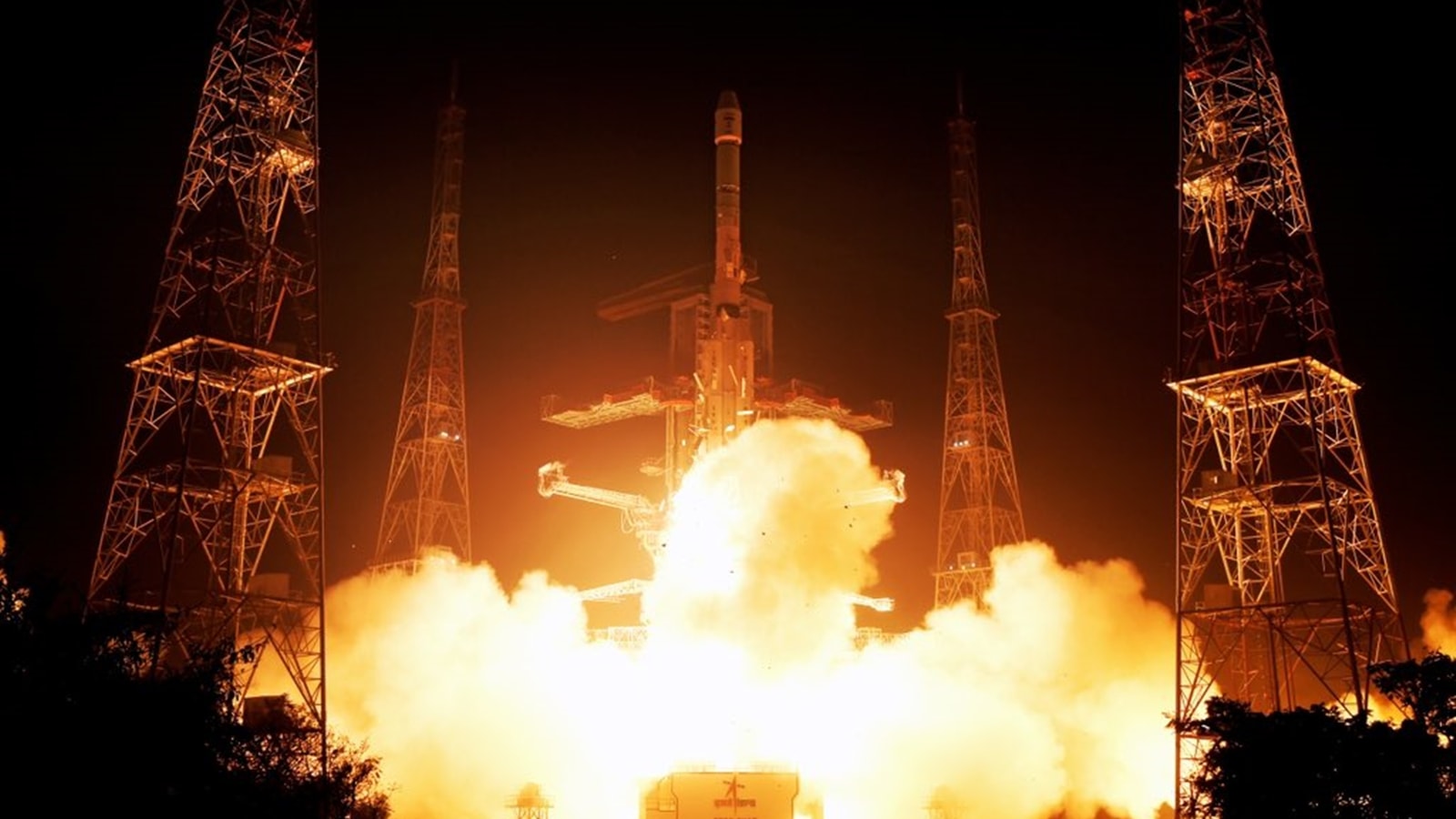
The Indian Space Research Organisation (ISRO) Sunday reported a technical glitch in its NVS-02 navigation satellite that was launched on board the GSLV-F15 on January 29, its 100th successful launch. In a statement, the ISRO said that the satellite’s technical glitch had caused the stalling of the orbit raising maneuvers. “Subsequent to the launch, the solar panels on board the satellite were successfully deployed and power generation is nominal. Communication with the ground station has been established. But the orbit raising operations towards positioning the satellite to the designated orbital slot could not be carried out as the valves for admitting the oxidizer to fire the thrusters for orbit raising did not open,” ISRO said. Story continues below this ad Sources in ISRO said the satellite had “failed to fire” after it was placed in orbit. “The satellite systems are healthy and the satellite is currently in elliptical orbit. Alternate mission strategies for utilising the satellite for navigation in an elliptical orbit is being worked out,” ISRO said. An ISRO official connected to the satellite …

SpaceX Falcon 9 Delivers 27 Starlink Satellites into Orbit from Vandenberg

SpaceX Falcon 9 Delivers 27 Starlink Satellites into Orbit from Vandenberg

A Falcon 9 rocket, operated by SpaceX, was launched on January 21, 2025, from Vandenberg Space Force Base in California, delivering 27 Starlink satellites into low-Earth orbit. The mission began at 10:45 a.m. ET, with the Falcon 9’s first stage returning to Earth roughly eight minutes later. The booster landed on the drone ship “Of Course I Still Love You,” stationed in the Pacific Ocean, marking its tenth successful flight and recovery. 27 Starlink satellites deployed into orbit According to SpaceX, the Falcon 9’s upper stage carried the satellites into their designated orbit, deploying them 61.5 minutes after liftoff. This batch is part of the Starlink Group 11-8 mission. As reported by space.com, the satellites include enhanced V2 Mini models that are lighter by 22 percent, with improved propulsion, power systems and a dual-band chip named Doppio, designed in-house by SpaceX. Details of the mission and impact on nearby regions This launch marked the 10th mission for this Falcon 9 booster, which had previously supported eight Starlink missions, along with the OneWeb 4 and USSF-62 …

Blue Origin’s New Glenn Rocket Successfully Reaches Orbit on First Test Flight

Blue Origin’s New Glenn Rocket Successfully Reaches Orbit on First Test Flight

Blue Origin achieved a significant milestone with the maiden launch of its New Glenn rocket. The vehicle lifted off from Cape Canaveral Space Force Station at 2:03 a.m. EST on January 16, 2025. Designed as a reusable orbital-class rocket, it marked a pivotal moment for the company’s ambitions in the spaceflight sector. The mission’s primary goal of reaching orbit was successfully accomplished approximately 12.5 minutes after launch, marking a significant achievement for the NG-1 test flight. About the New Glenn Rocket According to reports from Blue Origin, as reported by space.com, The New Glenn rocket, which is 320 feet tall, represents years of development. Initially targeted for a 2020 debut, its timeline was extended due to delays in producing its BE-4 first-stage engines. Blue Origin highlighted that the rocket’s reusable first stage underwent rigorous testing during this launch, including an attempt to land on a recovery ship named Jacklyn in the Atlantic Ocean. Although the booster did not successfully land, it executed planned reentry burns, providing valuable data for future missions. Capabilities and Future Missions …

Space Docking Experiment: Spacecraft Injected Into Right Orbit, ISRO Eyes Another Tech Feat

Space Docking Experiment: Spacecraft Injected Into Right Orbit, ISRO Eyes Another Tech Feat

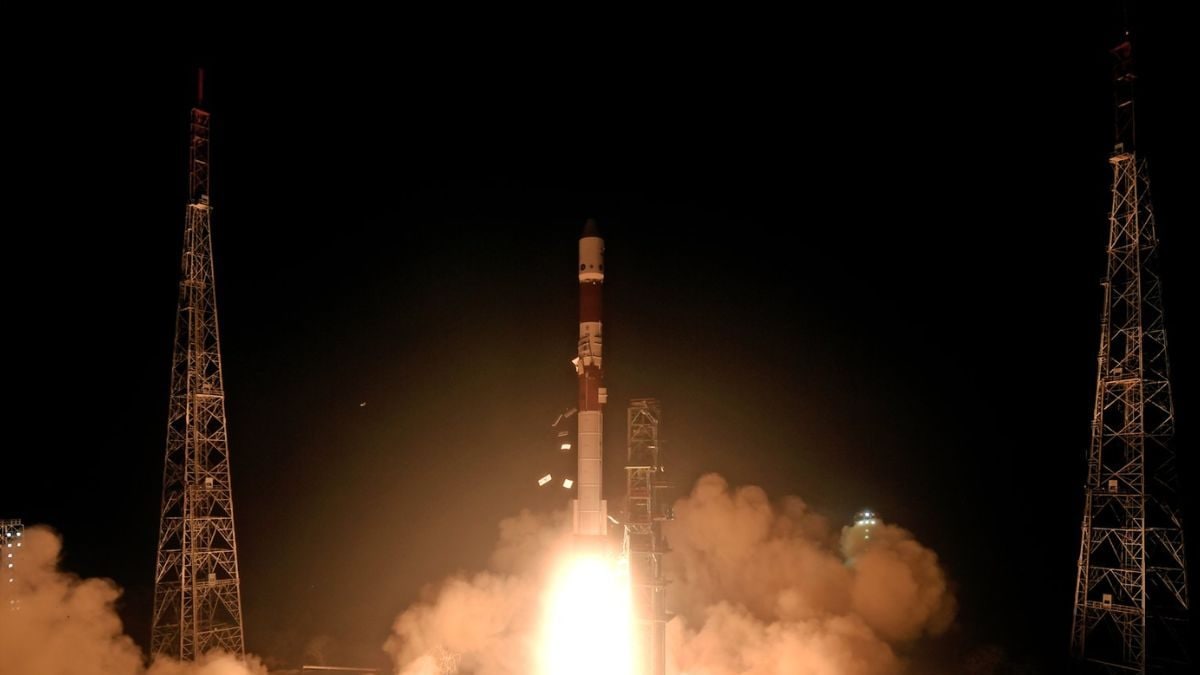
Last Updated:December 31, 2024, 06:27 IST Indian Space Research Organisation (ISRO) chief S Somanath said the rocket has placed the satellites in the right orbit of 475 km circular orbit, after over 15 minutes of flight In this mission, the very important part is the POEM-4 with 24 payloads from startups, industries, academia and also from ISRO centres. (Photo: X/ISRO) Two spacecraft that would aid ISRO in demonstrating space docking, a critical technology for future space missions, got separated successfully and were placed into the desired orbit late Monday, the country’s space agency said. “PSLV C60 mission accomplished as a SpaDeX spacecraft is considered,” said Mission Director M Jayakumar. Indian Space Research Organisation (ISRO) chief S Somanath said the rocket has placed the satellites in the right orbit of 475 km circular orbit, after over 15 minutes of flight. “So, as far as we are concerned, the rocket has placed the spacecraft in the right orbit and the SpaDeX satellites have moved one behind the other, and over the period of time, it will pick …