

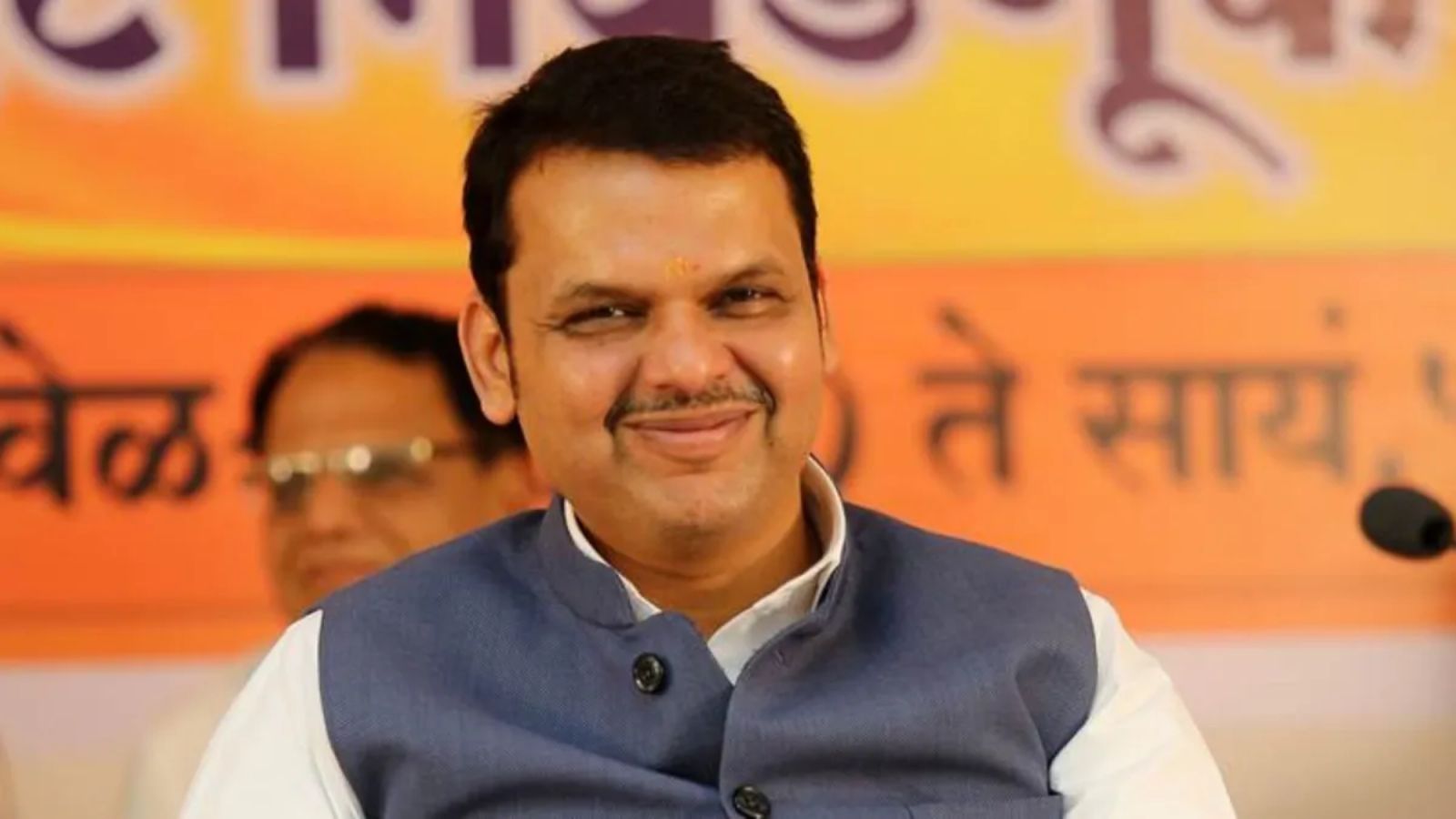
Maharashtra Chief Minister Devendra Fadnavis has put to rest speculation about further political realignments in the state, saying the BJP has no plans to induct more allies into the Mahayuti.
“The Maharashtra BJP will not get any new alliance partner. We have closed our doors to new entrants. All the talks of us trying to split Sharad Pawar’s NCP (SP) are baseless,” Fadnavis told the media in Delhi on Tuesday after meeting Union Home Minister Amit Shah.
The timing of his remarks is significant, as they come amid reports of a meeting between a senior leader of the Nationalist Congress Party (SP), which is led by Sharad Pawar, and top BJP leaders in Mumbai to discuss a possible entry into the NDA.
Fadnavis’s message has also trickled down to the state BJP headquarters in Mumbai, with sources saying state BJP chief Ravindra Chavan has been instructed not to make any commitments to leaders from rival parties.
While Fadnavis has signalled a status quo within the NDA, Deputy CM Eknath Shinde — whose relationship with the CM has been viewed as uneasy since the 2024 Assembly elections — recently inducted six leaders of the Uddhav Thackeray-led Shiv Sena (UBT) in a move dubbed “Operation Tiger”.
Even when “Operation Tiger” was underway, senior BJP leaders in Maharashtra were unenthusiastic about the entire situation, it is learnt. They believed the exercise shifted public attention away from governance and towards defections while simultaneously strengthening Shinde’s political position by taking his party’s tally in the Lok Sabha to 13.
Sources said at least two leaders from the Sena (UBT) approached the BJP but eventually joined Shinde after the ruling party declined to accommodate them. Similar overtures from leaders in the NCP (SP) have also been turned down by the BJP.
The BJP believes, sources said, that inducting leaders from the Sharad Pawar camp would not only upset Deputy CM Sunetra Pawar but also complicate its long-term political calculations. “Unlike Uddhav Thackeray, Sharad Pawar maintains cordial relations with Prime Minister Narendra Modi. On several occasions, the NCP (SP) chief has taken positions that placed national interest above partisan politics,” an insider said, adding that support from the NCP (SP) could be secured on merit without splitting the party.
However, the “no expansion” diktat stands in stark contrast to the BJP’s recent strategy. Until the local body elections earlier this year, the state BJP routinely organised induction programmes across districts and talukas, welcoming local leaders from Opposition parties.
What state leaders say
Senior Maharashtra BJP leaders argue that the party’s politics is driven by both arithmetic and chemistry.
“We do not need a fourth or fifth partner. In coalitions, three is often seen as a crowd. Why create an additional burden?” said a member of the state BJP’s core committee, the party’s highest decision-making body.
Managing Mahayuti allies is another reason leaders cite. “The BJP is conscious that any attempt to expand at the expense of the Sena or the NCP could unsettle them. Their support is crucial not only in Maharashtra but also at the Centre,” a source said.
Another senior leader said the BJP’s “no new ally” stance stems from lessons learnt from the splits in the Shiv Sena and the NCP in 2022 and 2023, respectively.
“Our cadre justified the split in the Shiv Sena as revenge for Uddhav Thackeray’s betrayal in 2019,” the leader said.
Following the 2019 Assembly elections, in which the BJP emerged as the single largest party, Uddhav walked out of the pre-poll alliance and joined hands with the Congress and the then undivided NCP to form the Maha Vikas Aghadi (MVA) government.
“However, things were different when the NCP split. There was considerable discomfort within the party, as many of our own leaders questioned the decision to bring the Ajit Pawar-led faction into the Mahayuti. The party’s poor performance in the 2024 Lok Sabha elections was seen as a sign of public disapproval,” a senior leader said.
The BJP won only nine of Maharashtra’s 48 Lok Sabha seats in 2024, down from 23 in 2019. The MVA secured 31 seats.
Keeping its house in order
A section of the BJP also cites the need to “protect its own organisation” as one of the reasons behind the new approach.
Senior leaders admit that managing the aspirations of the BJP’s 132 MLAs in the 288-member Assembly poses a bigger challenge than expanding the party.
“When outsiders join the BJP, everyone knows it is a transaction driven by power. Accommodating them often comes at the cost of loyal party workers who have spent decades building the organisation,” a senior leader said. “Earlier, we could justify such inductions as part of the BJP’s expansion. Today, when we are the single largest party in the Assembly and have a strong organisational presence across local bodies, the focus has to shift inward.”
Coordination challenges among allies at the grassroots may also have influenced the BJP decision. While the top leadership has often presented a united front, district- and taluka-level workers of the three allies have struggled to adjust to one another’s working styles.
For instance, recurring flashpoints have emerged in Thane and Pune, considered the home turfs of Shinde and Suntera, respectively.
Central calculations
Political compulsions in Delhi also appear to have influenced the BJP’s thinking.
With the Centre looking to push through key Constitutional amendments such as women’s reservation, delimitation and “One Nation, One Election” in Parliament, the support of allies such as the Sena and NCP remains crucial.
“The BJP has no incentive to weaken its allies,” a senior leader said.
Disclaimer: We do not own any of the content, ideas, images, or text presented here. All rights belong to their respective owners. For more information and to view the original source, please visit the following link: