

3 min readJul 18, 2026 10:23 PM IST
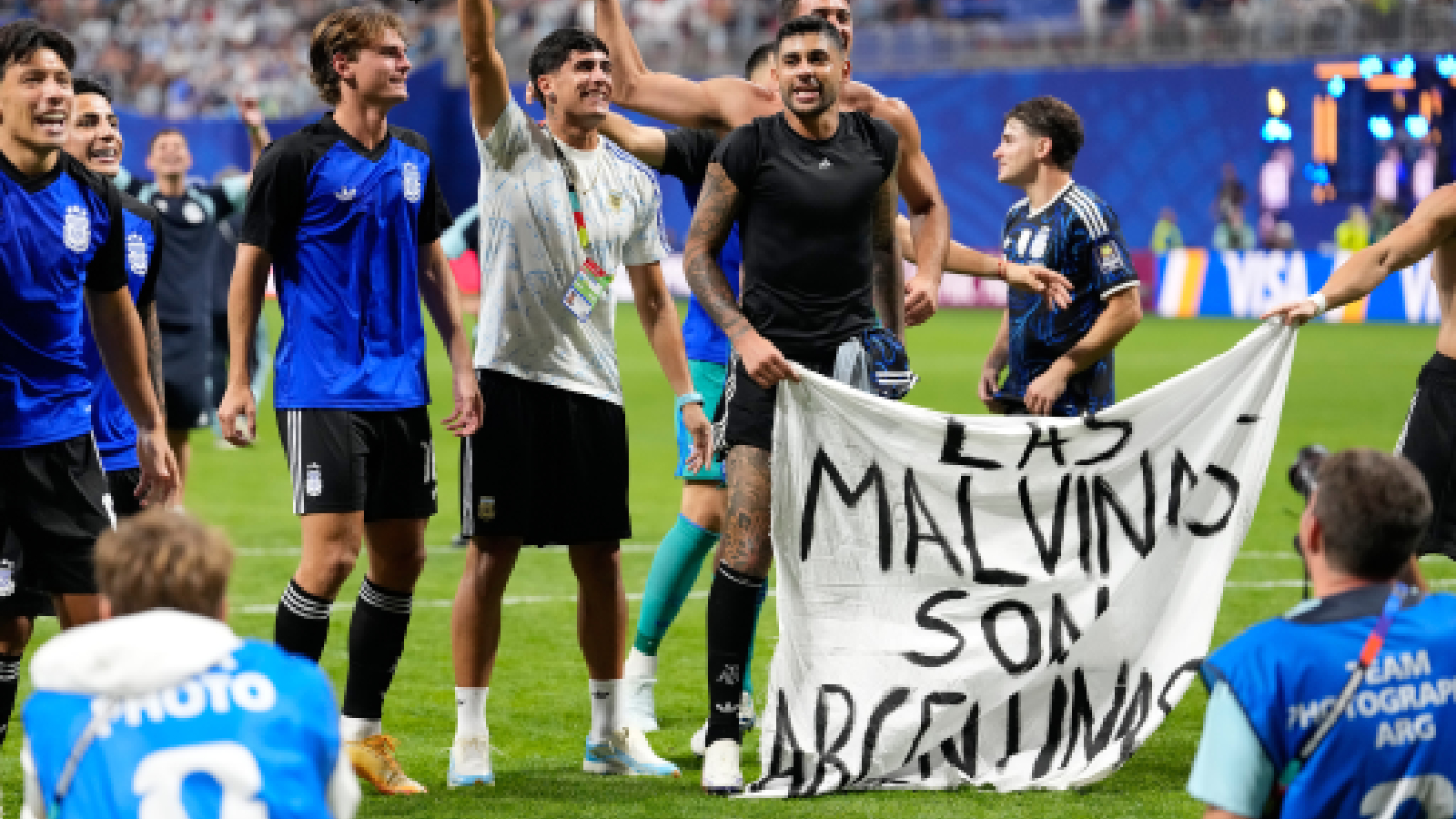
With the Argentine team facing flak for taunting England with a banner related to the Falklands War after their 2-1 win in the World Cup semifinal, the White House defended the Latin American team, saying that displaying it was their right to freedom of speech.
Andrew Giuliani, Executive director of the World Cup task force said that the Argentine team had the “ability” to do so under the First Amendment rights of the USA. “We believe in our First Amendment rights here in the United States of America. In terms of the ability and opportunity to be able to make those statements, they have the ability to do that in the United States,” Giuliani said to Sky News.
The controversy sparked off after Argentina’s Lautaro Martínez and Giovani Lo Celso held aloft a banner that read: ‘Las Malvinas son Argentinas’ after the semifinal match. It translates to: ‘The Falkland Islands [Malvinas] are Argentine.’
Sky’s @RobHarris asks the White House World Cup chief Andrew Giuliani if Argentina’s players were wrong to use celebrations in a stadium to claim the sovereignty of the Falkland Islands
Watch his response below⬇️ pic.twitter.com/hLJQrj3PEn
— Sky News (@SkyNews) July 17, 2026
The Falkland Islands — or Islas Malvinas, as they are known in Argentina — have remained at the centre of a sovereignty dispute between Argentina and the UK since Britain reasserted control over the islands in 1833. Argentina argues that it inherited the sovereignty of these islands from Spain upon gaining independence in 1816, and therefore regards Britain’s occupation as illegal.
In 1982, the two countries fought a 74-day war that resulted in 649 Argentine casualties and 255 British deaths. Officially, Britain continues to administer the islands, with the majority of the residents voting to remain a British overseas territory during a referendum in 2013. But Argentina still considers the British protectorate essential to its national identity.
FIFA’s regulations state that any political banner or flags with political messages are strictly prohibited before, after and during a match in the immediate vicinity of the stadium. International Football Association Board (IFAB) regulations also prohibit players from using sporting equipment with political messaging.
FIFA’s code of conduct also says fans cannot “curse or chant in a political, offensive and/or discriminatory manner”. The world body is currently reviewing the on-field gesture in Atlanta under its rules prohibiting political messaging
Disclaimer: We do not own any of the content, ideas, images, or text presented here. All rights belong to their respective owners. For more information and to view the original source, please visit the following link: