

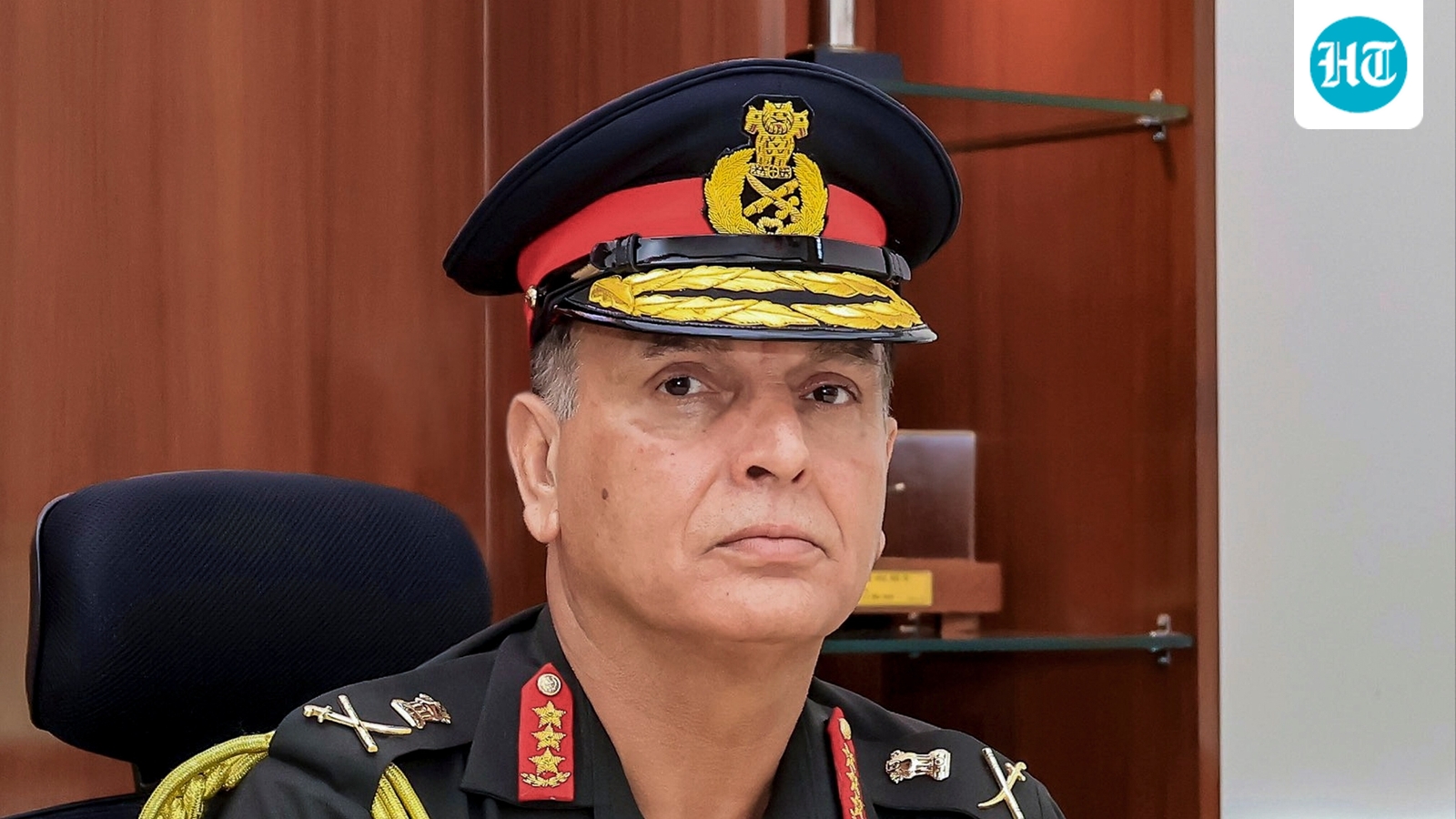
Indian Army Chief General Dhiraj Seth’s recent official visit to Nepal (August 16-19) where he was conferred upon the rank of honorary general of the Nepal Army (NA) by President Ramchandra Poudel, a tradition dating back seven decades wherein the army chiefs of Nepal and India receive the honorary general rank of each other’s army. He held high-level talks with his counterpart, Nepali army Chief General Ashok Raj Sigdel, and paid a courtesy call on Prime Minister (PM) Balendra Shah, who also holds the office of the defence minister. This was the first high-level bilateral engagement with PM Shah, who until recently stayed away from private meetings and opted for group discussions with envoys. On August 10, PM Shah also met the Indian ambassador in Kathmandu for the first time since taking office in March.
The army chiefs discussed ways to expand military-to-military cooperation, enhance joint training and bilateral security measures. Joint military exercise has been a hallmark of the relation between the two armies. Besides the 2018 NA pull out from the then BIMSTEC military drill held in Pune in India on the ground that the spirit of the block was not military in nature, the two armies have maintained most cordial ties. Gen Seth’s visit was also highly significant as Kathmandu became his first port of call upon assuming office on June 2026, thereby according high priority to the relation between the two countries. Nepali media and analysts are laying stress on the high success of his visit and see this as a gesture that “enhance Nepal army’s credibility and portray it as a reliable and permanent power structure in Nepal.” It can be recalled here that the NA played a vital role in re-establishing stability in Nepal after the Gen Z protest of September 2025 by facilitating dialogue with the Gen Z representatives and assisting in the formation of the interim government. Rumors of an army take-over after the rampant violence and arson was soon put to rest after the NA leadership facilitated talks and later helped in smooth conduct of the polls in March.
But most importantly, his visit has raised high hopes on a possible breakthrough in the much-delayed intake of Nepali Gorkha Agniveers in to the Indian Army since 2022. As per sources, Agnipath Scheme figured prominently during the talks this time as both sides “laid stress on a collaborative and consultative approach for a desirable outcome” for the larger benefit of the two countries. Nepal’s reservations/position on this issue so far has been threefold. First, it sees the Agnipath Scheme foremost as a problem statement in India as it lacks clarity and has been a matter of debate, especially regarding the retention rate of the Agniveers. As per the present scheme, 25% of the Agniveers will be retained after the four-year period and the remaining will be laid off with a retirement package. There is a demand to increase this rate. Thus, Kathmandu sees this issue as being in a flux as it is yet to be a permanent state of affair. Second, Kathmandu has maintained since the time of former PM KP Sharma Oli that Nepal was neither consulted nor informed about the Agnipath Scheme and thus cannot be solely blamed for the delay or the halt in the intake process. It sees this as an irritant in the bilateral ties, which requires negotiation so that a package deal can be worked out to resolve the issue once and for all. Third, Nepal senses an internal security threat emerging from the Gorkha Agniveer retirees. Given the history of a civil war and the high rate of unemployment in the country, it could face larger threat from such a highly trained batch of young people. It thus seeks larger dialogue at the government level to address the concerns, mainly as it feels similar standards cannot apply in case of recruitment from a sovereign country. At present, the Gorkha recruitment is driven under the 1947 Tripartite Agreement between India, the UK and Nepal.
However, it can be clearly stated that Gen Seth’s visit to Nepal has provided the additional impetus to resolve this issue. “The prospect of resolving this during his tenure looks much higher than before,” a source from Kathmandu said. The excitement visible in Kathmandu and Pokhara last week showcase that he went to Nepal on a clean slate and with open arms. The challenge is to build on this momentum. The changed political scenario in Nepal with a very young PM at the helm of affairs provides the right environment. The Gorkha community in Nepal too is pushing both the sides to resolve this matter at the earliest in order to maintain the traditional ties. The Armies of both the countries can be a powerful bridge to get the governments together. It can be on the table during PM Shah’s visit to India, anticipated at an earliest date possible.
After all, this issue has high strategic, economic and diplomatic ramifications for both the countries. The pride of Gorkhali bravery echoed in every war that India has fought is marked in India’s history, while Gorkhali regiments and the retired community has been a source of soft power for India. Given the geo-political rivalry in the region, it will be futile to push the Gorkhalis into the arms of other countries. For Nepal, the recruitment serves to economically strengthen a section of the society as the country grapples with high employment. There were some small protests in Nepal this time during Gen Seth’s visit demanding opening up of Agniveer intake. This voice needs to be heard. Gen Seth’s visit has already provided the right direction. Both the governments must build upon it.
(The views expressed are personal)
This article is authored by Akanshya Shah, Nepali journalist and researcher, New Delhi.
Disclaimer: We do not own any of the content, ideas, images, or text presented here. All rights belong to their respective owners. For more information and to view the original source, please visit the following link: