

4 min readNew DelhiMar 14, 2026 01:58 PM IST
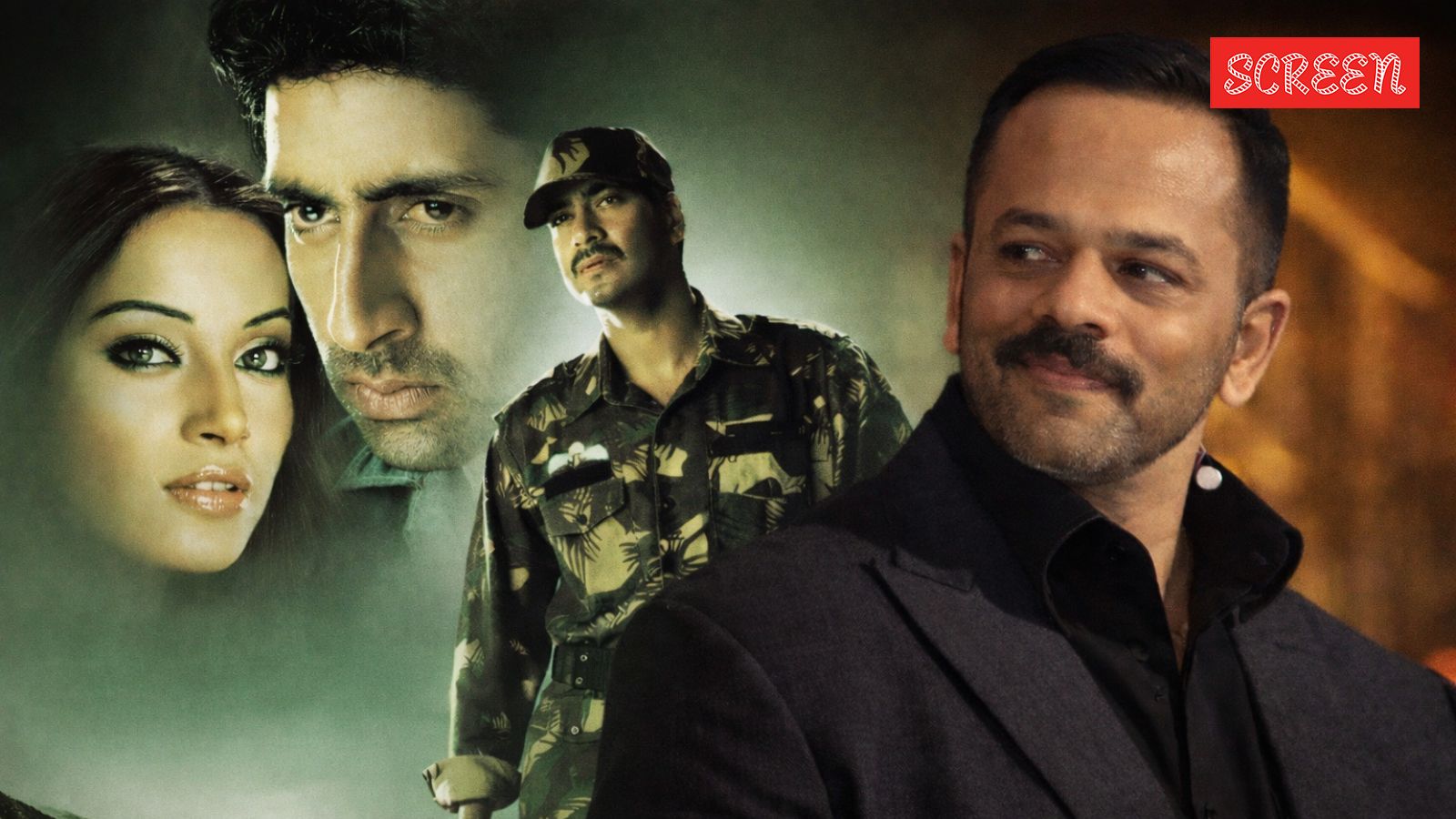
Long before the cop universe of Rohit Shetty turned testosterone-driven nationalism into blockbuster entertainment, the idea had already appeared — quietly and imperfectly — in his debut film Zameen. Watching the film in 2026 feels less like revisiting a forgotten action thriller and more like discovering the rough first draft of the “Naya Bharat” that later became big with the likes of Dhurandhar.
It was purely a coincidence that I chose to watch Zameen on Rohit Shetty’s 52nd birthday. The intention was simple: to understand whether the filmmaker who would later build one of Hindi cinema’s most commercially successful cop universes had hinted at that vision in his very first film. What I discovered was surprising. Beneath the film’s rough filmmaking lies an imagination of an India that fights back — the same idea that the upcoming film Dhurandhar now appears ready to revisit when its sequel releases on March 19.
Both films draw from the same painful chapters in India’s history — the Indian Airlines Flight 814 hijacking in 1999, the attack on Indian Parliament in 2001 and the Akshardham Temple attack in 2002. But the two films approach these events very differently. While Dhurandhar attempted to focus on the bureaucratic helplessness, Zameen imagined something else — the response many Indians, perhaps, wished for.
Zameen is far from perfect. The early Rohit Shetty aesthetic is visible in its rough edges — clumsy camera work, exaggerated characterisation and even peculiar traits like Ajay Devgn’s chain-smoking colonel who seems to light a cigarette regardless of place or circumstance. But beyond these flaws lies something interesting. Through two characters — played by Ajay Devgn and Abhishek Bachchan — the film unintentionally sketches two versions of India.
Abhishek Bachchan’s character represents the India that negotiates and does not act in haste. Ajay Devgn’s Col Ranvir Singh Ranawat, on the other hand, embodies the India that Shetty seems to endorse — a nation unwilling to remain passive after repeated terrorist attacks. At one point, frustrated by yet another crisis triggered by Pakistan, Ranawat confronts the Prime Minister and delivers a scathing line about India missing opportunities to act decisively after conflicts in 1948, 1965, 1971 and Kargil. “Humne ek nahi, char mauke khoye hai sir aur har martaba kamzor rajneeti ko Bhartiya sena ki kamzori samjha jata hai (We have lost four opportunities and every time, India’s weak politics is seen as the weakness of the armed forces),” he says. The frustration in the dialogue captures the mood of a country that, in the late 1990s and early 2000s, was grappling with repeated acts of terrorism.
Watching that scene immediately reminded me of a moment in Dhurandhar, where R Madhavan’s character confronts political leadership during negotiations with the hijackers of the Kandahar flight. His anger echoes the same frustration — a nation pleading for diplomatic patience while its adversaries exploit that restraint. “Sir mooh todne ke liye mutthi band karna zaruri hai (You have to make a punch to hit someone),” he argues, insisting that retaliation is sometimes the only language an aggressor understands.
The difference, however, lies in the outcome.
Story continues below this ad
Dhurandhar, by tracing the real events of the Kandahar crisis, ultimately reflects the painful truth that India had little choice but to concede to the hijackers’ demands. But Zameen takes the creative freedom that cinema often allows itself. In Shetty’s version of events, hesitation ends. The terrorists are eliminated. The hostages are rescued. In other words, Rohit Shetty did what cinema often does best — he imagined the response that he probably wishes for.
Seen today, Zameen feels less like Rohit Shetty’s flawed debut and more like the first draft of the cinematic worldview he would later polish. Long before Singham roared into theatres, Shetty had already imagined a “Naya Bharat” that refused to absorb blows quietly. If Dhurandhar now attempts to revisit those same historical events in its sequel on March 19 — this time in a world where India has finally retaliated — then Shetty’s early film almost feels prophetic. A box office failure in 2003, it quietly planted the seed of both the cop universe and the idea of an India that fights back, that Hindi cinema would later celebrate.


Click here to follow Screen Digital on YouTube and stay updated with the latest from the world of cinema.
© IE Online Media Services Pvt Ltd
Disclaimer: We do not own any of the content, ideas, images, or text presented here. All rights belong to their respective owners. For more information and to view the original source, please visit the following link: