

6 min readNew DelhiMar 20, 2026 01:53 PM IST
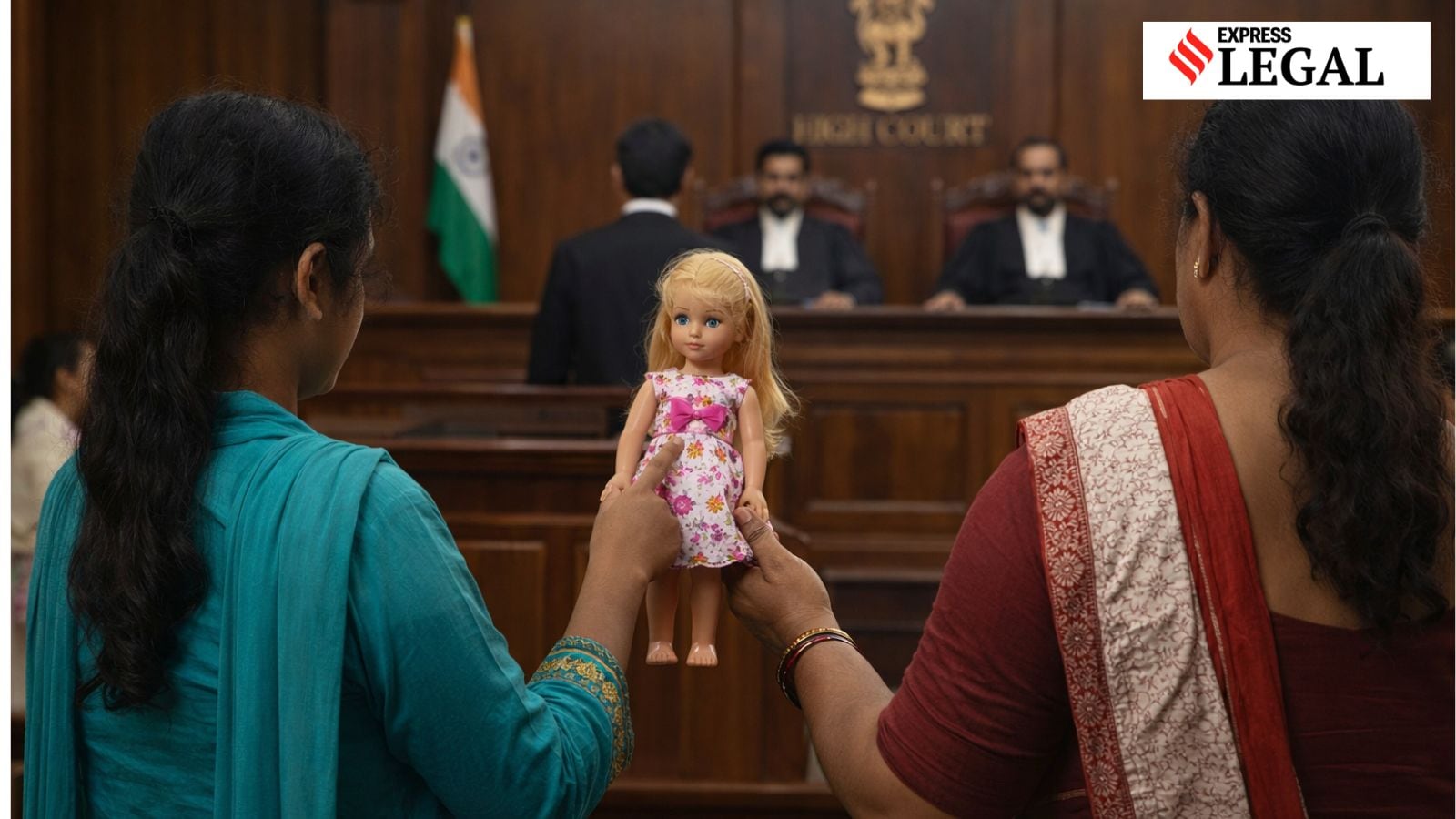
Chhattisgarh High Court news: After a deaf and mute sexual assault survivor’s testimony was recorded using a plastic doll and the help of an interpreter, the Chhattisgarh High Court recently validated it and upheld the life term until death sentence imposed on the perpetrator.
The court ruled that this specialised method of evidence-gathering rendered her testimony reliable and sufficient to establish the man’s guilt beyond a reasonable doubt.
Chief Justice Ramesh Sinha and Justice Ravindra Kumar Agrawal were hearing the plea of the accused, who challenged his conviction awarded by the trial court in March 2023.
 Chief Justice Ramesh Sinha and Justice Ravindra Kumar Agrawal pointed out that merely because a witness is deaf and dumb, her testimony cannot be discarded.
“Since the victim was not able to clearly understand certain questions during her examination, the court (trial) adopted an appropriate demonstrative method by bringing a plastic doll to facilitate communication,” the Chhattisgarh High Court said in its March 16 order.
‘Trial court’s method, sentence order’
- The trial court has recorded its observations regarding the survivor’s disability and continued her examination with the assistance of the interpreter and doll to ensure fairness and clarity in the recording of her testimony.
- The trial court also noted that although the victim is deaf and mute, there is no material to suggest that she suffers from any mental abnormality which would prevent her from understanding the occurrence or communicating the same.
- The high court finds no illegality or perversity in the manner in which the trial court assessed the competency and credibility of the deaf and dumb survivor.
- Her testimony inspires full confidence and constitutes reliable substantive evidence forming the foundation of the conviction recorded against the accused.
- The evidence further shows that immediately after the incident, when her mother returned home from agricultural work, the victim was found in a disturbed and crying condition.
- On being asked, she disclosed the incident through gestures and named the accused, who is her close relative residing in the same village.
- This prompt disclosure forms an important circumstance lending assurance to the truthfulness of her testimony.
- The victim’s gestures and narration in the trial court remained consistent with the version recorded in the FIR as well as with her earlier statement recorded during the investigation.
- The high court found that the trial court had rightly appreciated the testimony of the survivor, who is admittedly hearing and speech-impaired since birth.
‘Well-settled principle’
- It is well settled that merely because a witness is deaf and dumb, her testimony cannot be discarded.
- Evidence given through gestures or signs with the assistance of a competent interpreter is admissible and can form the basis of a conviction if it inspires confidence.
- The conviction of the accused can be based on the sole testimony of the survivor in cases of sexual assault and rape, as it is no longer res integra (an untouched thing), and the apex court has confirmed the same in other cases.
‘Indicated name of accused through gestures’
- The complainant, mother of the child, lodged a written report stating that her daughter, who is deaf and dumb since birth and can only speak minimally regarding her name and village, was allegedly sexually assaulted by the mother’s brother-in-law in July 2020.
- It was claimed that when the complainant returned home in the evening after work, the daughter was found crying.
- She allegedly indicated the name of the accused and, through gestures, conveyed that he had committed forcible sexual intercourse with her.
- During the investigation, the statement of the deaf and dumb woman was recorded with the assistance of a teacher trained in sign language, and subsequently, the accused was arrested.
‘No conviction on sole testimony of survivor’
- Appearing for the accused, advocate Prasoon Agrawal submitted that the trial court’s judgment of conviction is wholly illegal, perverse, contrary to the evidence placed on record and bad both in law and on facts.
- He further added that the accused deserves to be acquitted of all the charges.
- It is contended that the trial court has failed to note that the prosecution has not provided cogent, reliable and convincing evidence to establish the allegation of forcible sexual intercourse.
- He added that the evidence placed on record does not satisfy the essential ingredients of the offences for which the accused has been convicted.
- It is further submitted that the trial court has not properly considered and appreciated the statement of the woman in its correct perspective, particularly in light of the surrounding circumstances and inconsistencies coming from the same.
- It is argued that conviction cannot be sustained merely based on the sole testimony of the woman when the same does not inspire confidence and is not supported by other reliable evidence.
‘No interference required’
- On the contrary, government advocate S S Baghel opposed the submissions made by the counsel of the accused and submitted that the prosecution has proved its case beyond a reasonable doubt.
- He further emphasised that the survivor has clearly deposed the conduct of the accused in her statement, and the trial court, after considering the evidence placed on record, has rightly convicted and sentenced the accused, requiring no interference.

© IE Online Media Services Pvt Ltd
Disclaimer: We do not own any of the content, ideas, images, or text presented here. All rights belong to their respective owners. For more information and to view the original source, please visit the following link: