

Last Updated:
The IAEA said there was no radiation leak from any nuclear facility in Pakistan, and neither there was any radioactive incident as claimed on social media.
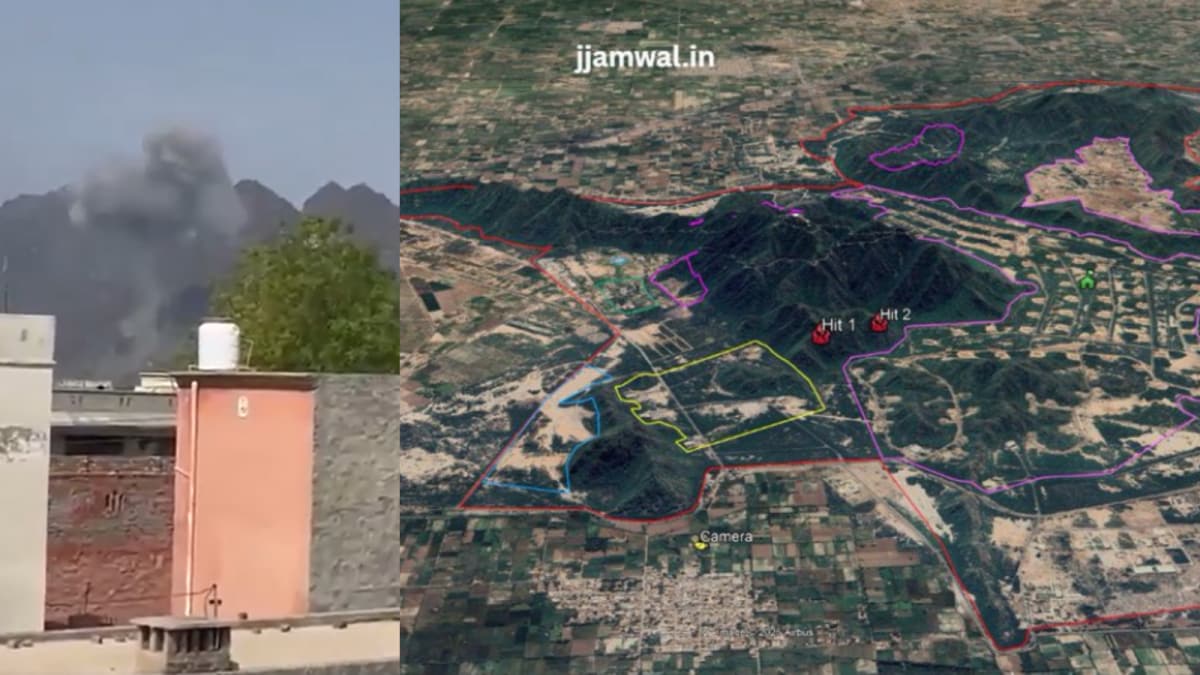
The social media has been abuzz with photos and claims that Indian missiles hit the nuclear facility in Pakistan’s Kirana Hills. (X/@ImtiazMadmood)
The social media has been abuzz with claims that Indian missiles hit the nuclear weapons storage facility in Pakistan’s Kirana. Some have posted before-and-after images of the area, while others have been sharing memes claiming that the move was a “warning shot that panicked the neighbours into begging for a ceasefire”. The International Atomic Energy Agency, however, has now come forward to burst the bubble.
The IAEA clarified on Wednesday there was no radiation leak or release from any nuclear facility in Pakistan, and neither there was any radioactive incident as claimed on social media.
The Times Of India had emailed a query to the agency, following which Fredrik Dahl from IAEA’s press department responded: “We are aware of the reports. Based on information available to the IAEA, there was no radiation leak or release from any nuclear facility in Pakistan.”
The IAEA’s Incident and Emergency Centre, established in 2005, serves as the primary hub for coordinating international assistance in emergency preparedness and response to radiation incidents and emergencies, regardless of their cause or severity.
Earlier at a press conference, Air Marshal AK Bharti had confirmed that India had not hit Kirana Hills.
Reports have also emerged about a US Beechcraft B350 Aerial Measuring System (AMS) aircraft being detected in Pakistan’s airspace. This aircraft is part of a US Department of Energy fleet designed to identify radioactive contamination during emergencies, which has fueled further speculation.
Pakistan has not commented on the presence of these aircraft in its airspace. However, flight tracking websites like Flightradar24 have shown activity involving an aircraft, identified as N111SZ, a B350 AMS variant, in Pakistan’s airspace.
(details to follow)
- First Published:
Disclaimer: We do not own any of the content, ideas, images, or text presented here. All rights belong to their respective owners. For more information and to view the original source, please visit the following link: