

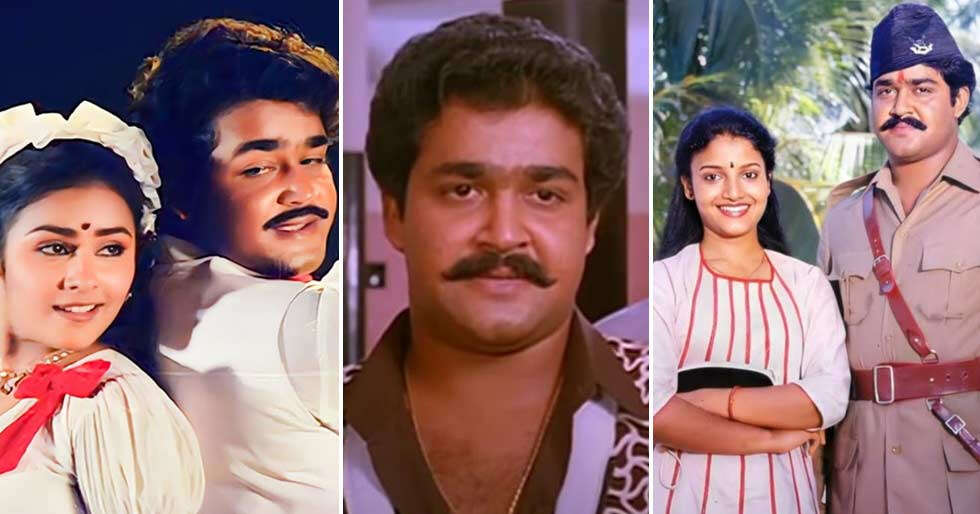
There are certain years in an actor’s career that seem to contain, in some early form, everything he would later become. Looking back at Mohanlal’s 1986 feels a bit like that. You can already see the many actors he would go on to be.
It was also the year the industry formally recognised what audiences had already begun to sense. In 1986, Mohanlal won his first Filmfare Award for Best Actor (Malayalam) for his performance in Sanmanassullavarkku Samadhanam, Sathyan Anthikad’s deceptively simple comedy about a man whose only ambition is to live in peace. In the same year, his deeply affecting turn in T. P. Balagopalan M.A. earned him the Kerala State Film Award for Best Actor. The two performances make for a revealing pair. One finds humour in the daily irritations of middle-class life. The other follows a man slowly worn down by responsibility. Together, they suggest an actor who already understood how little distance often separates laughter from sadness.
He was still in his mid-twenties and had not yet become the institution he would later be. Over the course of twelve months, he played an overqualified graduate carrying his family on his shoulders, an underworld don who quietly changed what a Malayalam hero could look like, a lover who spoke in Biblical imagery, a young man bluffing his way through unemployment, a homeowner driven to quiet exasperation, and a dreamer whose mind drifted away from the world that loved him.
What makes the year even more fascinating is the company he kept. Mohanlal was working with filmmakers as different as Sathyan Anthikad, Padmarajan, Priyadarshan, Thampi Kannanthanam and K. G. George. Each seemed to notice something different in him. Anthikad saw how naturally he could inhabit the frustrations of middle-class life. Padmarajan found the softness beneath the mischief. Priyadarshan trusted him to move from farce to heartbreak without seeming to change gears. Kannanthanam sensed a star who did not need to announce his presence. George understood how even a few scenes could suggest an entire inner life.
Looking back now, 1986 feels like the last year before audiences began expecting a certain kind of Mohanlal performance. At that point, he still approached each role as though he were discovering himself all over again.
The extraordinary burden of the ordinary in T. P. Balagopalan M.A.
Sathyan Anthikad has always been interested in men whose dreams are modest but whose responsibilities are overwhelming. In T. P. Balagopalan M.A., he found in Mohanlal someone who could make that burden feel entirely lived-in.
Balagopalan is educated, sincere and perpetually tired. He belongs to that familiar class of Malayali protagonists who are expected to remain dependable long after life has stopped rewarding dependability. Mohanlal plays him with a body that seems to have grown used to disappointment. His shoulders slope forward slightly, his smile arrives a second too late, and even his moments of hope carry the memory of earlier setbacks.
What is most moving is how little the performance asks for sympathy. Mohanlal simply lets us watch a man adjusting himself to circumstance, much like someone straightening a shirt that life has spent the day crumpling.
The swagger that changed Malayalam cinema in Rajavinte Makan
And then, in the same year, he appears in Rajavinte Makan and seems like an entirely different actor. Thampi Kannanthanam’s Vincent Gomes quietly changed what a leading man could be in Malayalam cinema. He was composed, dangerous and impossible to read fully. Until then, heroes were usually defined by a clear sense of right and wrong. Vincent Gomes was more interesting because you were never entirely sure where he stood.
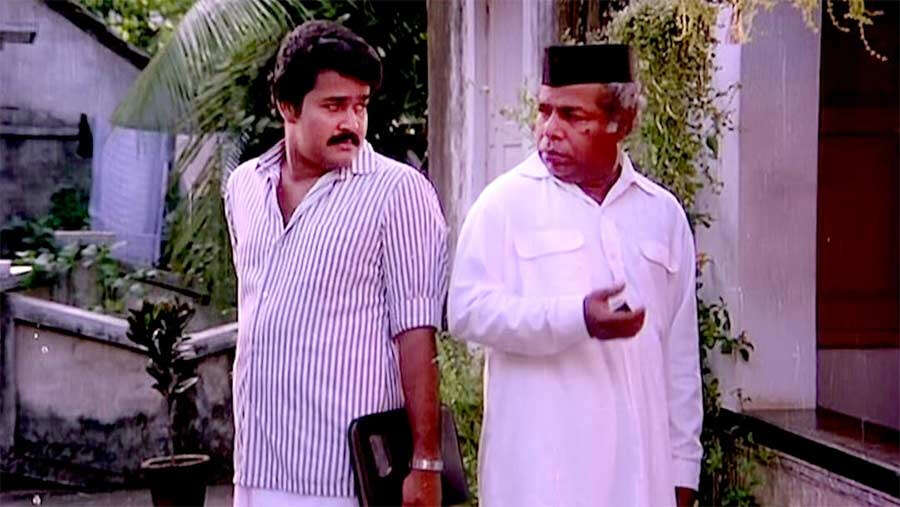
The remarkable thing about the performance is how little Mohanlal seems to do. He does not strain to look powerful. He behaves as though power is simply part of the character’s natural state. The slow delivery, the measured glances and the calm way he occupies space gave Malayalam cinema a new kind of star.
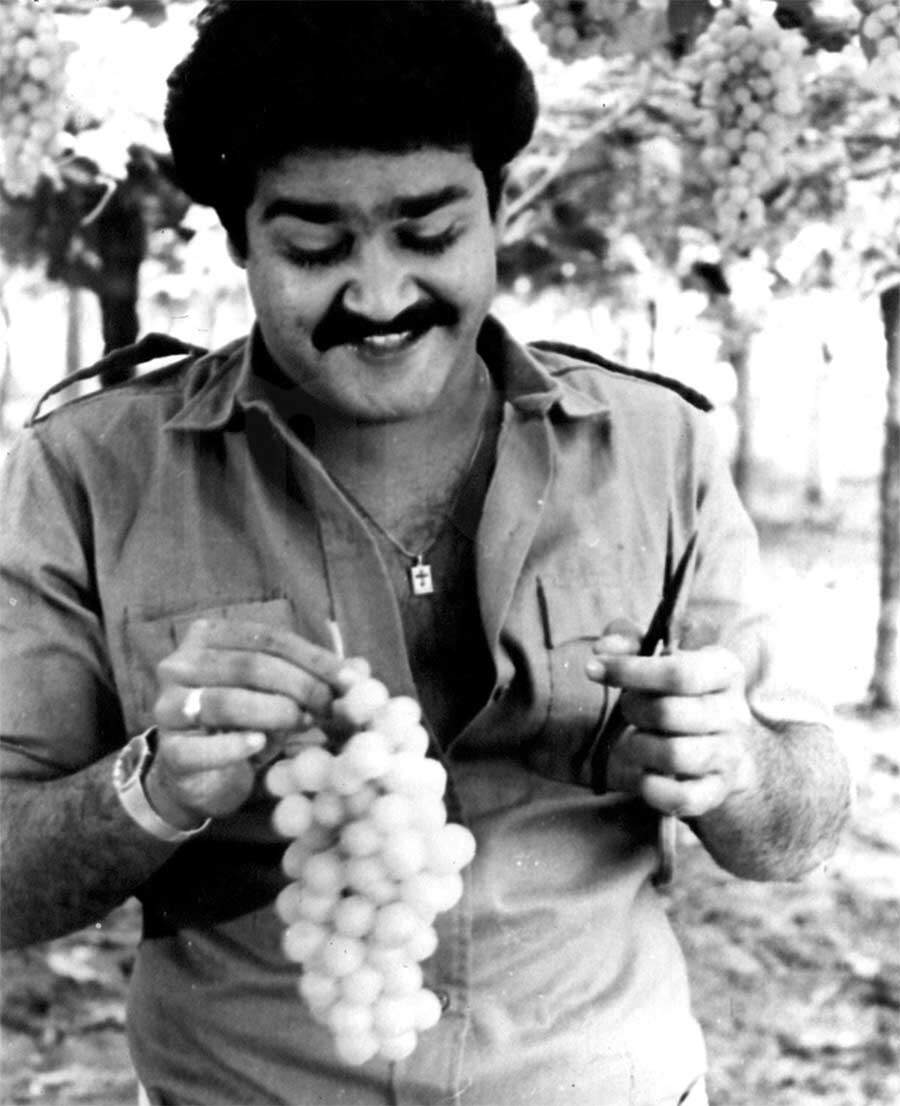
Love spoken in a whisper in Namukku Parkkan Munthirithoppukal
Padmarajan had a rare ability to uncover unexpected tenderness in actors. In Namukku Parkkan Munthirithoppukal, Mohanlal plays Solomon, one of the gentlest romantic heroes Malayalam cinema has produced. Solomon speaks of vineyards and scripture, but Mohanlal makes those words sound less like literary dialogue and more like the private thoughts of a man who has found a different language for love.
When Solomon invites Sofia into the world he imagines for them, it feels less like seduction than an attempt to build a place where both of them might feel safe. Padmarajan supplied the poetry. Mohanlal made it feel intimate and real.
Comedy born out of anxiety in Gandhinagar 2nd Street
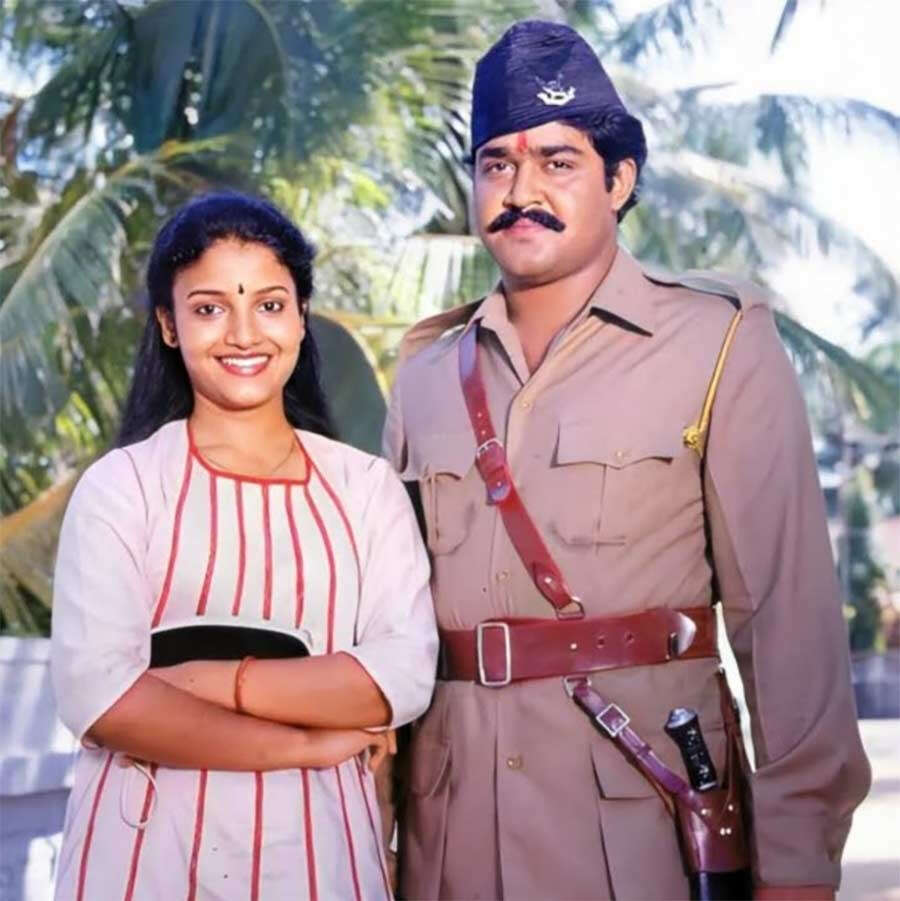
In Gandhinagar 2nd Street, Mohanlal’s Sethu survives by pretending to be someone he is not. The setup is comic, but the emotion underneath it is very familiar.
Priyadarshan’s films often depend on actors who can turn panic into rhythm, and Mohanlal was especially good at this. His lies become increasingly desperate, and his expressions seem to move a fraction ahead of his thoughts. Yet beneath every laugh is the unmistakable anxiety of a young man trying to hold on to his dignity in a world that offers him few chances.
Domestic frustration as performance art in Sanmanassullavarkku Samadhanam
The role that brought Mohanlal his first Filmfare Award does not announce itself as an obvious award-winning performance. That is perhaps why it remains so impressive. In Sathyan Anthikad’s Sanmanassullavarkku Samadhanam, Gopalakrishna Panicker wants something almost absurdly simple: a peaceful life. The world around him refuses to cooperate. Neighbours intrude, obligations pile up and patience becomes a daily test.
Most Malayalis probably know some version of this man. Mohanlal understands that the humour lies in recognition. He reacts the way ordinary people do when irritation and affection coexist in the same household. Panicker never feels written for effect. He feels observed.
The fragile innocence of Thalavattam
Priyadarshan’s Thalavattam asks for something entirely different. As Vinod, Mohanlal creates a character whose childlike openness becomes the source of the film’s heartbreak. He smiles with complete trust, responds to kindness with immediate warmth and moves through the world without the protective layers most adults acquire.
As tragedy closes in, Mohanlal does not play Vinod’s suffering in a showy way. What stays with you is the bewilderment, the sense that he cannot understand why the world has suddenly become unfamiliar.
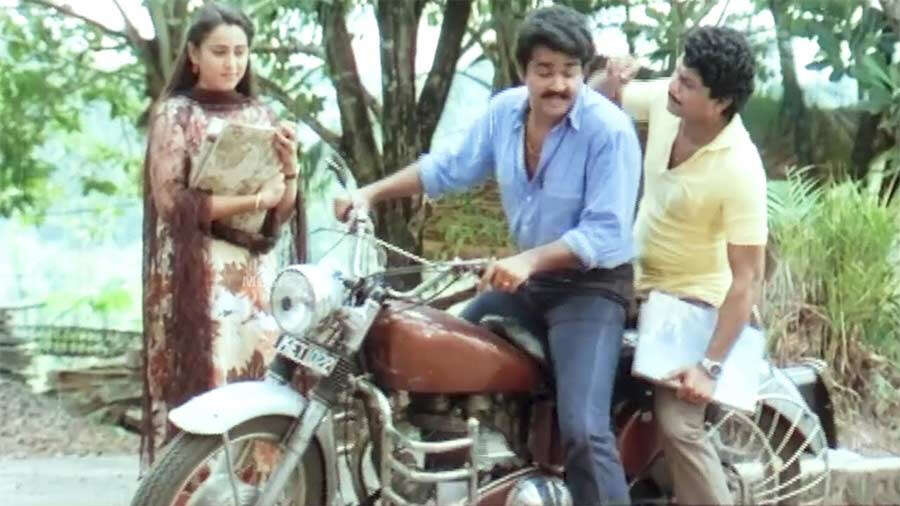
The melancholy beneath the mischief in Sukhamo Devi
Sunny in Sukhamo Devi begins as the typical carefree charmer, but Mohanlal slowly gives the character an emotional weight that the film never openly spells out. Even in the lighter scenes, Sunny often feels slightly out of sync with the happiness around him. His death works because it abruptly cuts short the warmth and energy he brings into every scene. The loss changes the emotional texture of the film entirely, turning what once felt youthful and playful into something painfully incomplete.
The ache of unspoken grief in Ninnishtam Ennishtam
In Ninnishtam Ennishtam, Mohanlal plays Srikumar, a young man whose hopeful romance slowly gives way to loss. He begins with the openness of someone who still believes life will give back what he has invested in it. As disappointment accumulates, that openness recedes almost imperceptibly. The change is visible in the length of his silences and in the way his face seems to hold on to feelings he can no longer put into words.
The power of brevity in Panchagni
K. G. George always had an extraordinary ability to suggest complete moral worlds in just a few scenes. Mohanlal’s role in Panchagni is brief, but Rasheed feels fully formed almost immediately. There is a warmth and steadiness to him, as though the film has opened a door onto a life already in progress. Many actors need time to establish depth. Mohanlal often needed only presence.
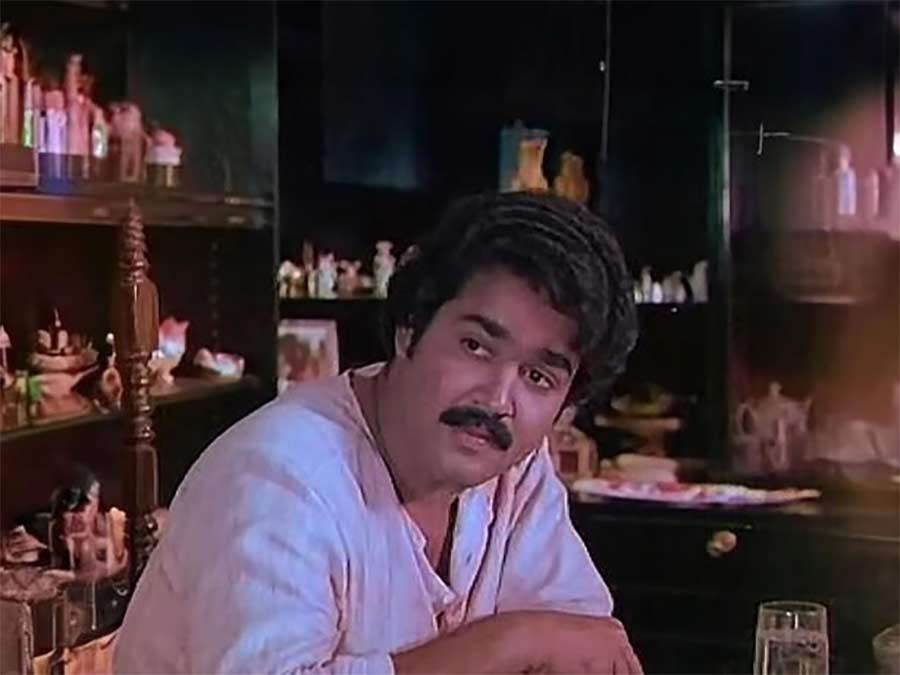
A year that contained every future Mohanlal
Taken together, these performances feel like early glimpses of everything Mohanlal would later become. Even then, this list leaves out a remarkable amount of work. The anarchic comic brilliance of Mazha Peyyunnu Maddalam Kottunnu, the farcical pleasures of Hello My Dear Wrong Number, the wistfulness of Yuvajanotsavam, the understated contribution to Kariyila Kattu Pole, and the emotional richness of Mizhineerppoovukal all point to the same conclusion.
For many actors, a breakthrough year helps define a recognisable screen image. Mohanlal’s 1986 suggested something far rarer. It’s when he revealed that his greatest gift would be his refusal to remain any one thing for too long.
Also Read: Mohanlal’s Chotta Mumbai Returns To Theatres: A Cult Classic Revs Up Again!
Disclaimer: We do not own any of the content, ideas, images, or text presented here. All rights belong to their respective owners. For more information and to view the original source, please visit the following link: