

4 min readChandigarhUpdated: Jul 28, 2026 02:08 PM IST
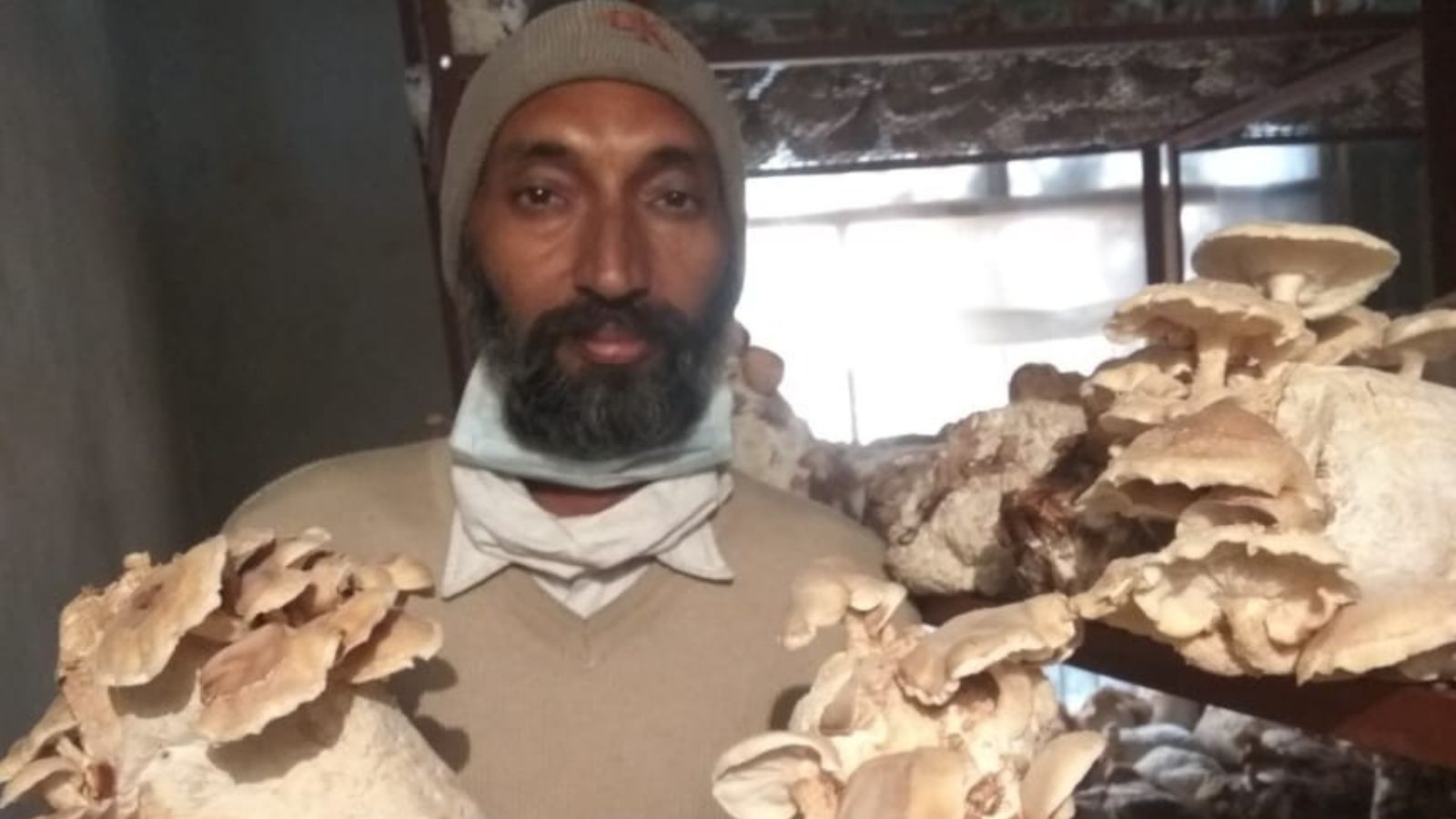
A 57-year-old farmer from Morni Hills in Haryana’s Panchkula district runs VMW Nutraceuticals OPC Pvt Ltd, which produces mushroom spawn (seed), while making and marketing value-added products.
His unit, however, stands on only a kanal (0.125 acres) of land, where he commercially cultivates around eight varieties of medicinal mushrooms.
Virender Bajwan has claimed to earn an annual profit of nearly Rs 20 lakh from just one kanal of land by cultivating mushrooms, especially Ganoderma (Reishi mushroom), and working with a network of farmers through his agri-startup.
His unit houses a building with 12 indoor cultivation halls and a mushroom laboratory capable of producing over 30,000 fully mycelium-run bags every year. These bags can produce up to 1,000 kg of dried medicinal mushrooms annually, he said.
“The market price of dried medicinal mushrooms ranges from Rs 1,600 to Rs 4,000 per kg, depending on quality,” Bajwan said.
Bajwan and his wife, Darshan Devi, started the venture in 2009 with an investment of nearly Rs 60 lakh. The investment was used to develop the building, purchase machinery, procure raw materials and create the infrastructure.
They also took a loan of Rs 16 lakh from Punjab National Bank’s Pinjore branch. They received a subsidy of Rs 8 lakh from the Haryana Horticulture Department.
Story continues below this ad
Explaining the business model, Bajwan said his company sells fully mycelium-run bags of medicinal mushrooms to farmers at Rs 120 per bag. The mushroom varieties include Shiitake, Ganoderma, Lion’s Mane and Cordyceps militaris.
The company also provides free training and buys back the harvested mushrooms at prices that give farmers around 20 per cent profit over their production cost.
Bajwan said the mushrooms are processed into powder and extracts after harvesting, and then supplied to pharmaceutical, Ayurvedic and cosmetic industries. The products are made with surety to meet the standards of the Food Safety and Standards Authority of India (FSSAI), the Ministry of AYUSH, the Import Export Code (IEC), and the International Organization for Standardization (ISO) before being marketed, he said.
He has also received two months of entrepreneurship training and an incentive of Rs 15 lakh from the Agri Business Incubation Centre (ABIC) of Chaudhary Charan Singh Haryana Agricultural University (CCSHAU), Hisar, for his innovations in medicinal mushroom cultivation.
Story continues below this ad
The project director (Haryana Horticulture Department), Arjun Singh Saini, said only a limited number of farmers in the state have adopted medicinal mushroom cultivation because it requires high initial investment, expensive spawn and specialised infrastructure.
Saini also said medicinal mushrooms are cultivated in enclosed growth rooms and under controlled conditions using straw as the growing medium. Unlike button mushrooms, they require specific temperatures, specialised equipment and continuous monitoring to prevent diseases.
“Medicinal mushroom cultivation is not easy. Farmers need proper training before starting. Free training programmes of seven to ten days are available at the research station of Maharana Pratap Horticultural University (MHU), Murthal, and at the Directorate of Mushroom Research Centre (DMRC), Solan,” Saini said.
While button mushrooms are best sold fresh, medicinal mushrooms offer much greater income potential because they can be processed into powders and extracts, which have higher market value, he said.
Story continues below this ad
The project director also said, “Farmers cultivating medicinal mushrooms are also eligible for financial assistance under the Haryana government’s horticulture mission. They can set up projects worth up to Rs 80 lakh, with the government providing a 50 per cent subsidy.”
Saini said medicinal mushroom cultivation does not require large landholdings and can be taken up even on half a kanal or one kanal of land.
Disclaimer: We do not own any of the content, ideas, images, or text presented here. All rights belong to their respective owners. For more information and to view the original source, please visit the following link: