

For a long time, this World Cup felt like a tournament with two hosts. There is the United States, where the final will be played, where the commercial heft of FIFA is most visible and where Donald Trump hovers over much of the conversation. There is Mexico, football’s old cathedral, where the World Cup is part of the national consciousness and where the Estadio Azteca stands as one of the sport’s great monuments.
And then there is Canada. A co-host on paper, but often an afterthought in the global imagination. The country will stage 13 matches across Toronto and Vancouver; the first of those on Friday (12.30 am Saturday, IST) when the hosts take on Bosnia and Herzegovina at the Toronto Stadium.
Yet, on the eve of the first-ever World Cup match on its soil, Canada – which has spent years preparing transport networks, fan festivals, security plans and stadium upgrades for arguably the biggest sporting event in its history – finds itself in a curious position: hosting the World Cup while still trying to convince the world, and perhaps itself, that it belongs at football’s biggest table.
And perhaps, that reflects the country’s football journey.
For decades, Canada existed on the fringes of the global game. The men’s team made a solitary World Cup appearance in 1986 before disappearing from the tournament for 36 years. They ended the long wait by qualifying for Qatar 2022, but struggled to leave a lasting impression.
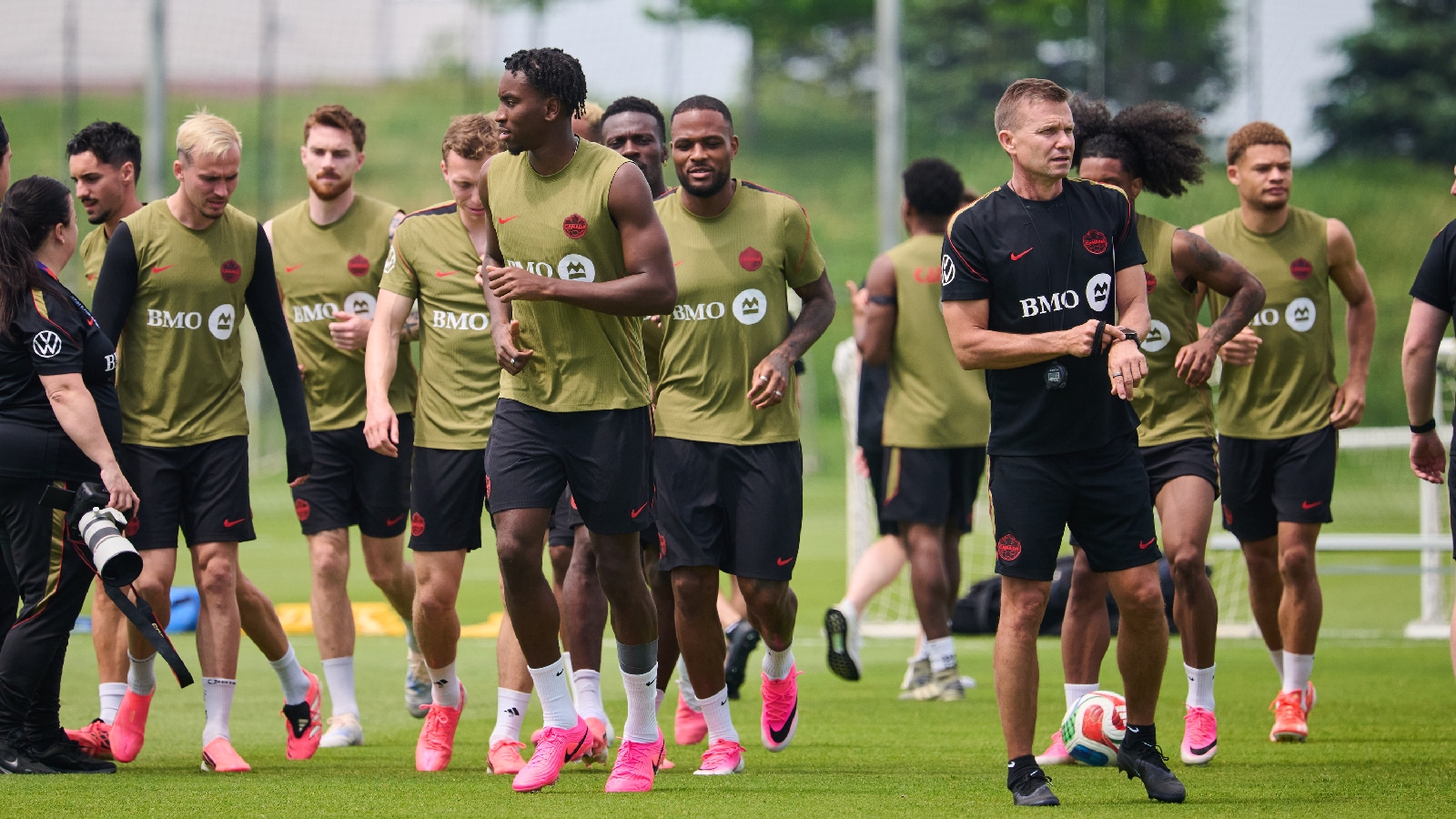
 Canada’s head coach Jesse Marsch watches during a World Cup soccer training session in Toronto, Tuesday, June 9, 2026. (Sammy Kogan/The Canadian Press via AP)
Canada lost all three matches but Alphonso Davies’s goal against Croatia – the country’s first World Cup goal – offered a glimpse of what might come next. Now, on the eve of their tournament opener, the country is sweating over the fitness of its biggest star while also hoping to step out of the shadow of its southern neighbour.
Canada’s current squad is widely regarded as the most talented in the country’s history. Davies remains the headline act. Jonathan David, the Juventus forward, has become one of Europe’s most reliable goal scorers. The supporting cast is deeper, more experienced and more comfortable on the international stage than the group that travelled to Qatar.
Hero from across the border
But perhaps the most crucial element in Canada’s World Cup moment is not a player. It is Jesse Marsch, the American coach who has become one of the most visible champions of Canadian football.
Story continues below this ad
Marsch arrived in 2024 with a reputation forged in club football and quickly transformed the national team. Under him, Canada reached the semifinals of the Copa América, achieved its highest-ever FIFA ranking and developed an aggressive, fearless style that mirrors the personality of its manager.
More importantly, he has given Canada a clearer football identity – pressing aggressively, playing proactively and embracing the kind of ambition that host nations often need when the spotlight arrives.
His influence, however, extends beyond tactics.
In recent months, Marsch has emerged as an unlikely public voice for Canadian football and, at times, Canadian identity itself. When Trump repeatedly referred to Canada as a potential ’51st state’, Marsch publicly pushed back, urging respect for Canadian sovereignty and character.
The comments resonated because they reflected the same qualities that define his football: directness, conviction and an absence of caution. Here was an American coaching Canada who seemed to understand the country’s desire to be recognised on its own terms.
Story continues below this ad
That relationship has deepened his connection with supporters. The Canadian media have chronicled his efforts to travel across the country, engage with communities and broaden the game’s reach beyond its traditional centres. He has become part coach, part ambassador and part salesman for Canadian football – a fitting role for a country still introducing itself to the global game.
The timing could hardly be better because beneath the logistics, ticket debates and host-city preparations lies a larger question about what this World Cup means.
For Mexico, the tournament is a return. For the United States, it is an opportunity to demonstrate scale and influence. For Canada, it is something more fundamental: a chance to create a football identity. That is why Canada may ultimately be the most fascinating host of all. It is not carrying the weight of history like Mexico, nor the burden of expectations that follows the United States.
Instead, it arrives as the host hiding in plain sight – overlooked and underestimated.
Story continues below this ad
When the opening whistle blows in Toronto, Canada won’t simply be welcoming the world. It will be introducing itself to it.
Disclaimer: We do not own any of the content, ideas, images, or text presented here. All rights belong to their respective owners. For more information and to view the original source, please visit the following link: