

Last Updated:
Indian envoy said that countries with vested interests should not be allowed to chair committees dealing with sanctions or counter-terrorism
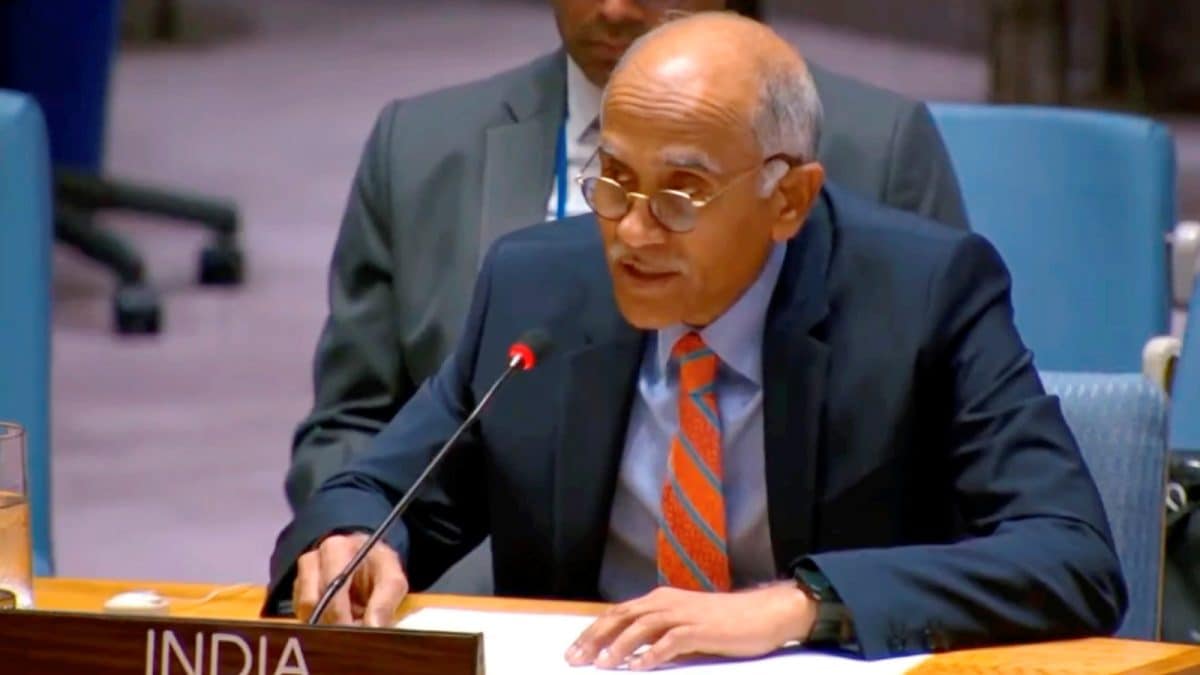
Permanent Representative of India to the United Nations, Parvathaneni Harish. (PTI file photo)
India on Friday threw shade at Pakistan’s leadership in key United Nations Security Council (UNSC) committees, calling it an “obvious conflict of interest.”
Speaking at a debate on the working methods of the Council, India’s Permanent Representative, Ambassador P. Harish, said that countries with vested interests should not be allowed to chair committees dealing with sanctions or counter-terrorism.
“Obvious and outright conflicts of interest can have no place in the Council,” Harish said, in a veiled reference to Pakistan.
The Indian envoy did not explicitly name the country or the committees, but the remarks were widely understood to target Pakistan’s role as head of the Taliban sanctions committee and co-chair of the counter-terrorism committee.
The 1988 sanctions committee, named after the resolution that created it, has the authority to impose travel bans on Taliban members. The recent visit of Afghanistan’s Foreign Minister Amir Khan Muttaqi to India faced delays due to issues in obtaining a travel waiver from this committee. Pakistan, which shares a tense border with Taliban-led Afghanistan, has been involved in multiple skirmishes with Afghan forces.
Ambassador Harish also pointed to Pakistan’s co-chairmanship of the counter-terrorism committee, noting that the country continues to provide sanctuary to several individuals and groups listed by the UN as terrorists. He urged the Council to adopt a more transparent and objective process in selecting chairs for its subsidiary bodies and pen-holders—members responsible for overseeing specific countries or issues.
Harish called for greater openness in the functioning of the Council’s anti-terrorism committees, particularly in decisions on sanctioning or delisting individuals and organisations.
“A case in point is the manner in which listing requests are rejected. Unlike de-listing decisions, these are done in a rather obscure manner, with member states that are not on the Council not being privy to details,” he said.
He also criticised the UN Military Observer Group in Kashmir, stating that mandates which have outlived their relevance should not continue simply for narrow political interests.
(With inputs from IANS)

The News Desk is a team of passionate editors and writers who break and analyse the most important events unfolding in India and abroad. From live updates to exclusive reports to in-depth explainers, the Desk d…Read More
The News Desk is a team of passionate editors and writers who break and analyse the most important events unfolding in India and abroad. From live updates to exclusive reports to in-depth explainers, the Desk d… Read More
New York, United States of America (USA)
November 15, 2025, 17:27 IST
Read More
Disclaimer: We do not own any of the content, ideas, images, or text presented here. All rights belong to their respective owners. For more information and to view the original source, please visit the following link: