

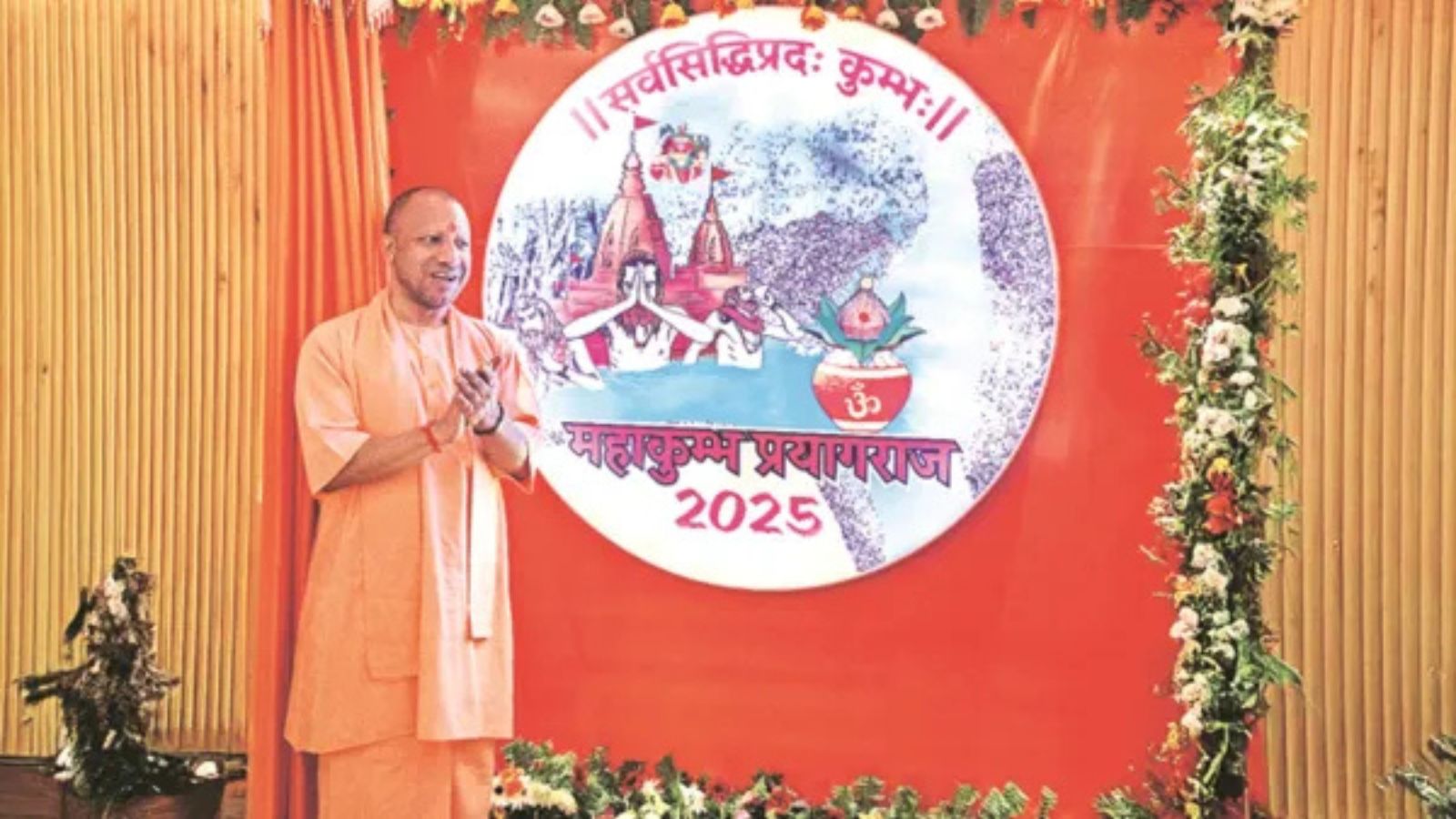
After the Ram temple in Ayodhya, the Uttar Pradesh government has shifted its focus on Prayagraj for the 2025 Maha Kumbh, a 45-day religious affair slated to begin on January 14 next year, to showcase the mega event as “India’s sanatan sanskriti (Hindu culture)” to the world.
With the event expected to be nearly thrice the size and budget of the last one in 2012, over 15 state departments, besides two of the Indian Institutes of Technology (IITs), are racing against time to complete over 500 projects within three months. Of the estimated budget of nearly Rs 6,382 crore, over Rs 5,600 crore has already been set aside for the event and related projects.
The Maha Kumbh and the shahi snan (royal bathing), being held after a gap of 12 years, will be spread over 4,000 hectares along the banks of the Ganga, with an expected footfall of at least 40 crore people. The 2012 Maha Kumbh, conducted on a budget of Rs 1,152, saw nearly 12 crore visitors, while the 2019 Ardh Kumbh (Half Kumbh), spread over nearly 2,500 hectares and with a budget of about Rs 2,400 crore, saw a footfall of about 25 crore visitors.
The success and scale of the 2025 event assume significance in light of the fact that the 2012 Maha Kumbh was organised by the Akhilesh Yadav-led Samajwadi Party government in the state.
Over the next three months, the state departments concerned will work with IIT Kanpur to finalise plans for massive crowd management and security; with IIT Guwahati to channelise and control the river flow; and finish both permanent and temporary projects, including the Ganga Expressway, one of Uttar Pradesh’s longest expressways that connects Meerut to Prayagraj. The authorities are aiming to bag at least four Guinness World Records through this event.

Officials said their biggest challenges include crowd management, water channelisation due to the delayed rainfall this year and the higher-than-normal levels of the Ganga at present.
Speaking to The Indian Express, Vijay Kiran Anand, Mela Adhikari and senior IAS officer, said, “The water normally starts receding around September 15. However, this year, it has been delayed by almost a month. We are also deploying manpower of about 20,000 workers, including 10,000 sanitation workers and others to mange duties related to electricity, roads, etc. We will also ensure that all projects are completed on time.”
Officials responsible for the event told The Indian Express, “With nearly 40 crore people expected to visit the Maha Kumbh, the 4,000-hectare area has been divided into 25 administrative sectors to make crowd management easier.”
To augment crowd monitoring, crowd density analysis, incident reporting and monitoring of cleanliness through control rooms, 2,300 CCTV cameras will be installed across both the Maha Kumbh venue and parts of Prayagraj. The authorities also plan to set up 99 temporary parking areas, spread over 1,850 hectares, and over 1.45 lakh toilets in the mela area.
For ease of movement across the mela venue, the Public Works Department (PWD) will construct 400 km of temporary roads and 30 pontoon bridges over the Ganga. The state power department will install 67,000 LED lights and 2,000 solar hybrid lights, besides two new power substations and 66 new transformers to ensure uninterrupted power supply during the 45-day event.
The Uttar Pradesh Jal Nigam will lay a 1,249-km line to supply potable water across the mela sectors, besides the installation of 200 water ATMs and 85 water pumps.
The state roadways department will ply 7,000 buses on different highways that connect to Prayagraj. It will also run about 550 shuttle buses from Prayagraj to the mela venue. The Prayagraj Mela Authority has authorised eight different agencies to paint murals on public walls and buildings, spread over 15 lakh square feet.
Projects with a November-end deadline include the installation of about 1,500 new signage across Prayagraj and the mela area; and planting of about 2.71 lakh saplings under the ‘Green Maha Kumbh’ project by the forest and other departments.
Among projects with a December-end deadline are the Rs 7,742-crore Ganga Expressway and the Rs 274-crore upgrade of the Prayagraj Airport.
A 594-km controlled-access, six-lane greenfield expressway, the Ganga Expressway, the second largest in the country, will connect Meerut to Prayagraj, besides providing connectivity to the city from the National Capital Region. Being developed under the Public-Private-Partnership mode, it is being made in four simultaneous parts — three by Adani Enterprises and one by IRB Infrastructure Developers Limited. Sources said that about 60% of the overall work is already completed.
The authority concerned is also working on upgradation and beautification of the Prayagraj Airport, which includes constructing a new terminal building, expanding the apron area (where planes are parked), etc. Though the deadline is December 25, officials said the target is to complete all physical work by the third week of November. Sources added that about 50% of all new construction work is already finished.
The state has also requested the railway ministry to double the number of trains to Prayagraj, especially around the time of the Mauni Amavasya snan, “since most visitors are expected to visit the mela then”. A source said, “Around 500 special trains were operational in 2019 (for the Ardh Kumbh). The number is likely to be increased to about 1,000. Nearly 300 trains are expected to be pressed into service around the time of the Mauni Amavasya snan.”
Disclaimer: We do not own any of the content, ideas, images, or text presented here. All rights belong to their respective owners. For more information and to view the original source, please visit the following link: