

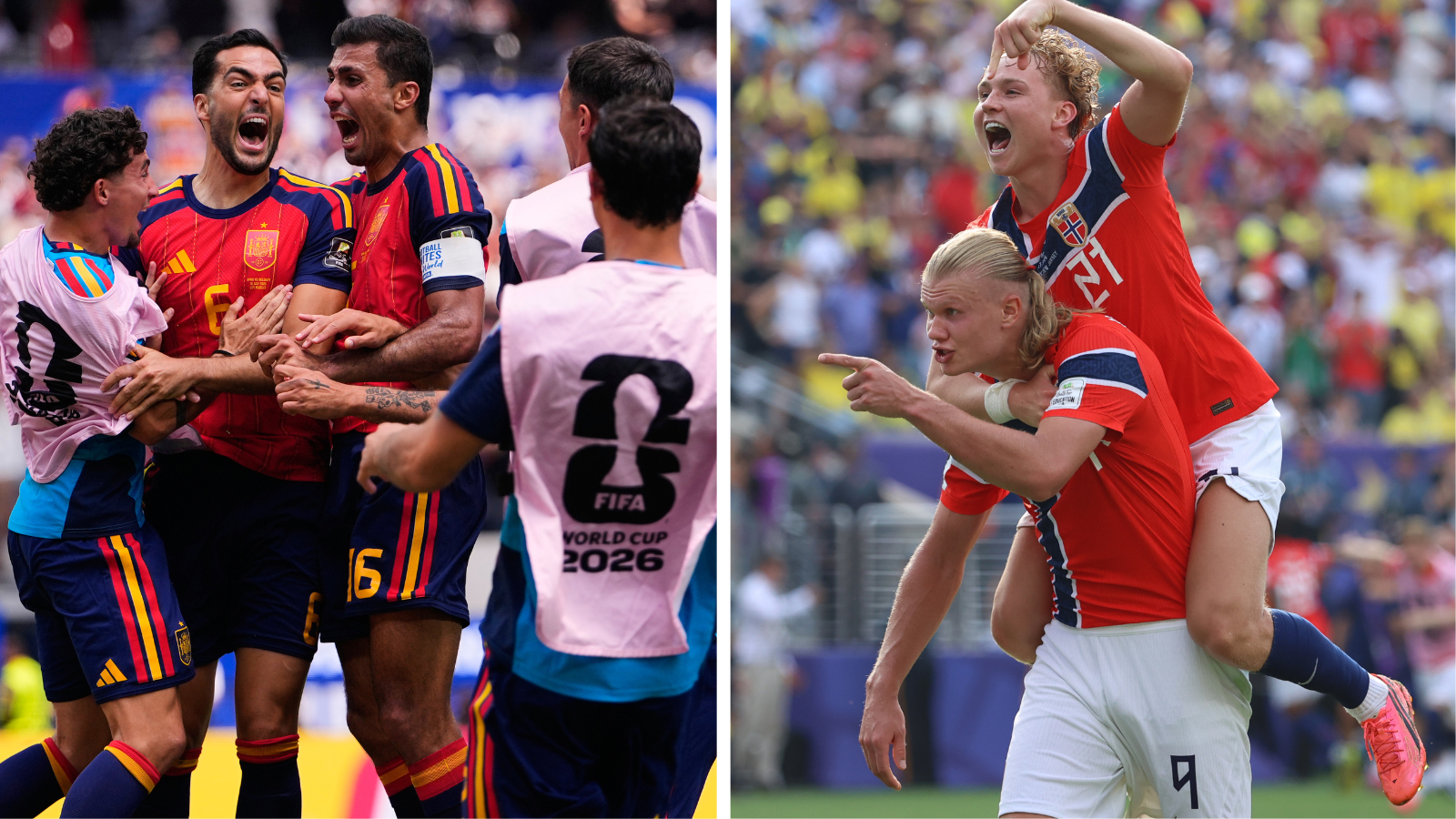
Mikel Merino had been on the pitch for a mere one minute and fifty-seven seconds when he scored the goal that sent Spain into the World Cup semi-final. Belgium’s backup goalkeeper Senne Lammens, in only because Thibaut Courtois had gone off injured, spilt a Pau Cubarsi shot into his path in the 88th minute. One substitute punished another substitute’s mistake, in a match Belgium had also started without their injured captain. It was Merino’s second goal as a substitute at this World Cup, with his first coming six days earlier, in the 91st minute, six minutes after coming on, and it ended Cristiano Ronaldo’s World Cup.
Matches at this tournament have been settled less by ninety minutes of football than by whoever is still standing in the final twenty. Sometimes that’s a substitute; sometimes just a starter who has run less than the man marking him.
ALSO READ | Despite just one goal in the tournament, Lamine Yamal remains special
Late drama
The pattern keeps showing up across too many teams and now too many matches involving the same player to be a coincidence.
Norway’s win over Brazil, the biggest result in their football history, ran on the same clock. Andreas Schjelderup came on at halftime and set up both of Erling Haaland’s late goals, scored in the last eleven minutes, against a Brazilian defence too spent to get low for a header. Neither of these is really about one player. Substitutes have scored 52 of 250 goals at this tournament, according to Opta, 18.6 per cent of the total, closing in on 2014’s all-time high of 18.7 per cent and well ahead of 2022 and 1990, both at 17.4 per cent.
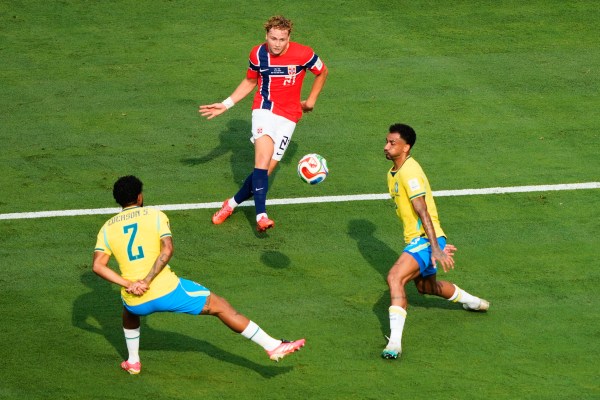 Norway’s Andreas Schjelderup plays a cross that teammate Erling Haaland headed in for his first goal during the World Cup round of 16 match against Brazil. (AP Photo/Yuki Iwamura)
There is a second number that says the same thing more precisely. Of all goals scored at this World Cup, 11.4 per cent have come in injury time, the highest share in the tournament’s history. More than half of those, 53 per cent, were scored by substitutes.
It isn’t that fresh legs are scoring more. It’s that they’re specifically the ones still standing when the rest of the pitch has nothing left.
Story continues below this ad
Beyond 90
Paraguay show the mechanism at work without needing to be the tournament’s best pressing side, only its most disciplined. Germany had 78 per cent of the ball in the first half and had, by most accounts, done enough to win long before it reached penalties. But Paraguay held out, saw a Germany goal wiped out by VAR in extra time, and won the shootout 4-3. Discipline, not possession, got them through. It was not enough against France, who beat them 1-0 in the last 16.
Argentina against Egypt shows the pattern needs no bench at all, only a clock. Egypt led 2-0 with eleven minutes left. Cristian Romero headed one back. Messi, who had missed a penalty earlier in the same match, levelled it with a half-volley. Enzo Fernandez won it in the 92nd minute. Nobody came on to do any of that. What changed was time, not personnel: eleven minutes turning a two-goal lead into a countdown.
ALSO READ | How do you solve the problem of Haaland’s goal mania?
It does not always open. Switzerland and Colombia played 120 minutes in Vancouver and barely produced a chance between them, two exhausted sides cancelling each other out so completely that fatigue itself couldn’t break the deadlock. That tie went to penalties and was decided by a Gregor Kobel save.
Story continues below this ad
The pressing sides live and die by their bench, because pressing cannot be sustained for ninety minutes. The rest live and die by the clock, because fitness and nerve are the same currency, spent differently. Either way, nothing gets decided until there’s nothing left to hide behind.
France and Spain have already booked their semi-final places, both fitting the pattern from opposite directions: France built to punish space before it closes, Spain grinding out a goalless run before their bench broke Belgium late. Argentina face Switzerland and England face Norway for the final two spots, and Norway’s own route, Haaland fed in behind a high press, suggests one more late goal is still coming before the semi-finals are set.
Each still carries a version of the same pattern: France closing the door early, Spain trusting its bench late, whoever survives Argentina-Switzerland doing it through Messi finding one more gear or the discipline that carried Switzerland this far. And Norway, should they get past England, would be repeating what worked against Brazil: a substitute setting up a striker who waited all match for one clean opening.
None of them will win by being better for eighty minutes. Whoever lifts the trophy will do what Merino did against Portugal and Belgium both: be ready in the only minutes that turned out to matter, on a pitch where everyone else had already spent what they had.
Disclaimer: We do not own any of the content, ideas, images, or text presented here. All rights belong to their respective owners. For more information and to view the original source, please visit the following link: