

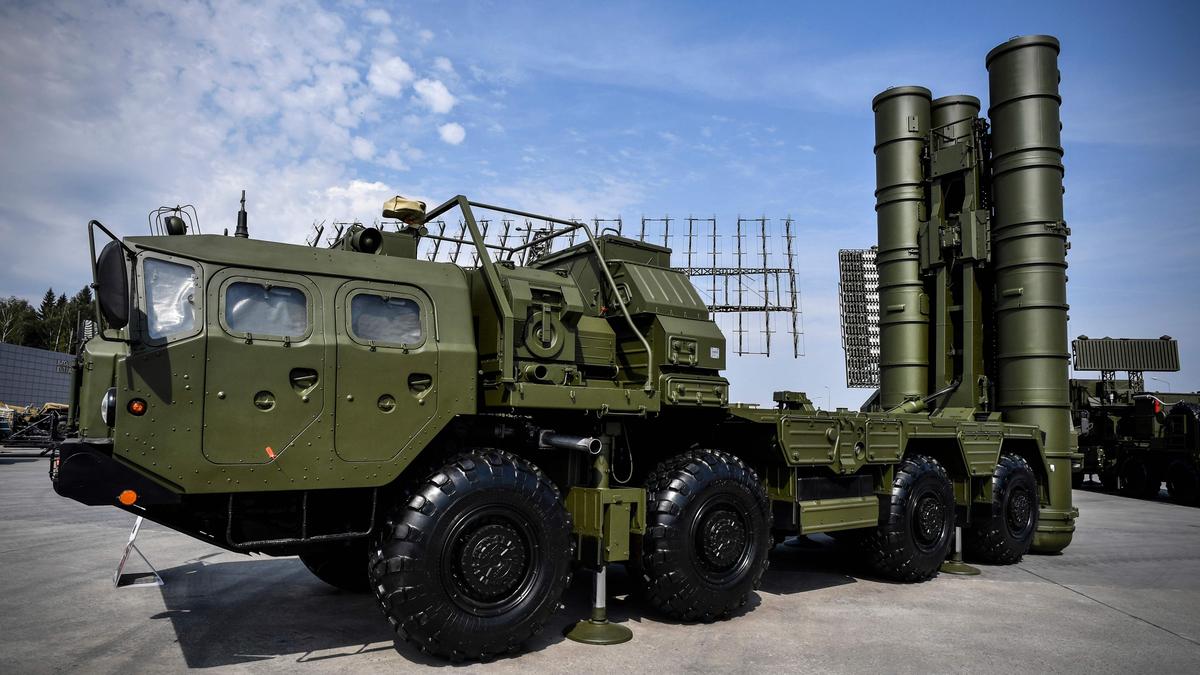
The delivery is part of a $5.43 billion agreement signed between India and Russia in 2018 for the acquisition of five S-400 regimental systems. File.
| Photo Credit: AFP
India has received the fourth squadron of the Russia-made S-400 air defence system, strengthening the country’s long-range air defence network. The system arrived from Russia as scheduled in May, and is expected to be deployed in an operational area shortly, sources in the defence sector said.
The delivery is part of a $5.43 billion agreement signed between India and Russia in 2018 for the acquisition of five S-400 regimental systems. Three S-400 squadrons have already been inducted into service; the fourth has now arrived, following delays linked to the Russia-Ukraine conflict.
The remaining squadron under the original contract is expected to be delivered in 2027, officials said. Deliveries are now back on schedule.
The S-400 will be integrated with AI-enabled decision-support capabilities aimed at improving threat prioritisation and target selection, senior defence officials said.
“AI-enabled targeting will assist operators in identifying and prioritising aerial threats. All incoming targets will be displayed on the system, and AI will provide recommendations based on the nature of the threat. However, the final engagement decision will remain with the operator,” a senior official said.
The AI-assisted system will help distinguish between different categories of threats, including ballistic missiles, combat aircraft, drones and cruise missiles, enabling more efficient utilisation of interceptor missiles, officials said.
The S-400 Triumf is among the world’s most advanced long-range surface-to-air missile systems, capable of engaging aircraft, drones, and cruise and ballistic missiles, at extended ranges. The system forms a key pillar of India’s layered air defence architecture, along both the western and northern fronts.
Officials also highlighted the operational role played by the S-400 during Operation Sindoor, with the system contributing significantly to India’s air defence posture during the conflict. According to sources, the platform was instrumental in countering aerial threats, and demonstrated its long-range engagement capabilities.
Beyond the Russian origin systems, India is simultaneously pursuing the development of an indigenous integrated air defence ecosystem under the broader ‘Sudarshan Chakra’ initiative.
Published – June 03, 2026 10:52 pm IST
Disclaimer: We do not own any of the content, ideas, images, or text presented here. All rights belong to their respective owners. For more information and to view the original source, please visit the following link: