

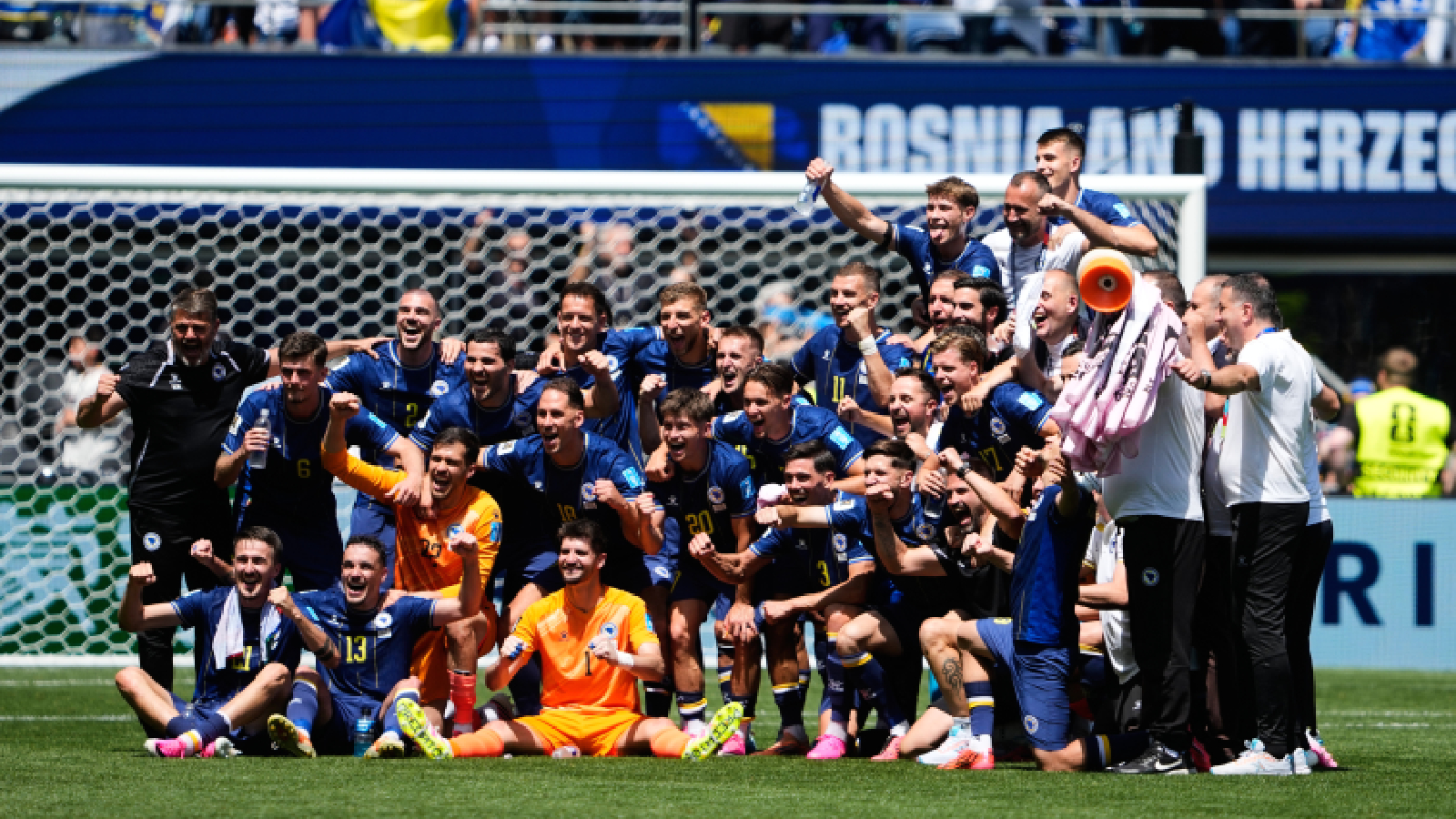
Esmir Bajraktarević, born and raised in Appleton, Wisconsin, became a Bosnian sensation when he scored the winning penalty in qualification against Italy. His assists from the left have lit up their World Cup, and his reputation for nutmegging opponents precedes him. The American-raised family never forgot their roots.
Several of Esmir’s relatives were killed in the Srebrenica genocide of 1995, years before he was born. His parents, Elmir and Emina, fled first to Switzerland as refugees, before settling in Appleton in 2001. “My parents lost a good part of their family,” Esmir told The Blazing Musket. “It’s a tragedy and something I will never forget. Srebrenica is something I will never forget. It’s a part of me and who I am.” Choosing to represent Bosnia wasn’t a difficult choice for the 21-year-old.
He shares that deep tug at the Bosniak heart with Zlatan Ibrahimović, who is entertaining Americans on FOX as a World Cup TV pundit.
Ibrahimović has joked about the connection before. Bosnian NBA player Nihad Dedovic was once asked if he was related to him, and replied, “No, my father has never been to Sweden.” Ibra’s response: “But my father has been to Bosnia.”
This time, though, the usual wisecracker, whose bicycle-kick banter has Thierry Henry bracing and Alexis Lalas rolling his eyes most nights, stepped out of character. He emotionally narrated just how much Bosnia Herzegovina making the knockouts, and 70,000 singing in the streets of Sarajevo, meant to him. “My father’s roots are from there, and because Bosnians have suffered so much. It makes me emotional, I can’t even express myself,” he said on Fox.
His father, Šefik Ibrahimović, a Bosnian Muslim, met his mother in Sweden, where the family settled. The couple, now divorced, raised the blunt-talking but beautifully gifted Ibra in the rugged Malmö district of Rosengård.
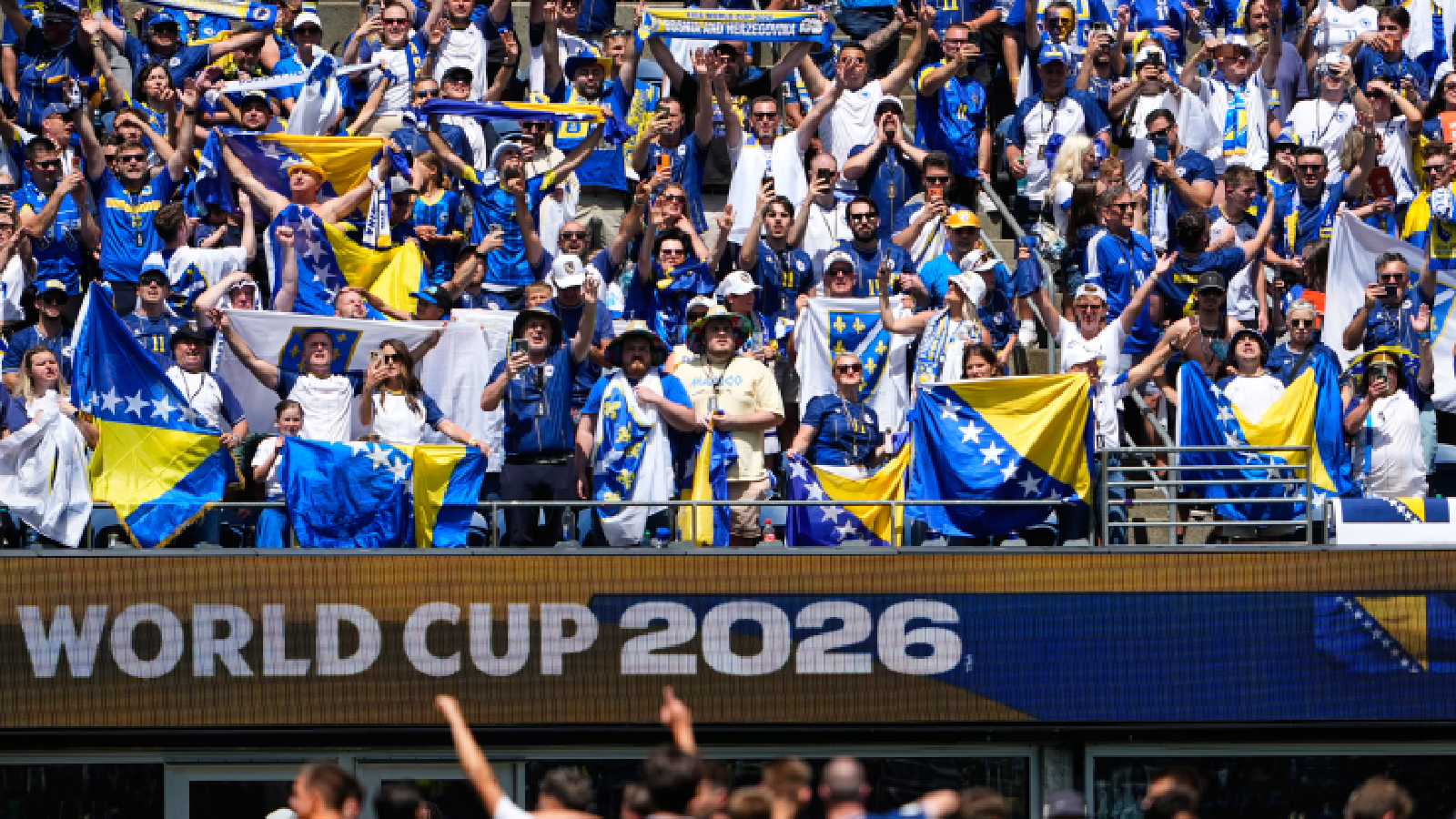 Bosnian fans celebrate after the World Cup Group B soccer match between Bosnia and Qatar in Seattle, Wednesday, June 24, 2026. (AP Photo/Maddy Grassy)
Football, Ibra likes to say, is about bringing people together. Back in Bosnia, things are slowly unraveling.
Story continues below this ad
While ethnic tensions between Bosniaks, Serbs and Croats have never fully stopped bubbling, Bosnia’s Round of 32 clash against the USA brings them face to face with a historic liberator with whom things have recently gone sour.
The Guardian reported that two flags are being waved in Sarajevo this World Cup summer. One is the national flag adopted in 1998, foisted by the international forces, led by the US, who intervened to end an ethnic-cleansing campaign that killed close to 100,000 people across the Bosnian War, its worst single atrocity the Srebrenica genocide of July 1995, in which more than 8,000 Bosniak men and boys were killed in a matter of days.
That official flag, blue and yellow diagonals with white stars, is accepted in gratitude by Bosniaks of all heritage, because the violence stopped.
The other flag carries golden lilies on a blue shield against white, and as the Guardian put it, has a far deeper history, steeped in centuries of complexity. This resurgent ethno-identity flag is popular among the youth and is waved with a flourish at public screenings across Bosnia.
Story continues below this ad
The golden lily, known as Zlatni Ljiljan, grows wild in the Dinaric Alps of Bosnia and blooms each May and June, according to the Guardian’s account. It was the symbol of the medieval Kotromanić Bosnian kingdom, a shared, non-religious heritage chosen as the national flag in 1992. After independence it came to be associated with the resistance troops of the mainly Muslim Bosnian army, fighting off attacks from its neighbours, the paper reported. While the official flag is embraced as settled history, the golden lily is reappearing as an assertion of Bosniak identity.
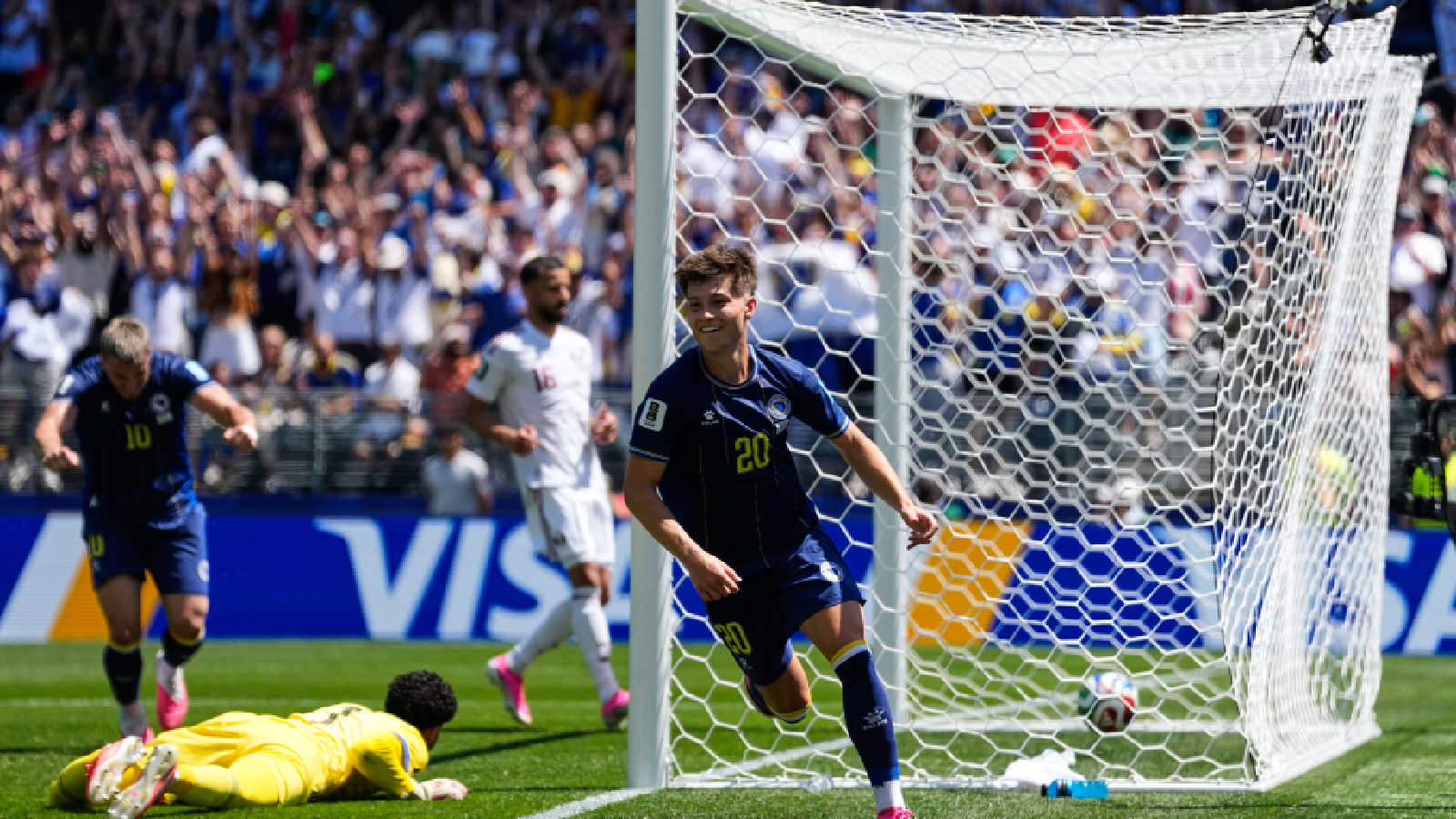 Bosnia’s Esmir Bajraktarevic, right, celebrates after Qatar’s Sultan Albrake scored an own goal during the World Cup Group B soccer match in Seattle, Wednesday, June 24, 2026. (AP Photo/Lindsey Wasson)
It doesn’t help that the US has caused fresh aggravation among Bosniaks lately. The Trump administration lifted sanctions on Milorad Dodik, the former Republika Srpska leader long pushing for secession, last October, and Dodik has since pushed harder for self-determination and Republika Srpska’s exit from the Dayton framework, drawing close to Moscow in the process. Trump associates, the Guardian reported, have meanwhile been scouting the region for lucrative business projects. Washington’s official line remains support for the Dayton Accords and Bosnia’s territorial integrity, but six US senators and two House members wrote to Secretary of State Rubio and Treasury Secretary Bessent in late March, according to the letter posted by the Senate Foreign Relations Committee, demanding fresh sanctions and arguing Dodik’s continued conduct threatens exactly that. The country’s historical protector has, at best, gone quiet on its old commitments.
Bosniaks once owed the US tremendous gratitude. These days they sniff betrayal.
On the field, the much-admired but ageing Bosnian squad won’t start favourites against the USMNT, but Esmir Bajraktarević, known to his old New England Revolution teammates as “Milwaukee Messi,” will roam the left with his nutmeg.
Story continues below this ad
There may not be needle between the two teams when they meet on Wednesday. But it is Zlatni Ljiljan bloom season back home, and the sting of defiance could travel as far as San Francisco.
Disclaimer: We do not own any of the content, ideas, images, or text presented here. All rights belong to their respective owners. For more information and to view the original source, please visit the following link: