

4 min readMay 18, 2026 03:29 PM IST
First published on: May 18, 2026 at 03:29 PM IST
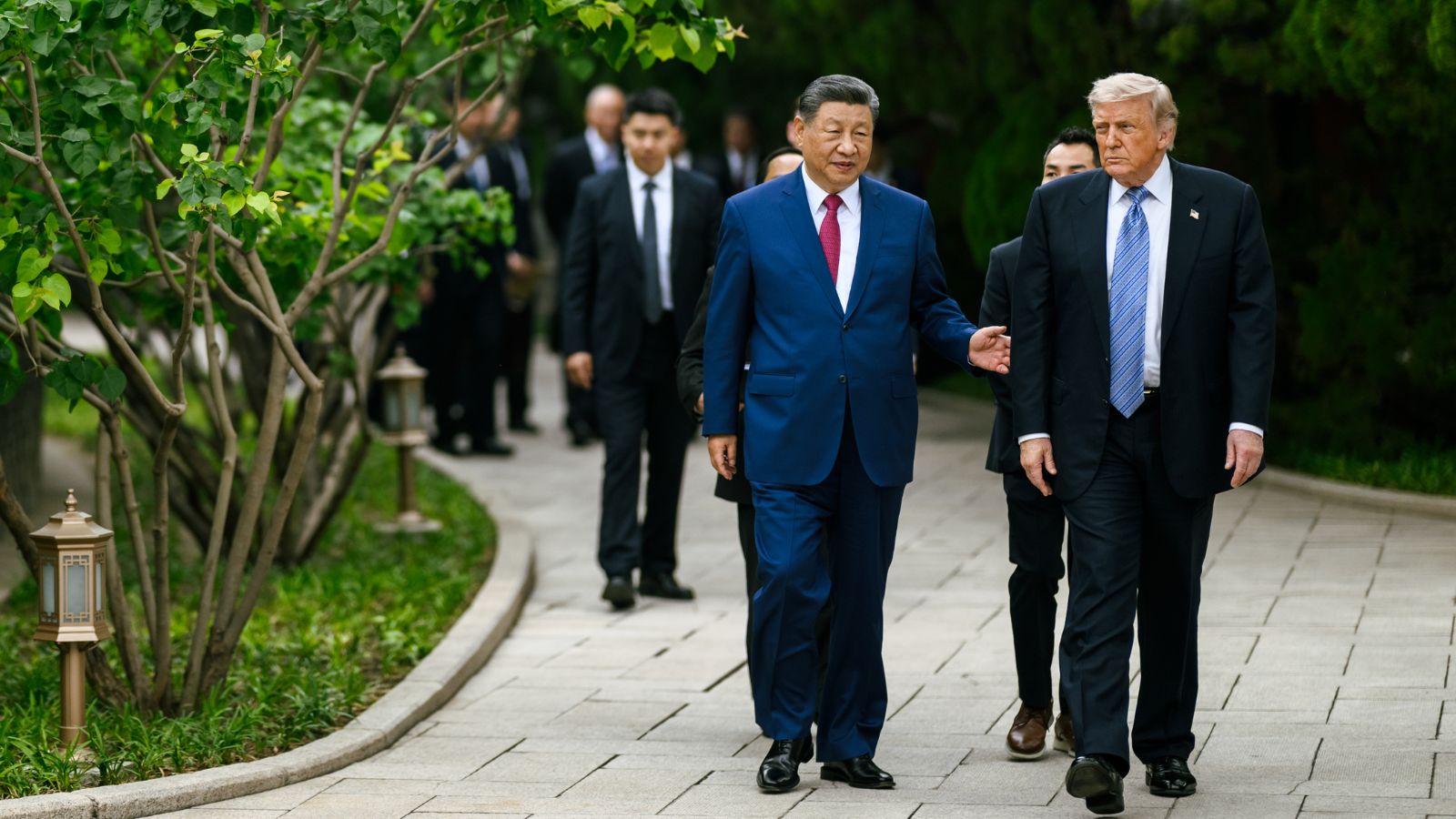
The drumbeat around US President Donald Trump’s visit to China seemed louder than deserved, given what was finally delivered. But perhaps that was the intention. The gap in a US presidential visit to China — nine years — and the power-packed business delegation that accompanied the President definitely seemed worthy of the hype before the summit. However, close watchers of US-China relations cautioned that any expectation of a breakthrough in bilateral relations between the two largest economies and military powers of the world should be tempered by structural realities. Yet, Trump brought a fresh approach to the table through calibrated pressure on China that could provide economic openings for the US government and companies.
The visit did not resolve any of the long-standing issues for obvious reasons. Some theorists would argue that both the US and China may have reached a plateau when it comes to the positive aspects of the relationship, while the competitive framework of the bilateral relationship remains dynamic. Neither China nor the US should expect a ceding of ground to the other’s advantage in an effort to make nice, and friction in areas such as technology, export controls, rare earths, regional balancing, etc., is likely to continue. Yet, Trump appeared to want to establish, quite firmly, red lines with China’s President Xi Jinping during the visit. The standout issue was Taiwan, where China portrayed the issue as the defining feature of stability in US-China relations. The lack of a commensurate response from the US on China’s rhetoric appears to be a quid pro quo for an economic modus vivendi.
Trump is hemmed in by domestic and external economic constraints like never before. In starting the war with Iran, where a conclusive end to the conflict seems perilously elusive, many reckon Trump is hoisted by his own petard. Trump faces difficult choices between saving face and allowing Iran to claim it has emerged stronger. Adding salt to the wound is the latest report that, despite the US-Israel joint military campaigns, Iran retains operational access to 30 of its 33 missile sites along the Strait of Hormuz. Moreover, the Iranian Foreign Minister Abbas Aragchi reiterated an unyielding position during the BRICS foreign ministers’ meeting. The subsequent energy and supply chains blockade has left the world, particularly the Global South, reeling. India has announced an advisory to ration energy usage at home.
Domestically, both inflation and energy prices have left little ground for Trump to manoeuvre politically as he heads to the midterms in November. China’s decision to buy Boeing planes appears as the only perceptible win for Trump. Trump has claimed that Beijing supports the idea of an open Strait of Hormuz. What that means in terms of actions from China remains to be seen, especially in the light of its long-standing relationship with Tehran and the Iranian foreign minister’s visit just ahead of Trump’s trip. What can be reasonably expected from Beijing is its ability to convince Tehran of keeping the Strait of Hormuz open, especially given its own stakes — China imports 12 per cent of its crude from Iran.
Although Trump seemed to walk away “impressed” from the bilateral meeting, the US-China relationship could go two ways from here. Trump’s apparent headway with China could remain more pomp and rhetoric. Or, this could be the beginning of the US acceptance of the inevitability of the latter’s military, technological, and economic ascendance, requiring a modified mechanism to co-exist with China. It is rare for Chinese leaders to outline achievements with the US before they actually materialise. Therefore, Beijing’s declaration that “a series of new common understandings” has been reached between China and the US is worth noting.
The writer is Deputy Director, Strategic Studies Programme, ORF
Disclaimer: We do not own any of the content, ideas, images, or text presented here. All rights belong to their respective owners. For more information and to view the original source, please visit the following link: