

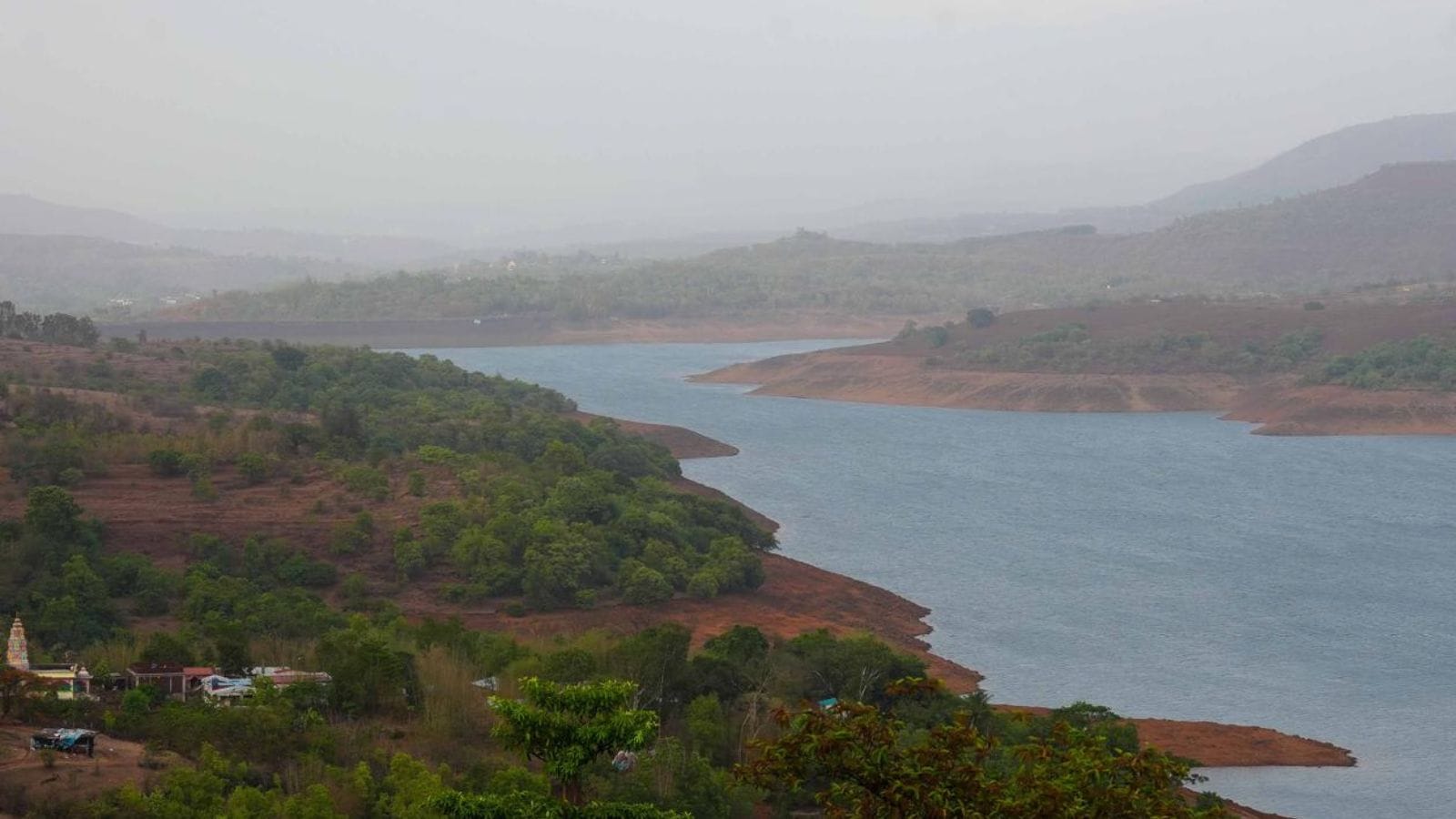
As Pune city braces for alternate-day water supply from June 15 due to critically low storage in the Khadakwasla dam chain, residents in several rural pockets and peri-urban areas of the district say they have been living with a far more severe reality for years, walking for hours, depending on tankers and rationing every litre of water despite living in some of the highest rainfall zones.
Across villages in Ambegaon, Junnar, Bhor, Mulshi, and Purandar, among others, residents say the annual water crisis has deepened even as the region receives abundant monsoon rainfall and hosts reservoirs that supply water to urban and industrial centres across Pune district.
For many families in the tribal hamlets of Bhimashankar temple area in Ambegaon taluka, fetching water has become a daily struggle.
“Our area is largely tribal and women from remote hamlets have to walk across steep, rocky hillsides in search of water. They return carrying pots on their heads through difficult terrain. It has become a routine for survival because wells have dried up and hand pumps no longer yield water, particularly in summer,” said Rupesh Ambekar, a resident of Eklahare village near Bhimashankar.
What frustrates villagers most is the contrast between the region’s natural abundance and their daily hardship.
“Bhimashankar receives around 2,000 mm of rainfall every year. Dimbhe dam is nearby, yet many villages, including Khamkarwadi, Dhamangaon, and others, face severe water crises every summer. A water tank and pipeline network were built nearly five years ago, but water has still not reached us. With even drinking water becoming scarce, agriculture now depends entirely on rainfall,” Ambekar said.
A similar story unfolds in the hills of Bhor taluka. Maruti Dhanawale, a resident of Dhanawale village, points to the irony of living next to a reservoir while struggling for water.
“The streams from our village feed the Nira-Deoghar dam, which supplies water to parts of Baramati, Indapur and Purandar. The dam is right in front of us, yet we still struggle for water,” he said.
Story continues below this ad
Dhanawale, who belongs to the Mahadev Koli tribal community, said poor road connectivity compounds the problem.
“Even after decades of follow-up, piped water facilities reached our village only in 2023. During summer, the streams dry up, and many families either depend on tankers or walk for nearly two hours to fetch water from distant wells and streams,” he said.
In Junnar taluka, 85-year-old Rambhau Tukaram Bhalerao from Nimgiri village said tanker supply remains the only lifeline for many hamlets.
“Our village is spread across several small settlements and water storage facilities are available only at some locations. The tanker frequency is also less. My children work in Mumbai, and there is often nobody at home to help me. Carrying water over long distances has become difficult at my age,” he said.
Bhalerao said villagers have repeatedly demanded a larger storage tank and piped water connections to individual settlements.
The crisis is no longer confined to remote villages.
Story continues below this ad
Residents in rapidly urbanising areas on Pune’s outskirts say infrastructure has failed to keep pace with growth. Gayatri Pawale, a resident of Pirangut, said water shortages have steadily worsened over the past few years.
“Earlier we received water regularly. For the last five to six years, the situation has been deteriorating. During the past three years, shortages were mostly limited to summer months. This year, however, we received water only once every three days for much of the year despite good rainfall last monsoon,” she said.
Families have been forced to create additional storage capacity at home to manage the uncertainty. “We keep every available container filled because we don’t know when the next supply will come,” Pawale added.
For apartment owners in Pirangut and nearby areas, which have witnessed a construction boom due to their proximity to Hinjewadi IT Park, dependence on tankers has become the norm.
Story continues below this ad
Atharva Barje, who lives near Ghotawade Phata in Mulshi taluka, said residential development has outpaced basic infrastructure.
“Mulshi developed rapidly because of its proximity to Hinjewadi, but essential services like water supply have not kept up. Our housing society has around 400 flats and receives no regular water supply because the gram panchayat lacks sufficient resources,” he said.
According to Barje, the society spends nearly Rs 1.25 lakh every month on water tankers. “The water comes from borewells and is hard water. Many residents use RO systems while others purchase drinking water separately.
Pirangut is barely a short distance from Pune city and Mulshi dam is around 20 km away, yet we remain dependent on tankers,” he said.
Story continues below this ad
Residents believe that better water storage, distribution infrastructure and watershed management could significantly reduce seasonal shortages in areas that receive substantial rainfall every year.
The concerns come at a time when Pune division is reporting some of the lowest reservoir storage levels in Maharashtra.
Several key reservoirs, including Khadakwasla, Panshet, Varasgaon, Bhatghar, Nira-Deoghar, Dimbhe, Mulshi, Koyna and Warna, have lower-than-expected water storage for this time of the year.
Disclaimer: We do not own any of the content, ideas, images, or text presented here. All rights belong to their respective owners. For more information and to view the original source, please visit the following link: