

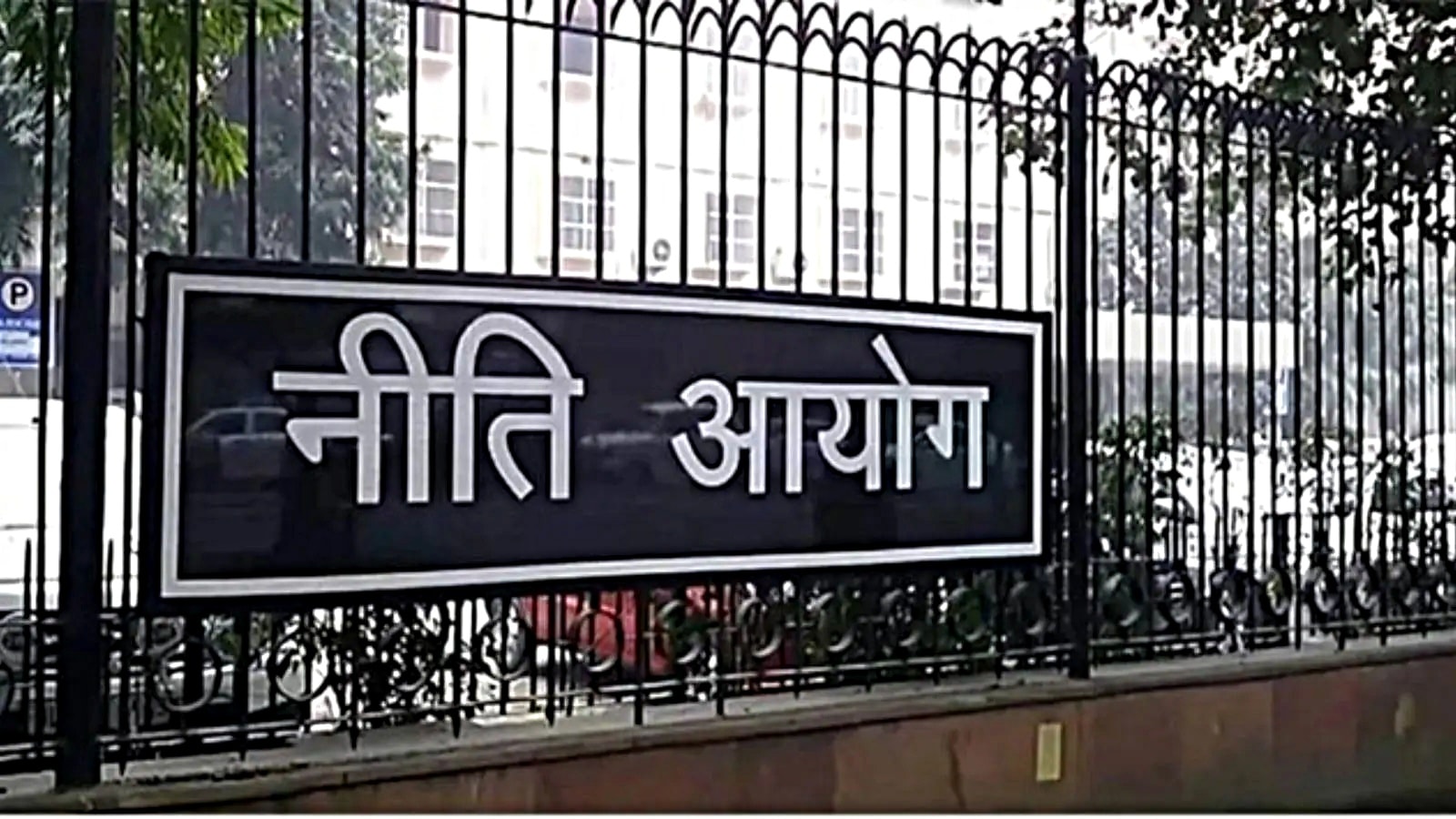
At a time when India is accelerating free trade agreement (FTA) negotiations to diversify exports and soften the impact of US tariffs, a Niti Aayog report has said that India’s trade deficit with its FTA partner countries is rising sharply, but exports from sunrise industries such as electronics are growing their foothold globally.
The Niti Aayog’s ‘Trade Watch Quarterly’ report released Tuesday said India’s trade deficit with FTA partners rose 59.2 per cent between April and June last year compared to the previous year as imports jumped by 10 per cent to $65.3 billion and exports declined by 9 per cent to $38.7 billion.
India has concluded FTAs with Oman, New Zealand and the UK in 2025 and is in active negotiations with the EU, the US, Australia, Bahrain, the Gulf Cooperation Council (GCC), the Eurasian Economic Union (EAEU), Canada and the Southern African Customs Union (SACU). New Delhi is also considering a Preferential Trade Agreement (PTA) with Brazil and Israel.
However, the report said that India’s export performance during the period shows clear structural divergence, with a sharp decline in petroleum exports but a strong surge in electronics exports. Electronics emerged as the standout performer, rising 47 per cent year-on-year, increasing its share to over 11 per cent of total exports, reflecting deeper integration into global electronics supply chains, the Niti Aayog said.
The widening of the trade deficit was driven by a contraction in exports to the Association of Southeast Asian Nations (ASEAN) region.
India has been in talks with ASEAN to re-negotiate the terms of the trade agreement; however, India and ASEAN missed the end of 2025 deadline. However, in October last year, ASEAN and China signed an upgraded free-trade agreement.
India’s shipments to FTA countries contracted as exports to ASEAN, the largest FTA export partners fell by 16.9 per cent, while Malaysia (-39.7 per cent), Singapore (-13.2 per cent), and Australia (-10.9 per cent) also witnessed sharp declines. UAE, India’s second-largest FTA export destination, saw a modest 2.1 per cent dip, whereas exports to South Korea (15.6 per cent), Japan (2.8 per cent), Thailand (2.9 per cent), and Bhutan (10.2 per cent) recorded marginal gains, the report said.
Story continues below this ad
Meanwhile, India’s share of imports from its top seven markets – China, UAE, Russia, USA increased, contributing around 43 per cent of total imports in Q1 FY26 from 39 per cent in Q1 FY25, amounting to $76.7 bn. In Q1 FY26, India recorded significant y-o-y import growth, with notable increases from the UAE (28.7 per cent), China (16.3 per cent), the USA (16.9 per cent) and Singapore (14 per cent).
However, import growth declined with Iraq (-13.3 per cent), Russia (-8.7 per cent) and Saudi Arabia (-8.50 per cent).
The report pointed out that gold compounds and petroleum primarily drove rising imports from the UAE. Gold compounds, which were previously not imported from the UAE, have now made the UAE one of the top import sources, surpassing Japan, which was previously the leading supplier. Imports of petroleum oils and oils obtained from bituminous minerals have also increased sharply.
“From China, the surge was concentrated in the ‘other’ subcategories under HS 85, particularly codes 851779 (circuit boards-parts) and 854239 (electronic integrated circuits-other). In the case of Iraq, while imports of petroleum oils declined, imports of mineral fuels in gaseous form and petroleum bitumen rose. Notably, crude soybean oil sourcing from Iraq has also begun. Imports from Russia, however, declined due to lower petroleum oil inflows,” the report said.
Disclaimer: We do not own any of the content, ideas, images, or text presented here. All rights belong to their respective owners. For more information and to view the original source, please visit the following link: