

A great murder mystery is never truly concerned with the identity of the killer. It is rarely concerned with the choreography of violence, and almost never with the immediacy of motive. What sustains it, what gives it meaning, is the question of why. Not the why that seeks a culprit, but the why that exposes a condition. The answers may reside in the killer, but the question is never about them alone. This is why the police procedural is not, at heart, an investigation of crime. It is an inquiry into the social order that makes the crime inevitable. The killer, over time, becomes a MacGuffin, as the murder stops being about a body and instead becomes an autopsy of the world that produced it. What is being examined is never innocence lost, but complicity maintained. The violence is not an interruption of normalcy; it is its very logical outcome. The genre understands this instinctively. Honey Trehan, alongside screenwriter Smita Singh, achieved this rare balance with their first collaboration, Raat Akeli Hai. And with Raat Akeli Hai The Bansal Murders, it appears they have returned to the genre not to repeat themselves, but to deepen the inquiry, once again using crime as a socio-cultural audit.
This time, however, the work is less moody, less atmospheric than its predecessor. The absence of Pankaj Kumar from cinematography duties is felt, and with it, a certain visual patience seems to have slipped away. If the craft falters here, some of that erosion can be traced to the pressures of platform aesthetics (the flattening impulse of Netflix originals, where distinction is often sanded down in favour of familiarity). The writing, and staging too, stumbles on occasion, most noticeably towards the end, where urgency begins to overtake precision. Yet this imbalance opens up a more unsettling question. When the material is so immediate, so insistent on being seen, discussed, reckoned with, what place does polish truly have? What value does sophistication have in a world, when children are dying, when privilege shelters itself behind faith, when the marginalized are left without even the air to breathe? There are no easy answers here. The film offers none, and perhaps that is its most honest gesture. Some questions are not meant to be resolved. They are meant to remain open, so they continue to trouble us, continue to haunt us.
 Just like the previous installment, Smita Singh once again played with the image of the femme fatale through the character of Chitrangda Singh.
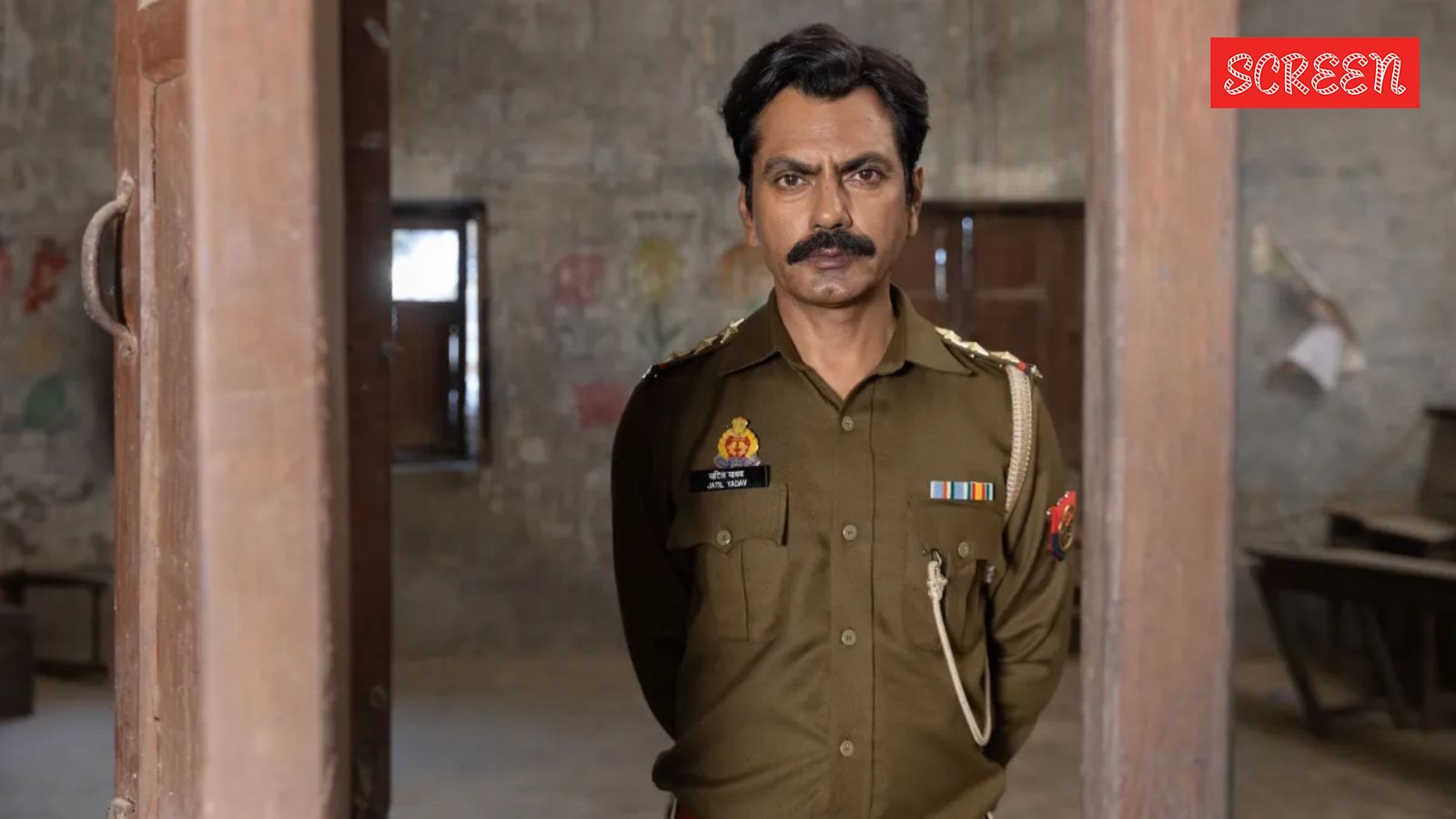
Continuing their engagement with the figure of the femme fatale, Singh and Trehan once again unsettle the images we think we recognise. Just as Raat Akeli Hai reworked our perception of Radha (Radhika Apte), destabilising deeply held assumptions, The Bansal Murders introduces Meera (Chitrangda Singh). She arrives shrouded in suspicion, her gaze as arresting as it is burdened with sorrow. The film opens with her. And when the massacre within the elite Bansal household unfolds, it is through her eyes that we witness it. She is at once observer and participant, witness and accomplice. Her vision is clouded by past trauma and by her intimate entanglement with the family, and so ours is too. Like Jatil (Nawazuddin Siddiqui), we are restricted to what she can see, and more crucially, to what she cannot. It is therefore no accident that much of the first half is structured as a pursuit of Meera. Her perspective, and the fractures within it, becomes the film’s guiding force. So, if the first half exposes the fault lines within privilege, the latter shifts its gaze downwards. Much like Bong Joon Ho’s Parasite, it locates both decay and defiance beneath the architecture of class itself, among those on whose backs the structures of privilege have been built.
Also Read | Dhurandhar pushes a bigoted vision, gaslighting the audience into accepting it as entertainment
By the time Meera completes her emotional arc, and fully inhabits her complicity in a larger crime, Jatil arrives at his own reckoning. If the first part unsettles his privileges as a man, this one confronts something more fundamental: his privileges as a citizen. So by the very end, everything begins to realign: the crime itself, the motivations behind it, even the title of the film. On paper, it signifies murders of the Bansals. Read that again, after the film has run its course, the phrase begins to hint something else entirely. This sustained play between perception and truth, mirrors Trehan’s own preoccupations. After all, he is less interested in answers than in the act of asking.
Even as his sophomore feature Punjab ’95 continues to struggle against censorship, Trehan refuses to retreat. He continues to press forward, to insist on inquiry. That insistence is visible in a film rooted in the policing of Uttar Pradesh yet unafraid to question the brutal shorthand of “bulldozer justice” and manufactured encounters. In one of its most arresting moments, Trehan cuts to an aerial view of a graveyard dotted with the graves of children, (an imagery that symbolises the visual conscience of the late photojournalist Danish Siddiqui). It is a reminder that Trehan, like Jatil, may negotiate with form, may absorb compromise at the level of craft, but does not surrender his ethical centre.

Click here to follow Screen Digital on YouTube and stay updated with the latest from the world of cinema.
© IE Online Media Services Pvt Ltd
Disclaimer: We do not own any of the content, ideas, images, or text presented here. All rights belong to their respective owners. For more information and to view the original source, please visit the following link: