

3 min readJun 4, 2026 07:17 PM IST
A rare meteorite recovered from the Sahara Desert is offering scientists a glimpse into a previously unknown world that may have existed more than 4.5 billion years ago, shortly after the solar system formed.
Found in 2019, the meteorite NWA 12774 is super rare, belonging to a group called angrites. These things are really old, some of the earliest volcanic rocks from our solar system. They give us a glimpse into what it was like when planets were just getting started.
A recent study in Earth and Planetary Science Letters has a cool theory about where NWA 12774 came from. It might’ve originated on a big planetary body that’s since vanished. So, this challenges older ideas suggesting angrites came from smaller asteroids.
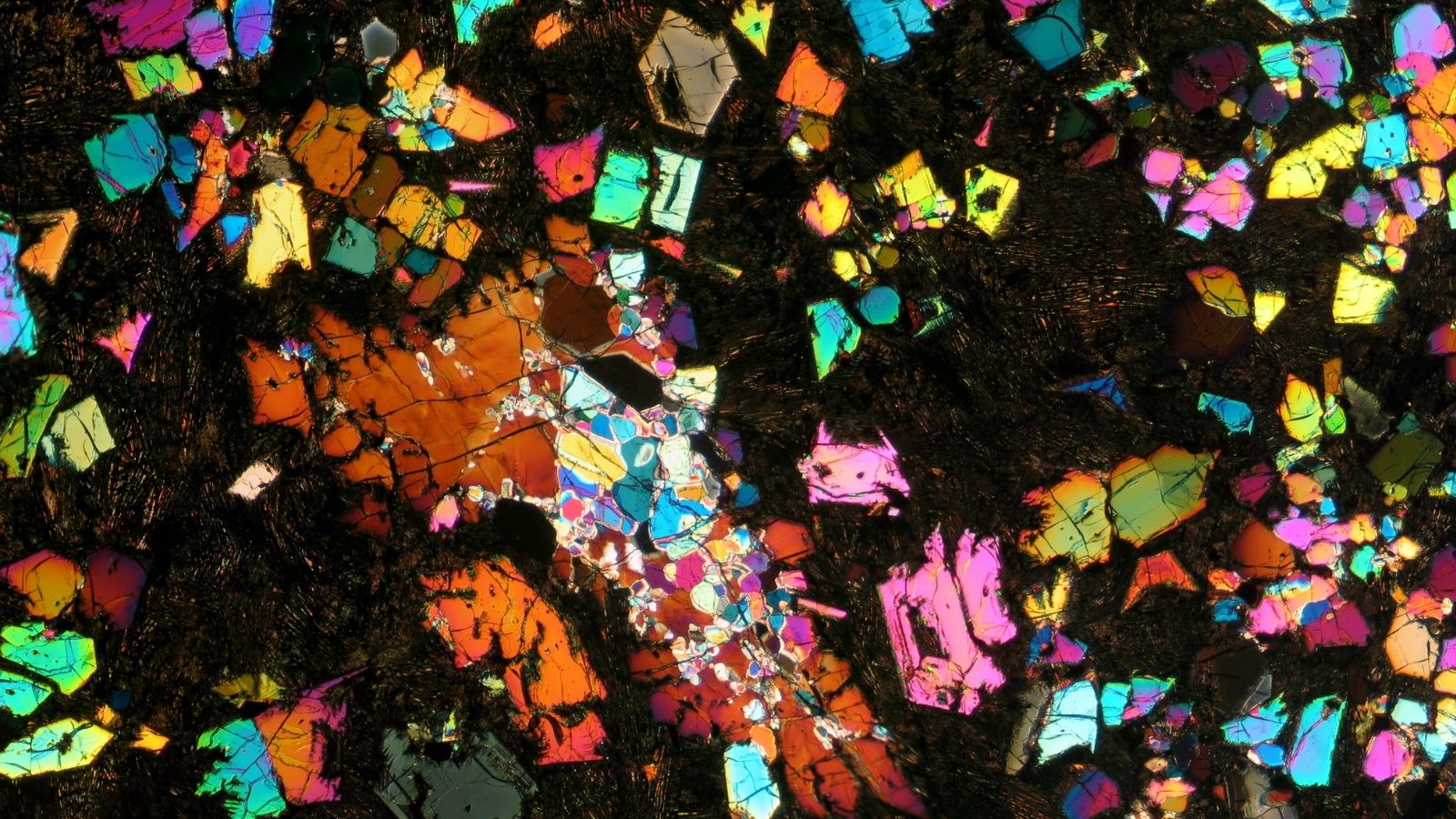
Scientists examined the meteorite and identified crystals of a mineral called clinopyroxene that were unusually rich in aluminium. According to the research team, the mineral could only have formed under extremely high pressures, estimated at more than 17.5 kilobars. Such conditions are difficult to explain if the parent body was a small asteroid.
The scientists figured out the environment where the meteorite came from and discovered its home was way bigger than they initially believed. They did some math and found the parent body could be over 1,800 kilometres wide – as big as our moon, and nearly as huge as Mars.
The meteorite also preserved features that indicate the minerals formed relatively close to the surface rather than deep within a planetary interior. Scientists say this is another clue pointing to a much larger world, as substantial pressure would have been required even at shallow depths.
Lead author Aaron Bell, a geoscientist at the University of Colorado Boulder, said the meteorite appears to record a completely different pathway of planetary evolution from the one followed by Earth and Mars. The materials that formed the angrite parent body are chemically distinct from those found on the two planets, suggesting that multiple types of planetary bodies may have emerged during the solar system’s infancy.
Story continues below this ad
Also Read: Why did Blue Origin’s New Glenn rocket explode during a prelaunch test in Florida
Only 68 angrite meteorites have been identified among the more than 80,000 meteorites recovered on Earth, making them exceptionally rare. Their unusual chemistry, including lower silica levels than those of most rocky planets, has puzzled scientists for some time. Researchers think NWA 12774 came from a world destroyed during the early solar system’s chaotic formation, when many violent collisions occurred. Pieces from that lost world could’ve ended up on other planets and asteroids. So a tiny bit might’ve ended up on Earth.
The team believes there’s more evidence of such vanished worlds hiding in meteorites we haven’t fully studied yet. This could teach us a whole lot about how our solar system developed.
Disclaimer: We do not own any of the content, ideas, images, or text presented here. All rights belong to their respective owners. For more information and to view the original source, please visit the following link: