

Last Updated:
Rahul Gandhi will lead the Opposition’s intervention in the Lok Sabha as Parliament takes up the SIR debate today.

Parliament Winter Session Day 7: Rahul Gandhi is expected to raise the issue of “vote theft” and the accountability of the Election Commission of India.
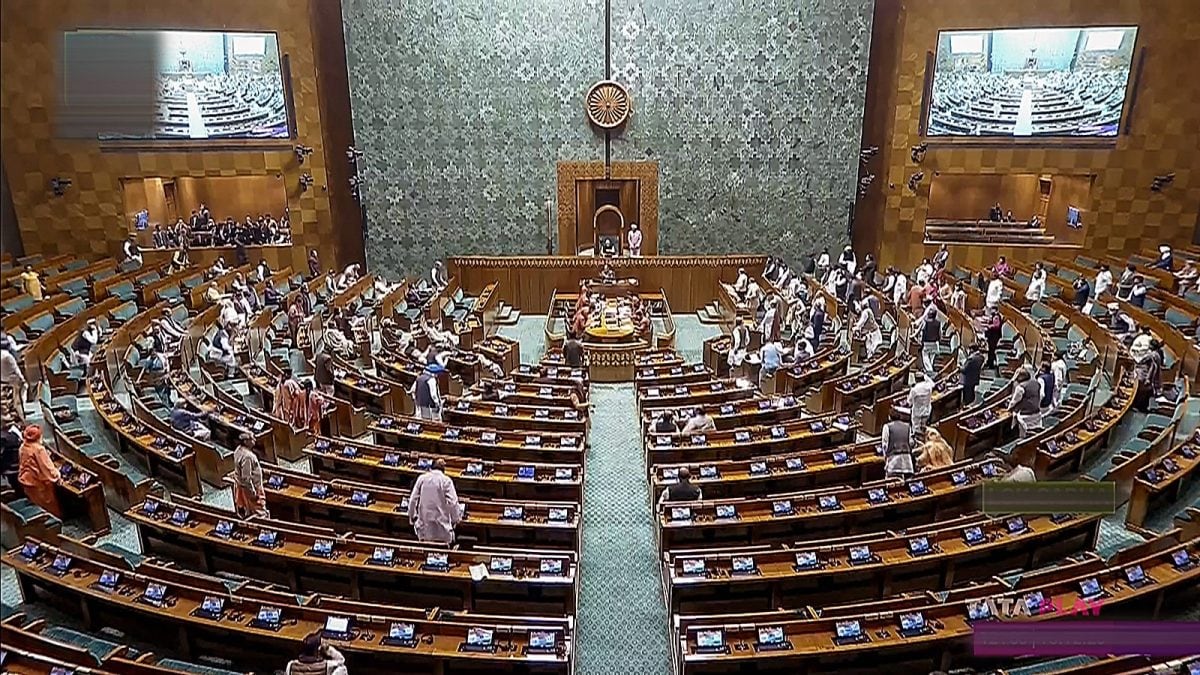
As Parliament enters a crucial stretch of its Winter Session, the Lok Sabha is set to take up a debate the Opposition has been demanding for days: a full-scale discussion on electoral reforms, including the Special Intensive Revision (SIR) of India’s voter rolls. After several rounds of negotiations, the government and the Opposition reached a consensus last week to bring the subject to the floor.
Leader of the Opposition in the Lok Sabha, Rahul Gandhi, will lead the Opposition’s intervention today, while Union Law Minister Arjun Meghwal is scheduled to reply on Wednesday.
SIR Debate Reaches Parliament
Since the Winter Session began on 1 December, Opposition parties have been demanding a dedicated debate on electoral reforms and the SIR. Over the first two days of the Session, several Opposition leaders, including Congress president Mallikarjun Kharge and former party chiefs Sonia Gandhi and Rahul Gandhi, staged protests inside and outside Parliament. The leaders held posters and placards against the Special Intensive Revision of the electoral rolls, carried a large banner reading “Stop SIR–Stop Vote Chori”, and raised slogans against the government.
The Congress has also alleged that the SIR drive, while presented as an exercise to clean the rolls of bogus entries, was misused during its rollout in Bihar to target marginalised communities whose votes traditionally favour opposition parties.
After multiple rounds of discussions between government and Opposition floor leaders, a consensus was reached to hold a debate on SIR, preceded by a debate marking 150 years of Vande Mataram.
Parliamentary Affairs Minister Kiren Rijiju had announced the decision on X, stating: “During the All-Party Meeting Chaired by Hon’ble Speaker Lok Sabha today, it has been decided to hold discussion in Lok Sabha on 150th Anniversary of National Song ‘Vande Mataram’ from 12 Noon on Monday 8th Dec and discussion on Election Reforms from 12 noon on Tuesday 9th Dec.”
The Lok Sabha opened the discussion on Monday with Prime Minister Narendra Modi’s remarks on the 150th anniversary of Vande Mataram, followed by Congress Deputy Leader Gaurav Gogoi from the Opposition benches. Ten hours each have been allotted for the discussion on Vande Mataram and on electoral reforms.
The Rajya Sabha will take up the Vande Mataram debate today, with the Home Minister scheduled to lead the discussion, before turning to electoral reforms.
What Will Rahul Gandhi And The Opposition Focus On?
Rahul Gandhi is expected to raise the issue of “vote theft” and the accountability of the Election Commission of India (ECI). Gandhi and the broader Opposition have repeatedly alleged discrepancies in voter rolls, including large-scale deletions, duplicate entries and what they describe as distortions in electoral procedures. These themes have also featured in his recent press conferences in Maharashtra, Haryana and Karnataka.
The Congress is also expected to highlight the pressure on Booth Level Officers (BLOs) during the re-verification exercise. Opposition parties have alleged that the SIR has placed untenable demands on field staff, citing reports of alleged suicides due to stress and heavy workloads. The BJP has rejected this charge, accusing the Opposition of politicising a sensitive issue.
Other Congress speakers in the Lok Sabha include KC Venugopal, Manish Tewari, Varsha Gaikwad, Mohammed Jawaid, Ujjwal Raman Singh, Isha Khan Choudhury, Mallu Ravi, Imran Masood, Gowaal Padavi and Jothimani. In the Rajya Sabha, Mallikarjun Kharge will articulate the party’s position when the Upper House takes up the discussion.
Why Is The SIR Being Conducted Now?
The Election Commission of India (ECI) has described the SIR as a large-scale verification exercise required to address “legacy data” issues that routine annual revisions can no longer correct. The Commission last carried out a nationwide house-to-house revision in 2002–04, and over two decades, electoral rolls have accumulated errors such as dead or shifted voters who were never deleted, duplicate registrations, and elector counts rising faster than projected populations.
Under Article 324 of the Constitution and Section 21 of the Representation of the People Act, 1950, the ECI has the authority to order such an intensive revision when it believes existing rolls contain inaccuracies. The SIR involves house-to-house enumeration, pre-filled forms, online submission options and a fresh verification of older voter data.
A key new requirement in the 2025 SIR is “legacy linkage”, under which voters must trace their name or a parent or relative’s name to old voter rolls from the early 2000s. The ECI has created an all-India database of these rolls on its website. Along with this, voters must verify or update their personal details and make mandatory declarations on citizenship and residency.
The enumeration period, originally ending on 4 December, was extended to 11 December. According to the ECI’s bulletin on Sunday, 99.94 per cent of electors across 12 states and Union Territories have received their Enumeration Forms, with 50.94 crore forms delivered to households. Kerala, following an extended schedule, will accept forms until 18 December. The Commission also noted that more than 50 crore forms, or 98.22 per cent of the total, have already been digitised.
 Click here to add News18 as your preferred news source on Google.
 December 09, 2025, 06:30 IST
Read More
Disclaimer: We do not own any of the content, ideas, images, or text presented here. All rights belong to their respective owners. For more information and to view the original source, please visit the following link: