

Last Updated:
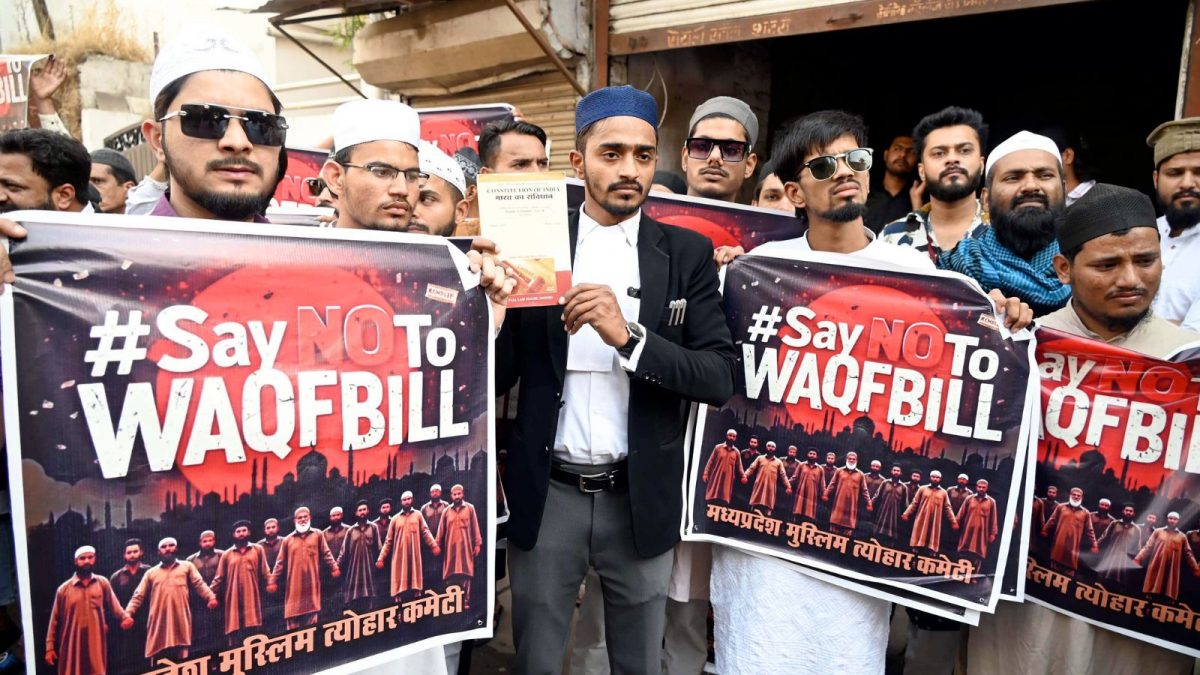
The petitioners argue that the Waqf (Amendment) Act, 2025, will undermine the religious essence of waqfs and severely impact the democratic governance of waqf administration and boards
The petitioners have sought a direction from the Supreme Court for a stay on the Act. (Photo: PTI File)
The Supreme Court on Wednesday will hear a batch of petitions challenging the constitutional validity of the Waqf (Amendment) Act, 2025.
According to the cause list published on the website of the apex court, a bench, headed by Chief Justice of India Sanjeev Khanna and comprising Justices Sanjay Kumar and K.V. Viswanathan, will take up the matter for hearing on April 16.
Some of the petitioners are Asaduddin Owaisi, Amanatullah Khan, Association for the Protection of Civil Rights (APCR), Maulana Arshad Madani, Samastha Kerala Jamiathul Ulema, Anjum Kadri and many others.
The petitioners argue that the Waqf (Amendment) Act, 2025, will undermine the religious essence of waqfs and severely impact the democratic governance of waqf administration and boards. The Centre also filed a caveat in the top court so that no order should be passed without hearing it.
The petitioners have sought a direction from the Supreme Court for a stay on the Act.
One of the petitioners, the President of the Islamic cleric’s body, Jamiat Ulema-i-Hind, Maulana Arshad Madani, in his plea, claimed the amendments were destructive of Waqf administration and jurisprudence in India and an effort to redefine the very nature of waqfs as existing in the country.
The batch of pleas challenged the Waqf (Amendment) Act, 2025 (Act) on the grounds that it violates the rights enshrined under Article 14 (Right to equality), 25 (Freedom to practise religion), 26 (Freedom to manage religious affairs), 29 (Minority rights) and 300-A (Right to property) of the Constitution.
The All India Muslim Personal Law Board, an NGO, and the DMK party, represented by its deputy general secretary A Raja, have filed petitions challenging the Waqf (Amendment) Act, 2025.
After the legislation was passed by the Parliament in the first week of April, the Congress announced it will challenge the Waqf (Amendment) Bill (now an Act after the Presidential assent) before the Supreme Court, claiming that it was an attack on the basic structure of the Constitution and was aimed at “polarising” and “dividing” the country on the basis of religion.
The concept of ‘Waqf’, rooted in Islamic laws and traditions, refers to an endowment made by a Muslim for charitable or religious purposes, such as mosques, schools, hospitals, or other public institutions.
Disclaimer: We do not own any of the content, ideas, images, or text presented here. All rights belong to their respective owners. For more information and to view the original source, please visit the following link: